
Table of Contents
The art of traditional Italian pasta making
The aroma of simmering tomato sauce fills the air, its rich scent promising a culinary journey that begins with a fundamental ingredient: pasta. As a cornerstone of Italian cuisine, pasta transcends mere sustenance; it embodies culture, tradition, and storytelling. Each strand of spaghetti or sheet of lasagna connects us to generations of artisans who have refined this craft. This exploration into the art of traditional Italian pasta making reveals techniques that tell a story, while every bite resonates with heritage.
The history of pasta: a cultural tapestry
Pasta’s origins trace back thousands of years, deeply connected to the Mediterranean region. Ancient civilizations, including the Etruscans and Greeks, created early forms of pasta. However, it was in Italy where pasta truly evolved and flourished. This evolution mirrors the rich diversity of Italy’s regions, each contributing its distinct interpretation to the cherished dough. For example, the delicate layers of lasagna from Emilia-Romagna contrast with the hearty orecchiette from Puglia, with each shape and texture narrating stories of local ingredients and traditions.
As a chef and food writer, I am continually fascinated by how the local terroir shapes the choice of flour and accompanying sauces. In northern Italy, soft wheat flour is preferred for its fine texture, while durum wheat, known for its high gluten content, dominates in the south. The journey of pasta, from simple grain to culinary masterpiece, is rich in history, and recognizing this heritage enhances our appreciation of every dish served.
Mastering the technique: from dough to dish
Making pasta from scratch may seem challenging, yet it is a fulfilling endeavor that anyone can undertake. The essential ingredients are straightforward: flour, eggs, and a pinch of salt. The transformation occurs when these components unite, resulting in a dough that is both pliable and resilient.
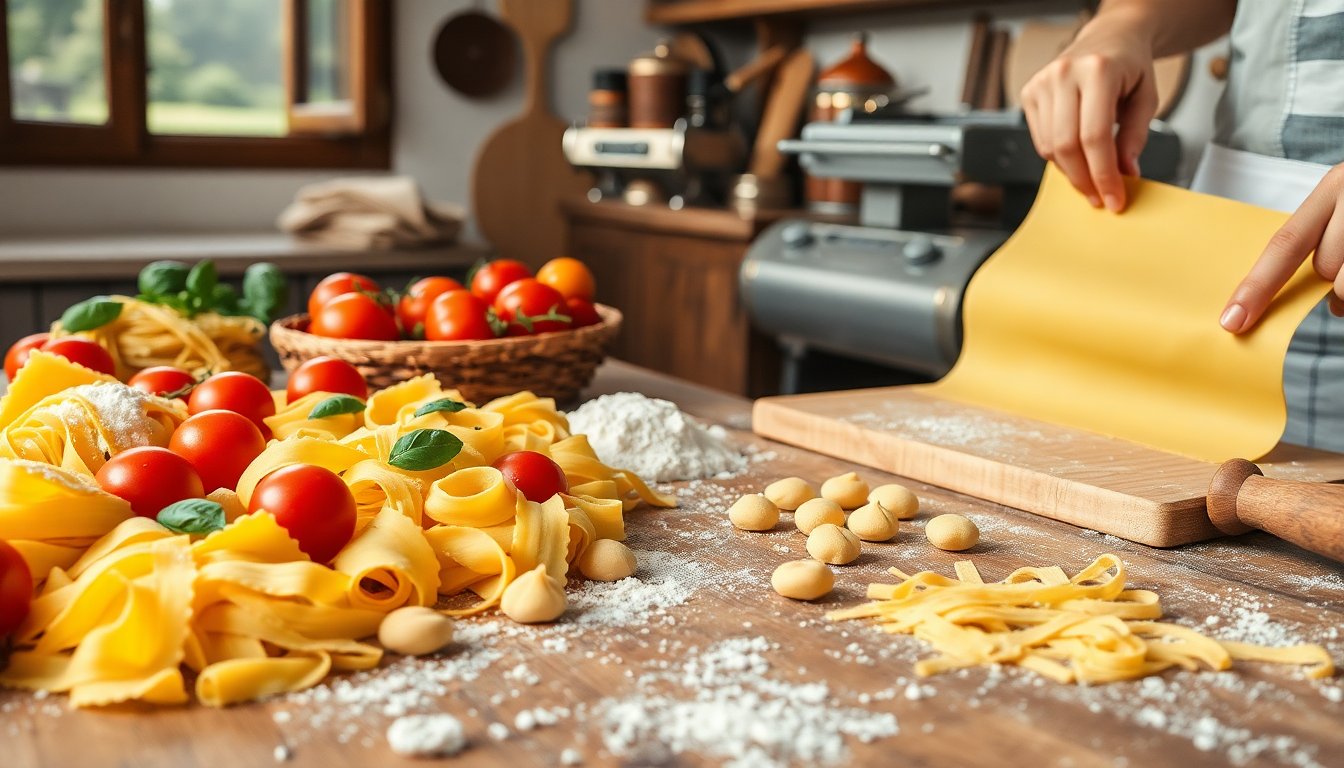
To start, pile flour on your work surface and create a well in the center for the eggs. Gradually mix the flour into the eggs using a fork until a rough dough forms. Knead the dough for about 10 minutes until it becomes smooth and elastic. This step is crucial; kneading develops gluten, which imparts the characteristic bite, or *al dente* texture, to the pasta.
After allowing the dough to rest, it can be rolled into sheets for lasagna or cut into various shapes. Each shape has a unique purpose, pairing with sauces that enhance their texture—consider ridged penne that clings to a hearty ragù or delicate fettuccine enveloped in a creamy Alfredo. Behind every dish, there’s a story; the palate never lies, and the right sauce can elevate a simple pasta dish to extraordinary heights.
Connecting to tradition and sustainability
In the context of sustainability and the farm-to-table movement, understanding the origins of our ingredients is increasingly vital. Many Italian chefs are embracing traditional practices, utilizing local grains and seasonal produce to craft authentic dishes that pay homage to the land. This emphasis on filiera corta, or short supply chains, not only bolsters local farmers but also guarantees that the ingredients are fresh, flavorful, and nutrient-rich.
As we enjoy each bite of homemade pasta, we reflect on the stories behind every ingredient—the farmers who grow the wheat, the artisans who mill it, and the chefs who transform it into culinary creations. This connection to the source enriches our dining experience, reminding us that every plate carries a narrative of passion, dedication, and environmental respect.
Gather your ingredients, roll up your sleeves, and embark on a pasta-making journey. As you knead the dough and shape your creations, remember that you are engaging in a rich tradition passed down through generations. Invite friends and family to join you in this experience, allowing the stories to unfold over a shared meal, where each bite reflects the love and history woven into every strand of pasta.