
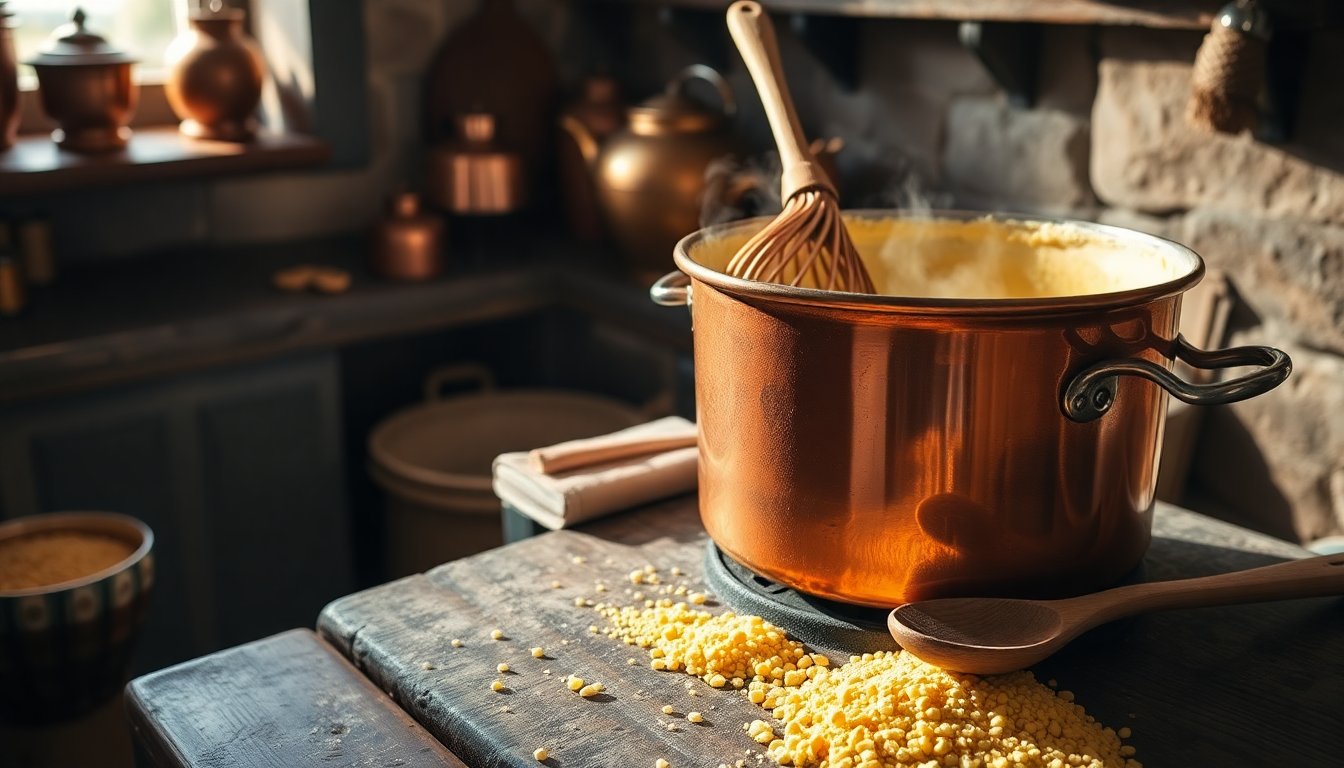
Discovering the timeless appeal of polenta
The aroma of freshly cooked polenta fills the kitchen, its creamy texture beckoning for a taste. This humble dish, crafted from ground corn, has been a cornerstone of Italian cuisine for generations, embodying the essence of comfort food.
Behind every plate of polenta lies a rich history. Originating in Northern Italy, polenta was traditionally the food of the peasants, made from the corn that was readily available. It serves as a versatile base, pairing well with meats, sauces, or simply finished with a drizzle of olive oil and a sprinkle of cheese. Today, polenta has evolved beyond its rustic origins, finding a prominent place in both gourmet kitchens and everyday cooking.
Making polenta is an art that blends technique and accessibility. Start with high-quality cornmeal—stone-ground varieties yield the best texture and flavor. Bring water and a pinch of salt to a boil, then gradually whisk in the cornmeal to prevent lumps. Continuous stirring is essential, allowing the polenta to thicken and pull away from the pot’s sides. This method releases the natural umami flavors of the corn, creating a dish that is both satisfying and comforting.
Polenta’s connection to the land is profound. Each Italian region showcases its own variation, shaped by local traditions and ingredients. In Veneto, it may be served alongside a rich ragu, while in Friuli, it is often paired with smoked cheese. This diversity reflects the terroir of the regions, demonstrating how local flavors elevate a simple dish.
Why not take a moment to engage with this culinary tradition? Try making polenta at home, experimenting with various toppings and pairings. Your palate will thank you as you savor each bite, discovering the rich tapestry of flavors that define this cherished Italian dish.