
Table of Contents
The conflict in Sudan, particularly in the region of Darfur, has escalated significantly. The actions of the Rapid Support Forces (RSF) have resulted in widespread suffering among civilians, underscoring the urgent need for global attention and intervention. Reports suggest that thousands of innocent lives are at risk as these paramilitary units perpetrate acts of mass violence and human rights violations.
The chilling reality of RSF’s actions in Darfur
In recent months, the city of el-Fasher has emerged as a center of violence, with RSF fighters allegedly targeting civilians indiscriminately. Survivors describe harrowing experiences of torture, extortion, and murder, as the RSF detain individuals and demand ransoms from their families for their release. The situation has deteriorated to such an extent that many are resorting to consuming animal feed due to extreme hunger.
Survivor accounts and the scale of atrocities
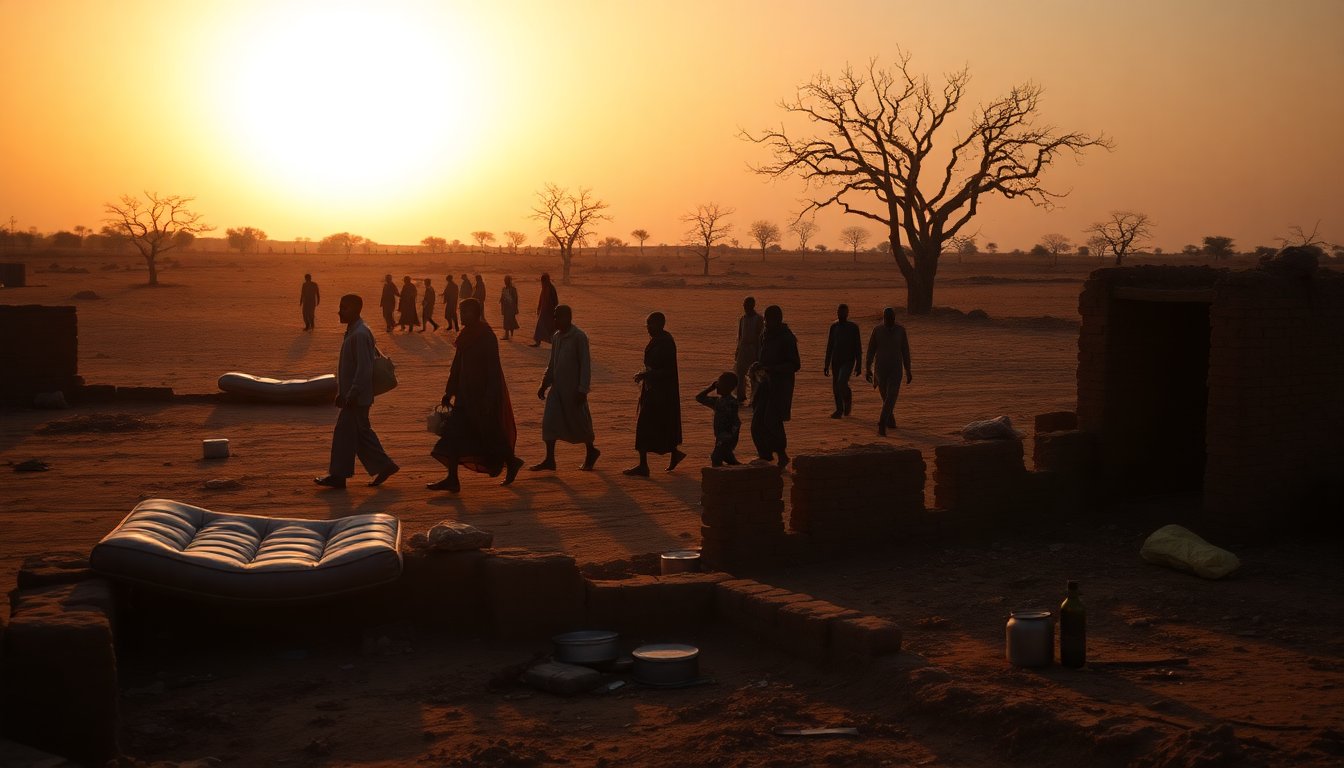
Individuals fleeing violence are arriving in nearby towns, including Tawila, visibly traumatized and burdened by their harrowing experiences. Eyewitness accounts indicate that many have lost family members. The violence is reportedly ethnically motivated, targeting specific groups such as the Masalit and other non-Arab communities. Humanitarian organizations working in the area describe a grim reality where women face sexual violence and children are left orphaned amidst the chaos.
The international community’s role and response
The international community’s response to the escalating crisis has been inadequate. Unlike previous conflicts in the region that prompted swift global action, the current situation has received little attention. As the actions of the Rapid Support Forces (RSF) echo past atrocities, it is imperative for governments and organizations to adopt a firmer stance. The United Nations and various humanitarian groups have consistently warned of the risk of mass killings, yet substantial interventions remain absent.
Historical context and implications
The international community has previously mobilized in response to crises similar to the ongoing situation in Sudan. Notably, the charges against former President Omar al-Bashir for crimes against humanity highlight the need for proactive measures. This history underscores the importance of preventing further escalation of violence. Influential nations, including the United States and the United Arab Emirates, must exert their influence to urge the warring parties to cease these atrocities.
Urgent call for action and accountability
The ongoing violence has intensified the demand for accountability. The systematic campaign by the RSF against civilians, marked by ethnic cleansing and sexual violence, requires a coordinated response. Reports indicate that a significant number of these crimes are carried out by RSF fighters, highlighting the need for international bodies, including the International Criminal Court, to take serious notice.
Additionally, the humanitarian crisis is worsened by severe funding shortages impacting aid distribution. The World Food Programme has warned of potential cuts to food supplies, which will exacerbate the suffering of civilians already facing food insecurity. Immediate action is essential to ensure that humanitarian aid reaches the most vulnerable populations without delay.
The situation in Sudan requires an urgent and coordinated response from the global community. Accepting a new normal where atrocities occur is unacceptable. It is essential to work together to protect civilians, deliver humanitarian aid, and ensure accountability for those responsible for these acts. Immediate action is necessary, as countless lives are at stake.