
Table of Contents
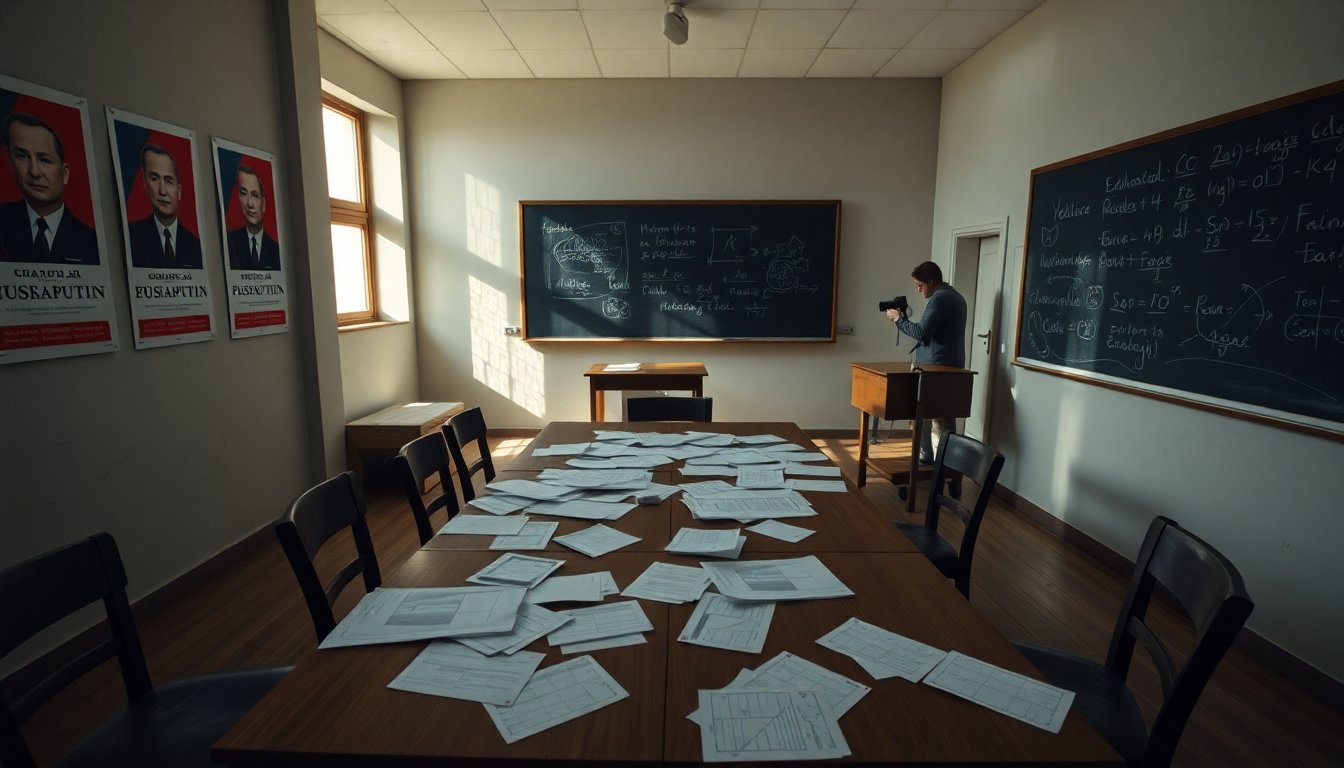
The documentary Mr. Nobody Against Putin has stirred significant conversation since its debut, especially following its nomination for an Academy Award. Created by Pavel Talankin, a teacher and videographer from Chelyabinsk, this film presents a raw look into the mechanisms of state propaganda within the context of Russia’s education system. Talankin’s effort, supported by American documentarian David Borenstein, uses footage illicitly smuggled out of Russia, offering an unsettling view of how children are indoctrinated in a regime that prioritizes loyalty to the state above all else.
The genesis of a controversial narrative
Since premiering at the Sundance Film Festival in, the film has inspired a spectrum of reactions, from admiration to outright disdain. Critics have debated whether Talankin should be celebrated as a brave whistleblower or condemned as a self-serving opportunist seeking fame and recognition. This dichotomy reflects a broader divide in perceptions of patriotism and dissent among those who have fled Russia and those who remain.
A conflicted legacy
Talankin’s motivations are complex. On one hand, he was an official employee tasked with documenting school events; on the other hand, his true aim was to unveil the stark realities of a totalitarian educational framework. This has led to fierce debates about the ethics of his actions. Is he a hero for exposing the truth, or is he jeopardizing the safety of his colleagues and students for personal gain? Such questions illustrate the intricate nature of activism in a repressive environment.
Documentary’s artistic execution and societal implications
While Mr. Nobody Against Putin has garnered attention for its bold thematic exploration, some critics argue that its artistic execution falls short. The film features monologues that come across as overly rehearsed, and the musical score often feels intrusive rather than enhancing the narrative. Nevertheless, the documentary has successfully highlighted the unsettling realities of indoctrination in Russian schools, capturing a complex portrait of the societal impacts of propaganda.
Understanding the effects of propaganda
One of the film’s key contributions is its exploration of how propaganda operates within the Russian educational system. Through candid footage, viewers witness teachers struggling to present terms like “demilitarization” and “denazification” to their students, who often react with confusion or disbelief. The film illustrates not only the mechanics of indoctrination but also its consequences—young men molded into soldiers, sent to the frontlines, and often never to return.
As the narrative unfolds, it becomes evident that the sheer volume of propaganda, coupled with the absence of alternative viewpoints, significantly shapes the perceptions of youth in Russia. This overwhelming influence raises critical questions about the effectiveness of resistance and the moral complexities of survival in an oppressive regime.
The personal journey of Pavel Talankin
Talankin’s journey from educator to documentarian is fraught with tension and risk. His decision to capture and share these realities was not taken lightly, and he faced the constant threat of severe repercussions. His actions, such as disabling screens showing state rallies or recording audio at a war-related funeral, reflect a personal rebellion against the pervasive ideology of his homeland.
Despite his efforts, Talankin is not portrayed as a conventional hero; rather, he embodies the struggles of an individual caught between the desire for truth and the harsh realities of his environment. His eventual escape to the Czech Republic in the summer of symbolizes both a personal victory and a sobering acknowledgment of the dangers faced by those who dare to dissent.
Redefining patriotism in a fractured society
One of the most thought-provoking aspects of Mr. Nobody Against Putin is its nuanced approach to the concept of patriotism. Talankin refrains from vilifying his ideological opponents, recognizing that many genuinely believe in the Kremlin’s actions. Rather than attacking these views, he seeks to articulate his vision of patriotism, which encompasses a critical stance on the state’s narratives.
Set against the backdrop of Karabash, a city marred by pollution and industrial decay, the film juxtaposes personal connections with an environment that feels increasingly alienating. Talankin’s farewell to his students resonates deeply, serving as a poignant reminder of the bonds that are tested under the weight of ideological divides.
Ultimately, Mr. Nobody Against Putin does not merely present a tale of anger or vindictiveness. Instead, it encapsulates a profound sense of desperation and a belief in the enduring power of storytelling and protest, even in the face of overwhelming odds.