
Table of Contents
The enforcement of a comprehensive oil blockade by the United States against Venezuela marks a significant escalation in U.S. foreign policy. Under President Trump’s directive, the U.S. Coast Guard has intensified its operations in the Caribbean Sea, actively intercepting vessels linked to Venezuela’s oil trade. This measure, described as a complete blockade, aims to curb the flow of oil from Venezuela, a country already grappling with severe economic challenges.
The implications of this blockade extend far beyond the immediate context, impacting not only U.S.-Venezuela relations but also the global oil market and international diplomatic dynamics. As the situation evolves, the actions taken by the U.S. Coast Guard serve as a crucial point of analysis for understanding the broader geopolitical landscape.
The U.S. Coast Guard’s role in the blockade
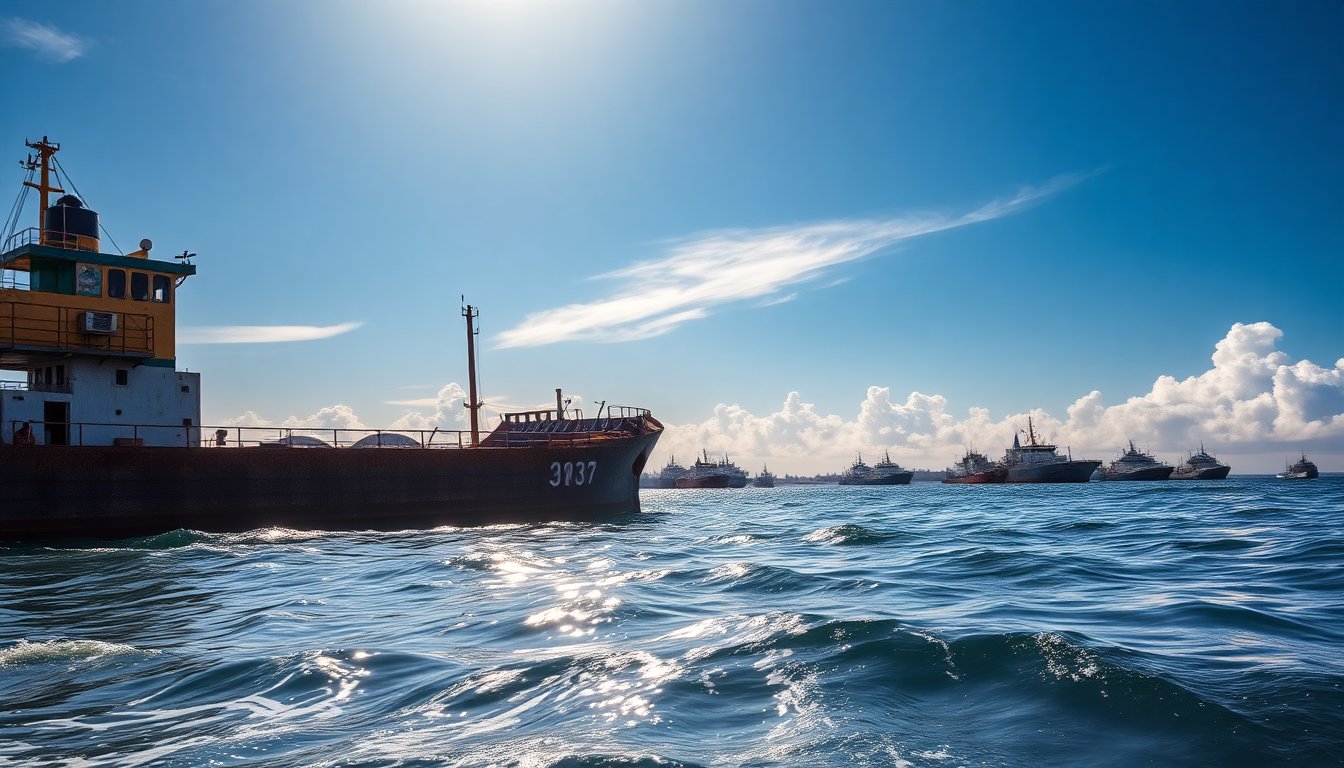
In recent weeks, the U.S. Coast Guard has taken decisive actions to enforce the blockade. The most recent vessel seized demonstrates the military’s commitment to implementing President Trump’s directive. The Coast Guard is tasked with monitoring and intercepting vessels believed to be transporting Venezuelan oil, a critical resource for the country’s economy.
Operational strategies
The operational strategies employed by the Coast Guard involve a combination of surveillance and interception techniques. Utilizing advanced technology and intelligence gathering, the Coast Guard has identified and tracked vessels traveling in the region. This proactive approach not only highlights the U.S. military’s readiness but also underscores the seriousness of the blockade as a tool of foreign policy.
Impact on Venezuelan economy
The blockade poses significant challenges for Venezuela, a nation heavily reliant on oil exports for revenue. With the U.S. effectively cutting off a major source of income, the Venezuelan economy faces further deterioration. This blockade is likely to exacerbate the humanitarian crisis already present in the country, leading to greater hardships for the Venezuelan population.
Global ramifications of the blockade
The broader implications of the U.S. blockade on Venezuela are notable not only for the involved nations but also for global markets. The oil industry is highly sensitive to changes in supply and demand, and cutting off Venezuela’s oil exports could lead to shifts in pricing strategies and supply chains worldwide. As one of the largest oil reserves globally, Venezuela’s situation will have ripple effects throughout the industry.
International responses
Countries around the world are closely monitoring developments within Venezuela and the U.S. blockade. Responses vary, with some nations criticizing the U.S. for its aggressive stance, while others may view it as a necessary measure to promote democratic governance in Venezuela. The international community’s reaction will be pivotal in shaping future diplomatic relations and economic strategies, particularly among nations that are major stakeholders in the oil market.
Potential for escalation
As tensions rise, there is a growing concern about the potential for escalation into direct military conflict. President Trump has not ruled out the possibility of military action, suggesting that the situation may become even more volatile. Such developments could lead to a significant shift in U.S. military strategy in Latin America and beyond, prompting a reevaluation of alliances and foreign policy objectives.
The U.S. Coast Guard’s actions in enforcing the oil blockade against Venezuela represent a pivotal moment in international relations. The blockade is not just a matter of economic sanctions; it serves as a broader instrument of U.S. foreign policy that will shape the political and economic landscape in the region for years to come. Stakeholders across the globe must remain vigilant as the situation continues to evolve.