
Table of Contents
In the realm of modern warfare, military simulations have become essential for understanding potential conflict outcomes. Recently, the Chinese People’s Liberation Army (PLA) showcased its capabilities through a series of war games, accompanied by insights from a leaked US Navy document that revealed concerning scenarios regarding a possible conflict in the Taiwan Strait.
This analysis provides an overview of these significant military exercises and their implications for international relations, particularly in the context of US-China tensions.
China’s military exercises showcase advanced capabilities
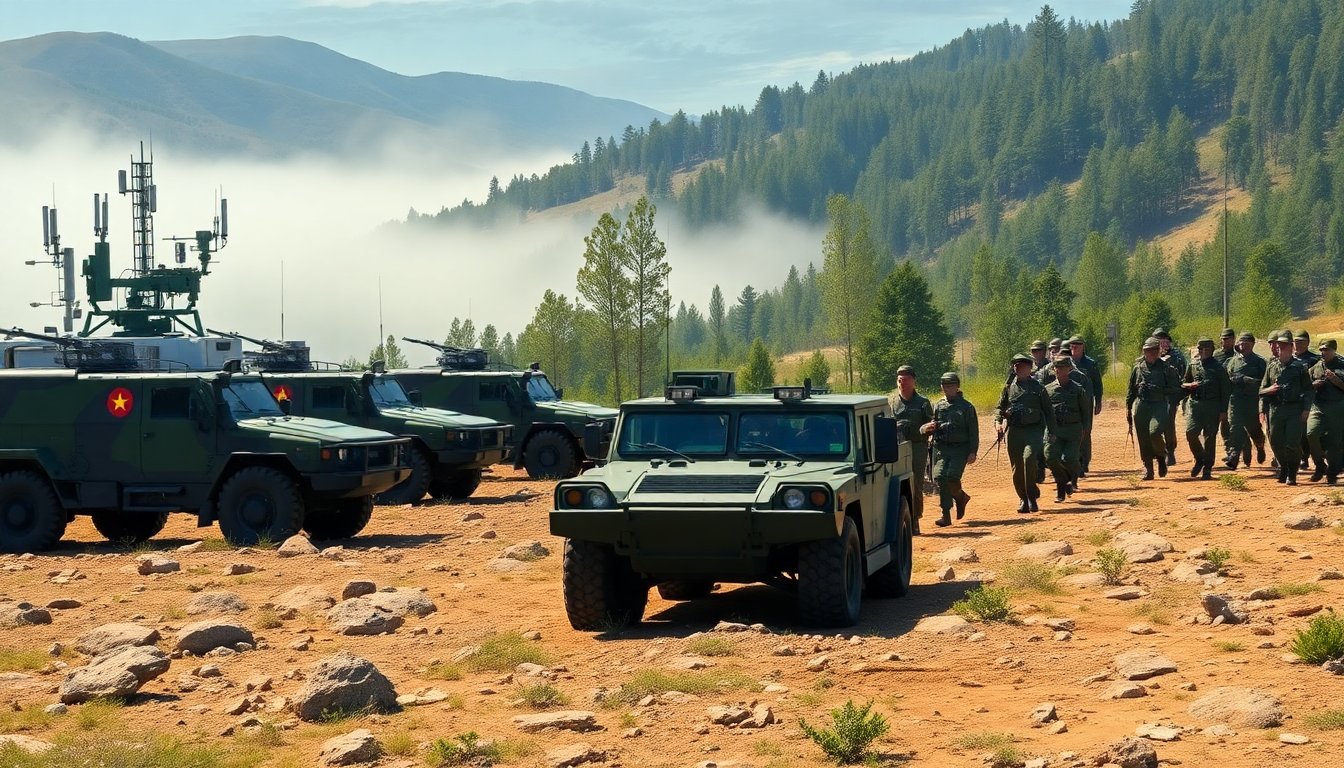
The PLA’s recent war games, prominently featured in state media, illustrate their operational readiness. The exercises included a direct simulation involving the Chinese J-16 fighter jets and the French Rafale aircraft, highlighting the tactical prowess of the Chinese air force.
This year marked a pivotal moment, as the PLA and the People’s Armed Police Force advanced their pilot training initiatives. The report indicated that the J-16, known for its multi-role versatility, was pitted against the Rafale, which had previously faced challenges against the Chinese J-10C in a recent Indo-Pakistani conflict. Such exercises not only enhance pilot skills but also assess the effectiveness of their combat strategies against foreign adversaries.
Technological advancements in missile systems
Another aspect of China’s military evolution is the introduction of a new suite of anti-ship missiles, enhancing capabilities in the Indo-Pacific theater. Among these are the YJ-15, YJ-17, YJ-19, and YJ-20, each designed to challenge naval operations from adversaries, particularly the US.
The YJ-15, for instance, is engineered to exceed speeds of Mach 5, with an operational range of up to 1,800 kilometers. Its aerodynamic design and advanced propulsion allow it to evade traditional defense systems, making it a formidable threat to aircraft carriers and other naval vessels.
US Navy simulations highlight potential vulnerabilities
In a contrasting scenario, a leaked document from the US Navy, dubbed the Overmatch Brief, outlined a grim picture for American naval forces in the event of a conflict with China in the Taiwan Strait. The report suggested that the advanced US aircraft carrier, USS Gerald R. Ford, could face severe threats from coordinated Chinese attacks.
According to the simulations, the carrier’s protective screen, composed of escort vessels, would gradually weaken, exposing it to a barrage of ballistic and cruise missiles. This assessment pointed to critical weaknesses in the operational readiness of US naval forces, emphasizing the need to reassess their strategic posture.
Cyber warfare and strategic disruptions
The Overmatch Brief also raised alarms regarding the potential for cyber warfare, stating that initial Chinese strikes would likely focus on disrupting US communication networks, complicating command and control. By neutralizing these vital systems, China could launch a series of missile assaults that overwhelm the defensive capabilities of the US Navy.
This layered approach to warfare, combining cyber tactics with direct military actions, demonstrates an evolved understanding of modern conflict dynamics. The implications are profound, as they highlight the necessity for the US to adapt its military strategies in the face of evolving threats.
The shifting balance of power
This analysis provides an overview of these significant military exercises and their implications for international relations, particularly in the context of US-China tensions.0
This analysis provides an overview of these significant military exercises and their implications for international relations, particularly in the context of US-China tensions.1