
Table of Contents
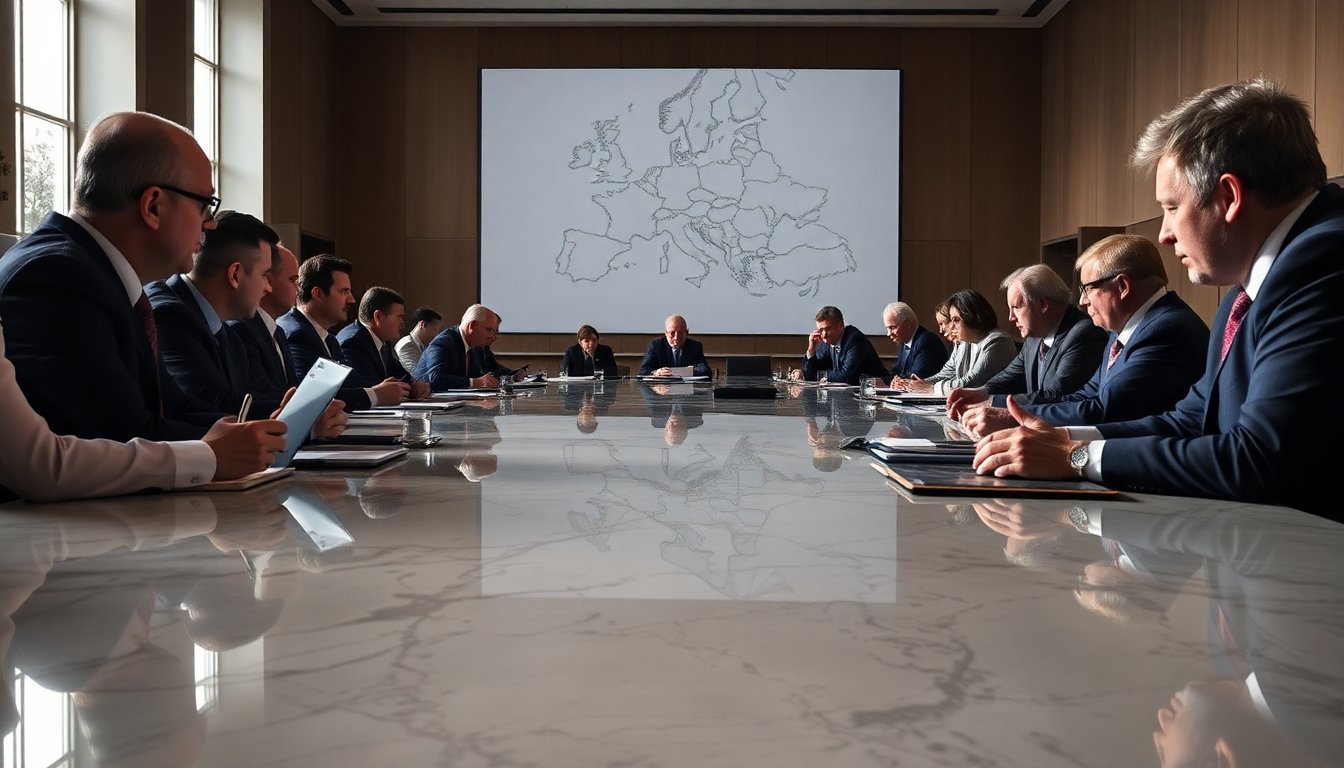
The conflict in Ukraine continues to drive a significant reassessment of Europe’s foreign policy strategy. High-level meetings are currently taking place in Brussels, marking a crucial moment for the European Union. Foreign ministers are gathering to discuss a proposed peace initiative from the United States, spearheaded by President Donald Trump. As European leaders weigh their options, it is evident that the stakes are exceptionally high.
Shifting dynamics in European and U.S. relations
Central to the European response to the U.S. peace plan is the ambition to alter the proposal in a way that makes it less appealing to Russia. European leaders are shaping a narrative that depicts President Vladimir Putin as disingenuous in his pursuit of peace. Their strategy aims to render the peace plan unacceptable to Moscow, thereby encouraging Trump to escalate military and economic pressure on Russia. However, this approach carries the potential for significant repercussions.
Ukraine’s funding challenges
Ukraine faces significant difficulties in maintaining its military operations against Russian forces as the geopolitical situation shifts. President Trump has claimed that the United States is no longer responsible for funding Ukraine, characterizing the conflict as “Biden’s war.” This statement has effectively transferred the financial responsibility to European nations.
Countries within Europe, including the European Union, the United Kingdom, and Norway, are now under increased pressure to provide the essential resources. While the United States continues to supply arms and intelligence, much of this support depends on funding from Europe. This reliance raises critical questions regarding the sustainability of Ukraine’s defense strategies.
As the year comes to a close, the European Union has not yet clarified how it intends to convert its rhetoric into tangible financial support for Ukraine. The future of Ukraine’s military efforts may hinge on Europe’s response to this pressing funding dilemma.
Controversial plans and potential consequences
European leaders are proposing a reparations loan that would use assets from the Russian Central Bank frozen in Europe. The plan aims to direct these funds toward strengthening Ukraine’s defense instead of covering post-war reparations. The underlying assumption is that a significant Russian defeat would justify this confiscation retroactively.
However, skepticism is rising among EU nations about the practicality of this strategy. Countries such as Belgium, which controls a substantial amount of these assets, have expressed concerns about the ramifications and have publicly opposed the initiative. Furthermore, Donald Trump’s peace proposal suggests that these assets might be more effectively used for Ukraine’s economic recovery, a stance that Moscow has previously recognized. This divergence in priorities could lead to increased tension between the U.S. and Europe.
Economic risks for Europe
The reparations loan brings significant challenges to the European economy. If European banks proceed with the confiscation of Russian assets, it could discourage global central banks from holding their currencies in Europe. This scenario risks destabilizing the European banking system, which may undermine the EU’s economic stability. Meanwhile, this approach fails to address the urgent humanitarian crisis unfolding in Ukraine.
The threat of a humanitarian disaster remains critical. Russia’s ongoing military aggression poses a serious risk to Ukraine’s energy infrastructure. Recent events, such as the blackout in Odesa that left residents without heating and water during winter, underscore the need for immediate and effective action.
The political landscape and future implications
European leaders’ refusal to consider realistic compromises raises significant questions about their motivations. Is their aggressive stance a reflection of a deep political commitment to an unrealistic vision for the conflict, or are they simply positioning themselves strategically as the war evolves? The growing sentiments of war fatigue are evident, with pro-Russian factions gaining influence across various European nations, complicating the political scenario.
If the reparations loan fails to gain traction this week, Europe may resort to relying on the EU budget for loans, a move likely to encounter substantial public backlash. A failure to secure necessary funding could foster perceptions of inadequacy within Europe, placing President Zelenskyy in a difficult position.
His administration is already grappling with challenges stemming from military setbacks and corruption scandals. A lack of support from Europe may enable Zelenskyy to argue that the West has abandoned Ukraine, potentially leading to an unfavorable peace settlement dictated by Russian terms.
While Europe’s intentions may aim for a positive resolution for Ukraine, the current strategies could result in outcomes that contradict those objectives. As diplomatic discussions continue, the path ahead remains complex and uncertain.