
Table of Contents
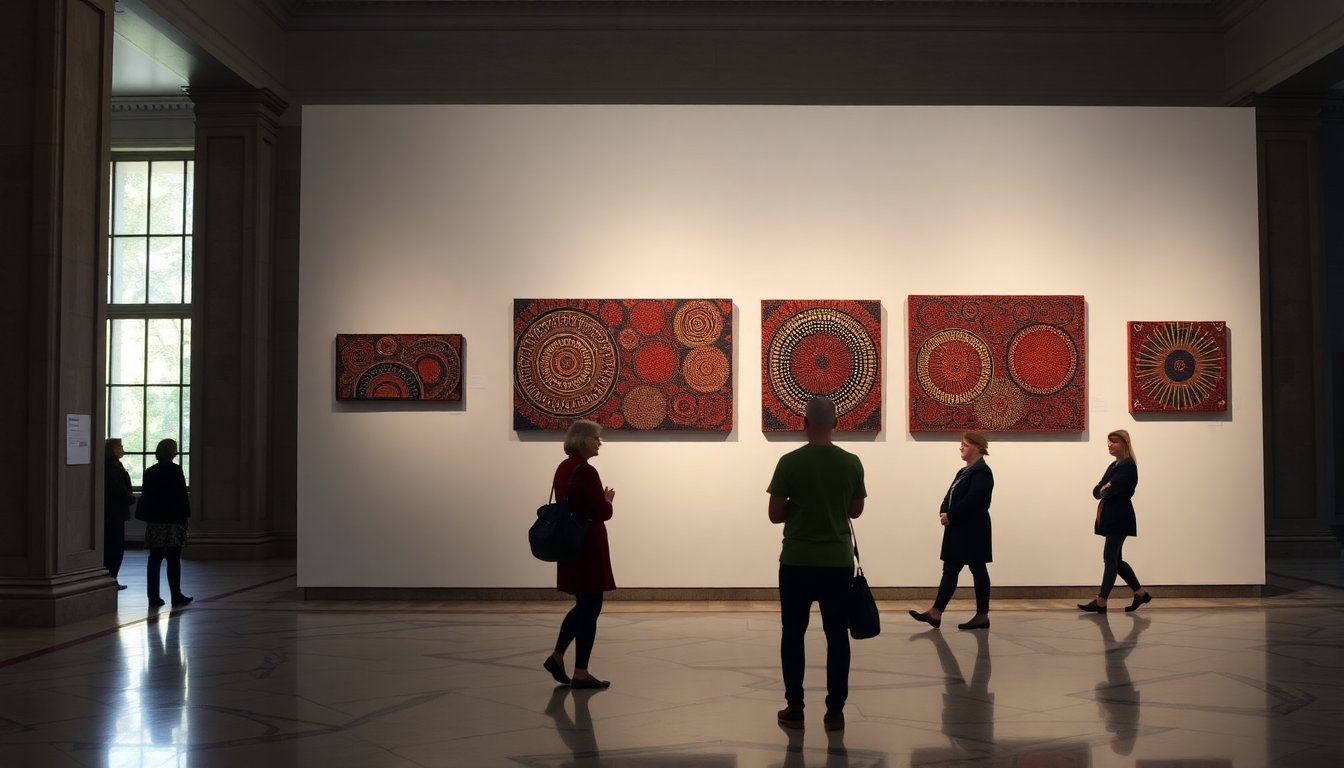
The exhibition titled the stars we do not see at the National Gallery of Art was highly anticipated by admirers of Australian Indigenous art. For decades, advocates have sought a comprehensive presentation of this profound artistic tradition in a major American museum. However, the exhibition has resulted in disappointment, muddling one of the most captivating narratives in modern art history.
Upon its delayed opening, following a pause due to government shutdowns, many were eager to explore the works of over 130 Indigenous artists. The exhibition features more than 200 pieces, including notable works such as a collaborative painting by Tim Leura Tjapaltjarri and Clifford Possum Tjapaltjarri, as well as remarkable bark paintings by John Mawurndjul and Jimmy Njiminjuma, and a stunning sculpture created by 13 women from Maningrida. Despite these highlights, the overall presentation feels disorganized and lacks a coherent narrative.
Incoherence in presentation
This exhibit, which should have stood as a significant milestone for Australian Indigenous art, suffers from a lack of focus. While the intention was to showcase a variety of works, the overwhelming diversity ultimately diminishes the impact of the standout pieces. The exhibit resembles a collection of items hastily gathered, losing the potential for a well-curated exploration of this rich artistic tradition.
Having visited acclaimed exhibitions in Australia, including the retrospective of Emily Kam Kngwarray at Tate Modern, there was hope that the stars we do not see would encapsulate those inspiring experiences and offer a compelling argument for the value of this art form, which has often been misrepresented in the global art scene.
The opportunity for a deeper narrative
This showcase should have been a powerful and thought-provoking display, intertwining intelligent commentary with visual intensity. Instead, it presents itself as an arbitrary assortment, lacking in curatorial vision. For example, imagine curating a thorough examination of revolutionary movements in Western art but filling the space with lesser-known figures, thereby diluting the essence of the movement.
The National Gallery’s decision to feature this traveling exhibition from the National Gallery of Victoria suggests a reliance on a curated selection rather than an independent, robust narrative. While Myles Russell-Cook is credited as the curator, the resulting presentation feels more like a committee-driven collection rather than a cohesive artistic statement.
The historical context of Indigenous art
Understanding the historical context of Indigenous art is crucial to appreciating its significance. Before British colonization began in 1788, around 600 distinct Indigenous nations existed in Australia, each with its language and cultural practices. However, colonial policies inflicted severe trauma and disruption upon these communities, leading to a long struggle for recognition and rights.
Despite these challenges, Indigenous cultures have demonstrated resilience and adaptability. For tens of thousands of years, Aboriginal peoples have created art, from rock paintings to intricate ceremonial designs. Encouragement from Western anthropologists in the early 20th century allowed for a revival of traditional designs on bark, leading to a flourishing of artistic expression in contemporary formats.
Modern movements in Indigenous art
The 1960s and 70s marked pivotal shifts for Indigenous artists in Australia. The land rights movement gained momentum, and significant milestones occurred, such as the 1967 referendum, which acknowledged Indigenous people as part of the population. This era also witnessed the birth of new styles, most notably the emergence of the Papunya Tula movement, which transformed traditional storytelling into contemporary visual art.
These artists, facing various social challenges, began documenting their cultural narratives through painting. The resulting works, often created on unconventional surfaces like discarded materials, showcased a blend of ancient and modern techniques, culminating in an art movement that Robert Hughes described as one of the last great movements of the 20th century.
Future directions for Indigenous art exhibitions
Upon its delayed opening, following a pause due to government shutdowns, many were eager to explore the works of over 130 Indigenous artists. The exhibition features more than 200 pieces, including notable works such as a collaborative painting by Tim Leura Tjapaltjarri and Clifford Possum Tjapaltjarri, as well as remarkable bark paintings by John Mawurndjul and Jimmy Njiminjuma, and a stunning sculpture created by 13 women from Maningrida. Despite these highlights, the overall presentation feels disorganized and lacks a coherent narrative.0
Upon its delayed opening, following a pause due to government shutdowns, many were eager to explore the works of over 130 Indigenous artists. The exhibition features more than 200 pieces, including notable works such as a collaborative painting by Tim Leura Tjapaltjarri and Clifford Possum Tjapaltjarri, as well as remarkable bark paintings by John Mawurndjul and Jimmy Njiminjuma, and a stunning sculpture created by 13 women from Maningrida. Despite these highlights, the overall presentation feels disorganized and lacks a coherent narrative.1