
Table of Contents
Have you ever thought about what lies beneath our feet? Recent scientific discoveries have opened up a fascinating world that exists deep beneath the Earth’s surface, revealing thriving ecosystems packed with a staggering variety of microbes. These previously unexplored realms make up a significant portion of our planet’s total biomass. Understanding these deep biospheres is crucial, as they showcase how life can flourish in extreme conditions, offering insights into the resilience of life itself.
The Discovery of the Deep Biosphere
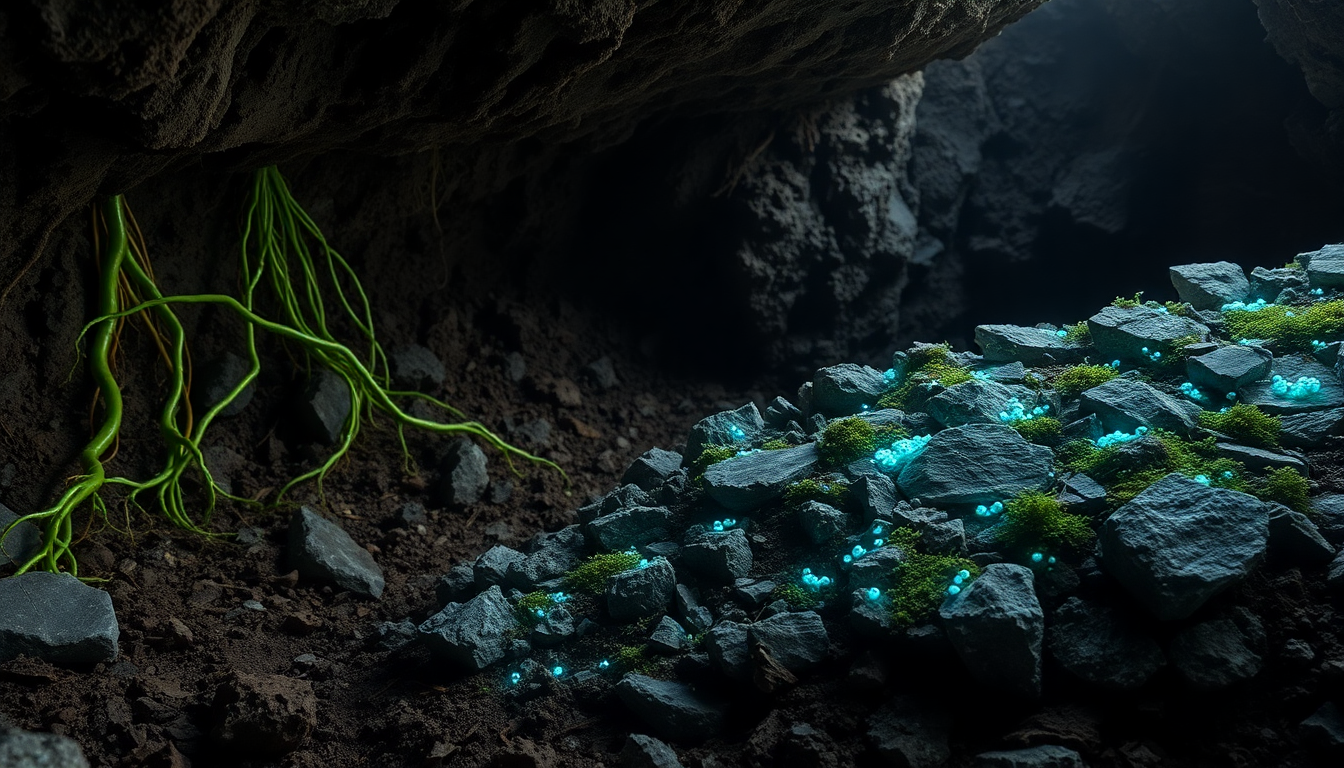
A groundbreaking study led by Zhu Jianxi and He Hongping from the Guangzhou Institute of Geochemistry, along with Kurt Konhauser from the University of Alberta, has uncovered a massive, active deep biosphere. Can you believe that around 95 percent of Earth’s prokaryotic life resides in these depths? This discovery highlights a vibrant ecosystem that significantly contributes to our planet’s biological diversity.
The findings reveal that these prokaryotes have adapted to survive in some of the most extreme and isolated conditions imaginable. With limited sunlight and scarce nutrients, these microorganisms have evolved unique metabolic pathways, allowing them to thrive where other forms of life would struggle. This not only broadens our understanding of biodiversity but also challenges our perceptions of where life can exist. Isn’t it incredible to think about how life can adapt and thrive in such hostile environments?
Survival Strategies of Microbes
So, how do these remarkable microbes survive in the depths of the Earth? The study raises intriguing questions about their biological mechanisms. These organisms have developed specialized adaptations to withstand high pressure, extreme temperatures, and a lack of resources. For example, some microbes tap into chemical energy from minerals, while others rely on unconventional nutrient sources that surface-dwelling organisms can’t access.
This research also reveals the potential ecological roles these deep biosphere microbes play. They might contribute to nutrient cycling, influence geological processes, and even impact the global carbon cycle. By studying these organisms, scientists are uncovering the intricate relationships between life and the environment, emphasizing how interconnected all ecosystems are. It really makes you think about how every little part of our planet plays a role in the bigger picture, doesn’t it?
Implications for Future Research
The implications of these findings go beyond mere curiosity about life in extreme conditions. As we continue to delve deeper into our planet, the potential applications of this knowledge are immense. From biotechnological advancements to understanding the impacts of climate change, insights from deep biosphere research can inform fields like environmental science and astrobiology.
As we face global challenges such as climate change and habitat destruction, grasping the resilience of life in extreme environments may offer valuable lessons. The deep biosphere serves as a powerful reminder of nature’s adaptability and highlights the importance of preserving our planet’s diverse ecosystems. What do you think we can learn from these unseen worlds to better protect our environment? The more we explore, the more we realize just how much we still have to learn about the life that shares our planet.