
Table of Contents
In discussions regarding the MAGA movement, former President Trump has asserted that there is no place for antisemitism among its supporters. This statement marks a notable shift in his stance, particularly in light of his past interactions with various far-right groups. The ongoing debate within the Republican Party regarding the inclusivity of its coalition underscores the complexities involved in balancing differing ideologies and values.
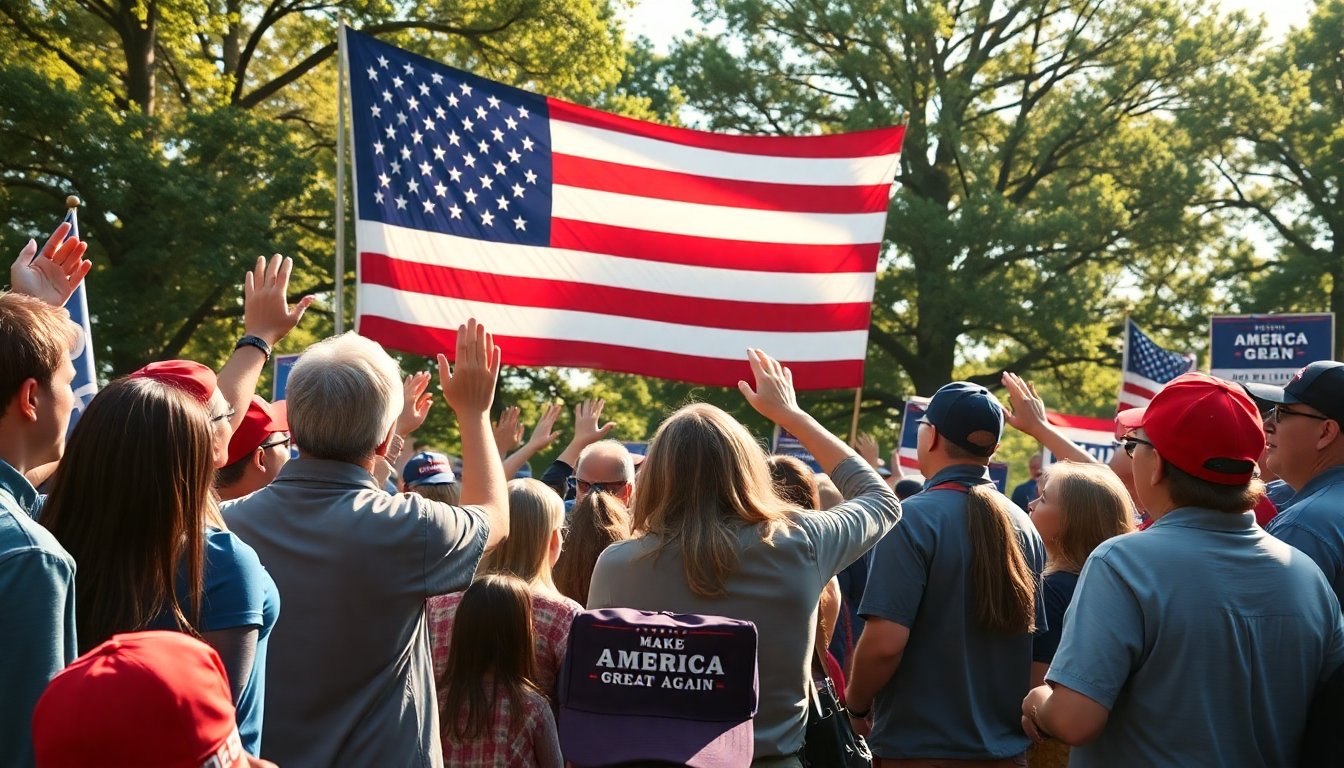
The MAGA movement, which rose to prominence during Trump’s 2016 presidential campaign, is defined by its nativist beliefs and strong sense of nationalism. Central to the movement is the advocacy for policies that prioritize American interests, often perceiving foreign influence and immigration as threats to national integrity. As the movement expands, addressing the extremist elements within it presents a significant challenge.
The evolution of the MAGA ideology
Initially, the slogan “Make America Great Again” resonated with voters disillusioned by the political establishment. Though not a new phrase, having been previously used by figures such as President Reagan, Trump’s adaptation has come to symbolize a broader movement seeking to reclaim a perceived lost greatness.
Core beliefs and values
The foundational beliefs of the MAGA movement are predicated on the idea that America, once a dominant global power, has declined due to various factors, including immigration and globalization. Supporters frequently advocate for policies promoting economic protectionism, such as tariffs on foreign goods, alongside significant reductions in immigration, especially from countries they consider problematic. These views have at times resulted in controversial proposals, including calls for a ban on Muslim immigration.
Additionally, the movement is characterized by a combative stance towards mainstream media, which many supporters perceive as biased. This antagonism has fostered an environment where conspiracy theories and misinformation can thrive, as members often seek affirmation from media outlets that echo their beliefs.
Trump’s relationship with far-right figures
During his presidency, Trump has maintained a complex relationship with individuals and groups on the far-right spectrum. While he has occasionally embraced these figures, his recent assertion that MAGA has no room for antisemitism indicates an attempt to distance himself from extremist rhetoric. This shift appears to respond to growing concerns regarding the direction of the Republican Party and its coalition.
Responses to controversial incidents
A notable event that underscored the tensions within the MAGA movement was the January 6 Capitol attack, where a mob of Trump supporters sought to overturn the election results. This incident raised significant questions about the implications of Trump’s rhetoric and the responsibility of leaders to condemn violence and extremism. In the aftermath, Trump’s supporters often attempted to downplay the event, frequently attributing blame to opposing groups.
Despite his efforts to clarify his stance against antisemitism, Trump has encountered backlash for past remarks and associations with individuals whose beliefs may diverge from mainstream Republican values. The ongoing struggle of the MAGA movement to define its identity and boundaries reflects broader issues of extremism within American politics.
The future of the MAGA movement
As Trump continues to navigate his role within the Republican Party, unifying a diverse coalition while confronting the uncomfortable realities of its extremist elements remains a significant challenge. The debate over the inclusion of far-right ideologies within the MAGA movement is likely to persist, shaping the party’s policies and strategies going forward.
Ultimately, the evolution of Trump’s position on antisemitism mirrors a broader struggle within the Republican Party to reconcile traditional values with the changing landscape of American politics. Ongoing discussions will have profound implications for the MAGA movement and its supporters, influencing the future of political discourse in the United States.