
Table of Contents
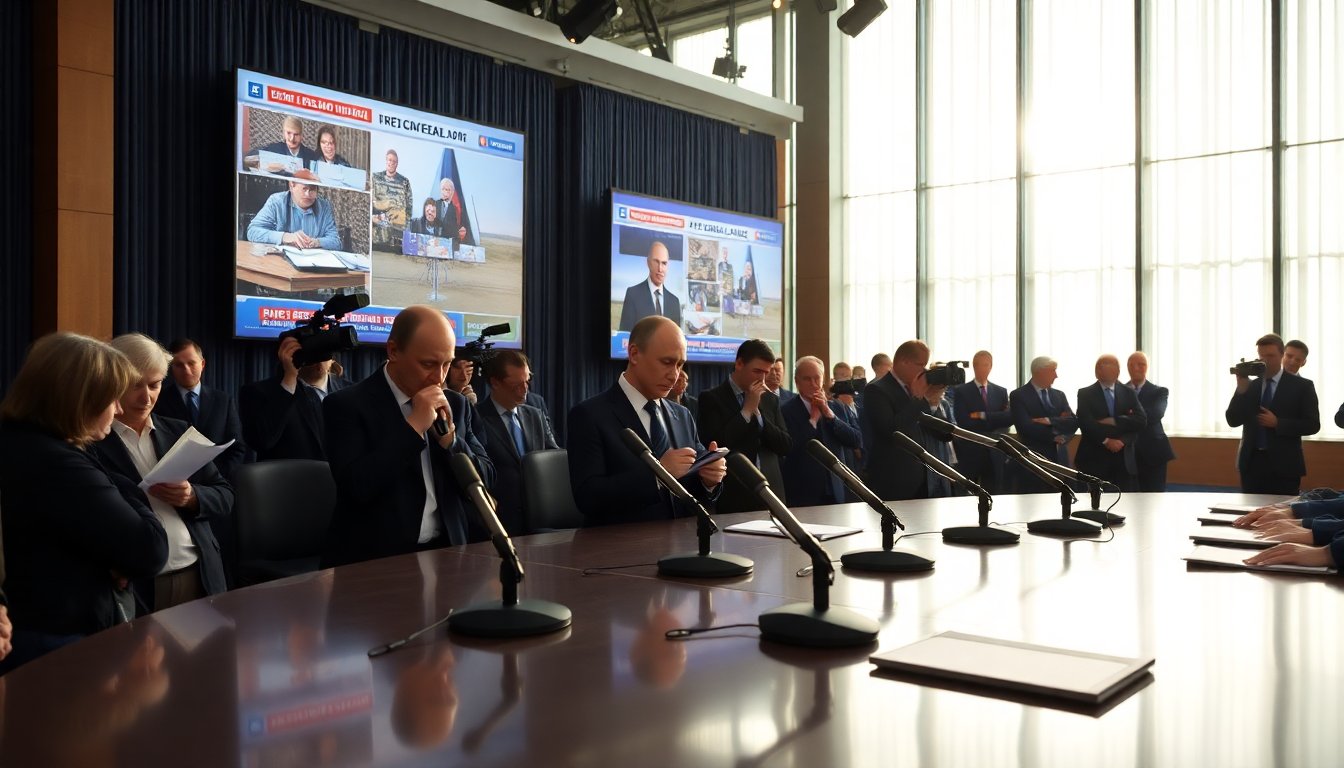
In a recent televised event, President Vladimir Putin engaged in his annual Direct Line, a forum designed for him to field questions from journalists and citizens alike. This year’s session lasted nearly four and a half hours. During this extensive dialogue, Putin addressed various subjects, including the ongoing conflict in Ukraine, international relations, and the economic situation in Russia. However, many of his statements require careful scrutiny to ensure their accuracy.
Dissecting the budget claims
Russian President Vladimir Putin recently addressed the federal budget deficit, asserting it stands at 2.6 percent of the GDP. He projected a reduction to 1.6 percent in the following year, expressing faith in the government’s capability to maintain a balanced budget. This, he attributed to effective governance.
However, these figures warrant scrutiny. The Russian government claims to have achieved a balanced budget while managing extraordinary wartime expenditures, which surpassed $137 billion in 2025. This balancing act largely hinges on tax increases, most notably the rise in the general value-added tax (VAT) from 20 to 22 percent, effective in 2026. The Finance Ministry has made it clear that this tax increase is intended to bolster military and defense needs, essentially financing the ongoing conflict in Ukraine.
Understanding the peace negotiations
President Vladimir Putin addressed allegations concerning Russia’s position on peace talks. He asserted that claims of Russia rejecting a peace proposal are completely unfounded. Putin emphasized that the responsibility to engage in meaningful dialogue rests with Western leaders and the Ukrainian government.
While Russia has not entirely ruled out the possibility of a peace agreement and is engaged in discussions with the United States, Moscow has shown a marked reluctance to make concessions or agree to a ceasefire. Such an agreement would imply recognizing Russia’s control over the territories it occupies, a scenario unlikely to be accepted by Ukraine.
NATO expansion and military justifications
Vladimir Putin has raised concerns about NATO’s expansion, claiming that Western leaders violated promises made to Russia about not expanding the alliance. He argues that the increase of military infrastructure near Russia’s borders justifies these apprehensions.
Yet, a closer look at history shows that no official agreements were made regarding NATO’s expansion during the discussions about Germany’s reunification. While conversations took place, the concessions offered to Soviet leader Mikhail Gorbachev did not include guarantees against NATO’s enlargement.
Assessing domestic laws and repression
In a recent address, President Vladimir Putin described Russia’s foreign agents law as clear-cut, asserting that political activists must simply disclose their funding sources. He stated that no repressive measures exist, but this claim is misleading. Failing to comply with the foreign agent law can result in severe penalties, including imprisonment. For instance, opposition politician Ilya Yashin was sentenced to 22 months in prison for violations of this law.
Putin’s remarks frequently minimize the serious legal consequences faced by individuals designated as foreign agents, despite overwhelming evidence to the contrary. At a meeting of the Presidential Human Rights Council, he inaccurately claimed that the law does not entail prison sentences.
Military operations and responsibility for conflict
In a recent address, President Vladimir Putin discussed the motivations behind Russia’s military operations in Ukraine. He indicated that if Russia were treated with respect, military actions would not have been necessary. This marks a significant narrative shift, suggesting that a perceived lack of respect from Western nations has played a role in the ongoing conflict.
Putin also sought to distance Russia from the responsibility for the casualties resulting from the war. He attributed the unrest to what he called an unconstitutional coup in Ukraine, thereby shifting the blame onto the Ukrainian government and its allies.
While Putin’s statements provide insight into his perspective, rigorous fact-checking reveals numerous discrepancies regarding his claims about the economy, military strategies, and the broader geopolitical context. As the situation in Ukraine continues to develop, careful scrutiny of such statements remains crucial.