
Table of Contents
The events at Bondi Beach, where a father and son opened fire during a Jewish festival, have raised significant concerns across Australia. This tragic incident resulted in the deaths of fifteen individuals and left many others injured, sparking a nationwide discussion about terrorism and community safety. Authorities have uncovered crucial information linking the attackers to extremist ideologies.
Details of the attack
On the evening of the Chanukah celebration, Naveed Akram, 24, and his father, Sajid Akram, 50, initiated a violent attack at a gathering by the beach. The incident was marked by its brutality, as the assailants fired upon attendees, causing numerous casualties and injuries among innocent participants. Naveed, who was later hospitalized under police surveillance, survived the assault, while Sajid was fatally shot during a confrontation with law enforcement.
Connection to terrorism
Following the incident, it was disclosed that Naveed Akram had previously drawn the attention of the Australian Security Intelligence Organisation (ASIO). In 2019, ASIO investigated him due to his connections with a Sydney-based Islamic State (IS) cell. However, he was not considered an immediate threat at that time, raising concerns regarding security protocols.
Prime Minister Anthony Albanese has indicated that the motivations behind the attack seemed to be influenced by Islamic State ideology. Two homemade IS flags were found in the vehicle used by the attackers, further substantiating their extremist beliefs. The Prime Minister condemned the act as a manifestation of pure evil and antisemitism, emphasizing the necessity for enhanced national security measures.
Community response and security measures
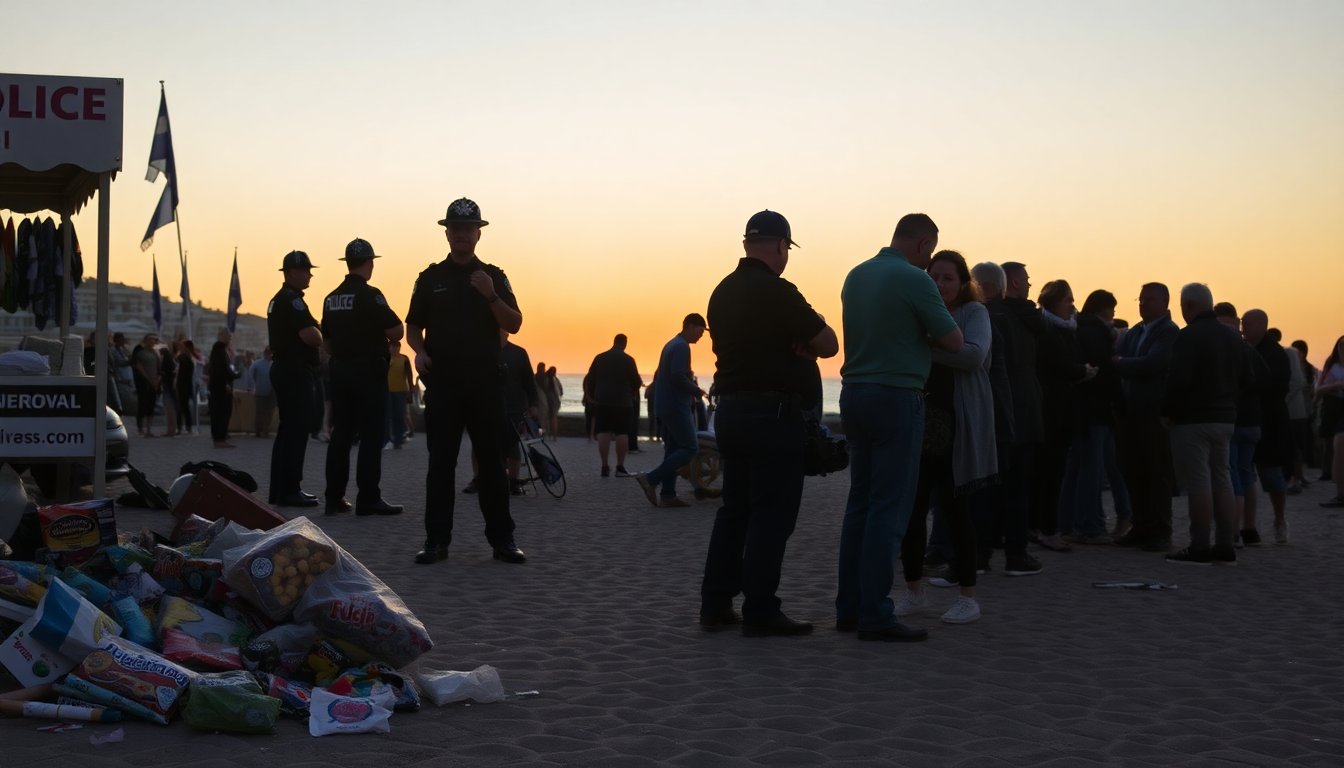
In response to the attack, the New South Wales Police have implemented enhanced security measures around places of worship throughout Sydney. A total of 328 officers have been deployed to ensure the safety of communities, particularly those observing religious events. This initiative, known as Operation Shelter, aims to reassure the public and prevent further incidents.
Investigations and ongoing concerns
Law enforcement agencies are intensifying their investigations into the events leading up to the shooting, focusing on the backgrounds of Naveed and Sajid Akram. Reports indicate that Sajid had possessed a licensed firearm for over a decade, raising issues regarding the regulation and oversight of firearm ownership among individuals with potential extremist affiliations. NSW Police Commissioner Mal Lanyon confirmed that while the shooters acted independently, their connections to broader terrorist networks are being thoroughly examined.
Eyewitness accounts from neighbors describe a family that appeared unremarkable, leaving many in the community astonished by their actions. Local residents voiced their disbelief, noting they had never suspected anything unusual in the Akram household. As investigations proceed, the community is left to contend with the aftermath of violence that has now tarnished a notable Australian location.
Impact on the Jewish community
The shooting has notably impacted the Jewish community in Sydney, sparking memorials and gatherings to honor the victims. Rabbi Yossi Shuchat led a candle-lighting ceremony at the Bondi Pavilion, emphasizing that light will always triumph over darkness. This message resonates profoundly in the aftermath of such a tragic event, as community members unite to support one another during this challenging period.
Bondi Beach shooting highlights the need for community vigilance
The events at Bondi Beach underscore the persistent threat of extremism and the critical importance of community vigilance. As the investigation continues, authorities face calls to reevaluate their strategies to prevent future incidents and safeguard vulnerable groups.
The Bondi Beach shooting will be remembered not only for its tragic impact but also for the necessary discussions it has initiated about security, community solidarity, and combating hate-driven violence.