
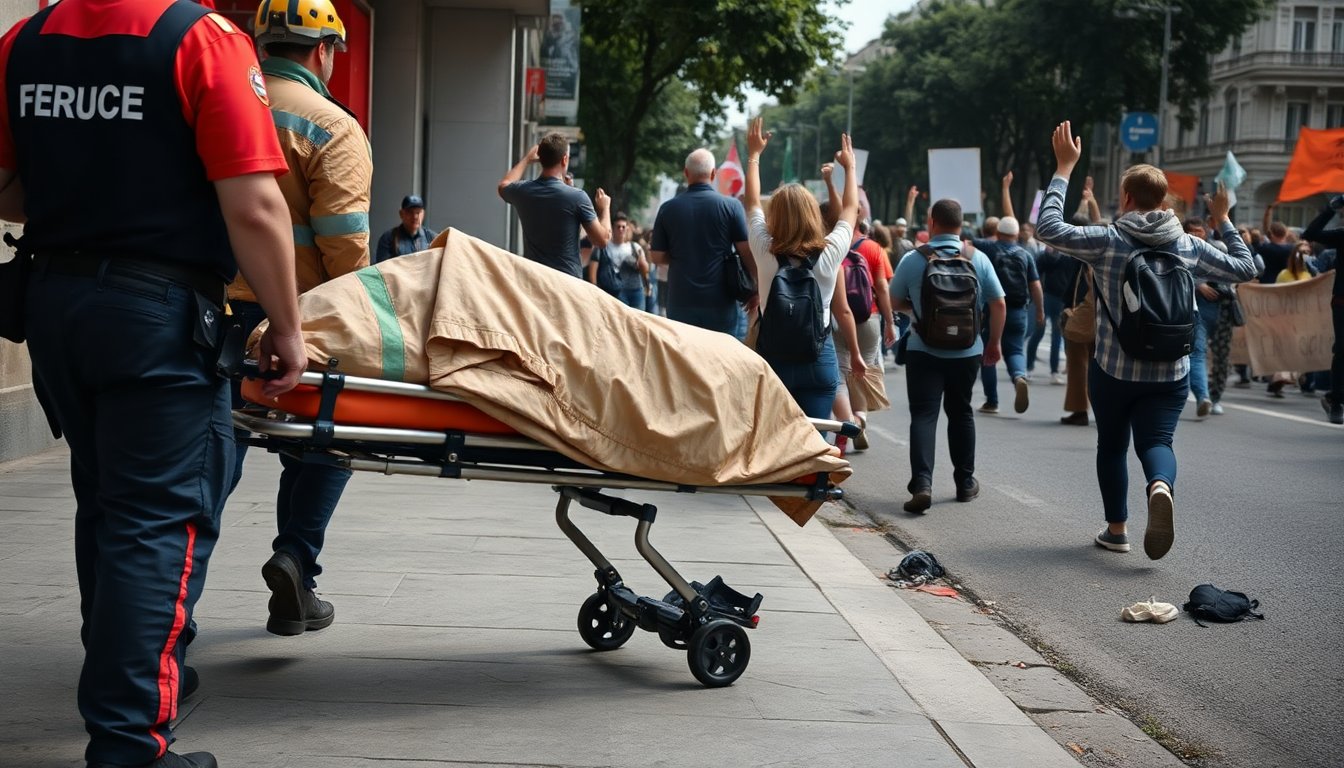
A federal agent was hurt during an anti‑ICE protest that moved through downtown Los Angeles on Friday, Feb. 13, 2026, the Los Angeles Police Department confirmed. The Los Angeles Fire Department transported the agent to a hospital; authorities have not released the person’s condition or identified which federal agency they work for.
What began as a student-organized campus walkout wound its way into the city and toward federal buildings, according to law enforcement. Demonstrators blocked streets, waved flags and carried signs. Video and eyewitness accounts show a segment of the crowd breaking off to vandalize property near federal facilities and, police say, hurling objects at officers. Those who allegedly attacked federal personnel later blended back into the larger march, which complicated immediate identification and arrests.
How the march unfolded
Organizers routed the walkout through downtown. Marchers temporarily halted traffic on major thoroughfares and gathered in large groups. Law enforcement says tensions rose when a subset of participants began smashing property and throwing projectiles. Officers and federal personnel moved to secure federal sites; during those confrontations at least one federal agent was struck and taken to a hospital.
Authorities say the fluid nature of the crowd made arrests difficult. People accused of assaulting federal agents rejoined the main procession, mixing with other demonstrators. Officials have not released totals for arrests or additional injuries.
Police response and on-the-ground incidents
City and federal officers monitored the demonstration with a mix of crowd-control tactics and aerial surveillance, while attempting to keep traffic moving. News footage and social clips show protesters slowing vehicles and carrying a range of flags and placards, some bearing provocative messages that added to the charged atmosphere.
Police intervened to prevent the crowd from entering restricted zones and to reopen blocked streets. Eyewitnesses and videos documented scuffles at several intersections, and officers issued dispersal orders in at least one location. The LAPD says first responders provided medical care at the scene to both attendees and law-enforcement personnel.
Investigations are ongoing. Officials plan to review body-worn camera and aerial footage as they piece together what happened. The LAPD and federal partners have declined further comment while the inquiry continues.
Detentions, evidence and investigative hurdles
Police confirmed several people were detained on suspicion of offenses related to the disturbance; the department has previously said it expects felony vandalism charges in at least some cases. Investigators face familiar challenges: moving crowds, brief encounters and a tendency for suspects to melt back into larger groups make positive identification difficult.
Digital and surveillance video have produced leads, but corroborating visual material with witness statements remains essential. Prosecutors must also establish intent or direct participation before filing charges, and investigators must preserve chain-of-custody and constitutional protections when collecting evidence. Civil‑liberties groups have pushed for transparency, warning against overreach in surveillance of lawful protesters.
To build cases, authorities are canvassing for witnesses, requesting footage from nearby businesses and conducting forensic analyses of available material. Officials say a careful legal review will guide the timing and scope of any charges.
What began as a student-organized campus walkout wound its way into the city and toward federal buildings, according to law enforcement. Demonstrators blocked streets, waved flags and carried signs. Video and eyewitness accounts show a segment of the crowd breaking off to vandalize property near federal facilities and, police say, hurling objects at officers. Those who allegedly attacked federal personnel later blended back into the larger march, which complicated immediate identification and arrests.0
What began as a student-organized campus walkout wound its way into the city and toward federal buildings, according to law enforcement. Demonstrators blocked streets, waved flags and carried signs. Video and eyewitness accounts show a segment of the crowd breaking off to vandalize property near federal facilities and, police say, hurling objects at officers. Those who allegedly attacked federal personnel later blended back into the larger march, which complicated immediate identification and arrests.1
What began as a student-organized campus walkout wound its way into the city and toward federal buildings, according to law enforcement. Demonstrators blocked streets, waved flags and carried signs. Video and eyewitness accounts show a segment of the crowd breaking off to vandalize property near federal facilities and, police say, hurling objects at officers. Those who allegedly attacked federal personnel later blended back into the larger march, which complicated immediate identification and arrests.2