
Table of Contents
The recent shooting of Renee Nicole Good, a 37-year-old woman, by an officer from Immigration and Customs Enforcement (ICE) has sparked widespread protests and increased tensions in Minneapolis and beyond. This incident occurred amid a broader crackdown on immigration enforcement, prompting the U.S. Department of Homeland Security (DHS) to announce the deployment of hundreds of additional officers to the area to enhance the safety of ICE agents already present there.
During a weekend marked by demonstrations, thousands gathered in Minneapolis to voice their outrage over the fatal shooting. The incident has garnered national attention, with officials such as Homeland Security Secretary Kristi Noem defending the actions of the involved agents. However, many local officials and community members contest the narrative presented by federal authorities.
Nationwide protests erupt
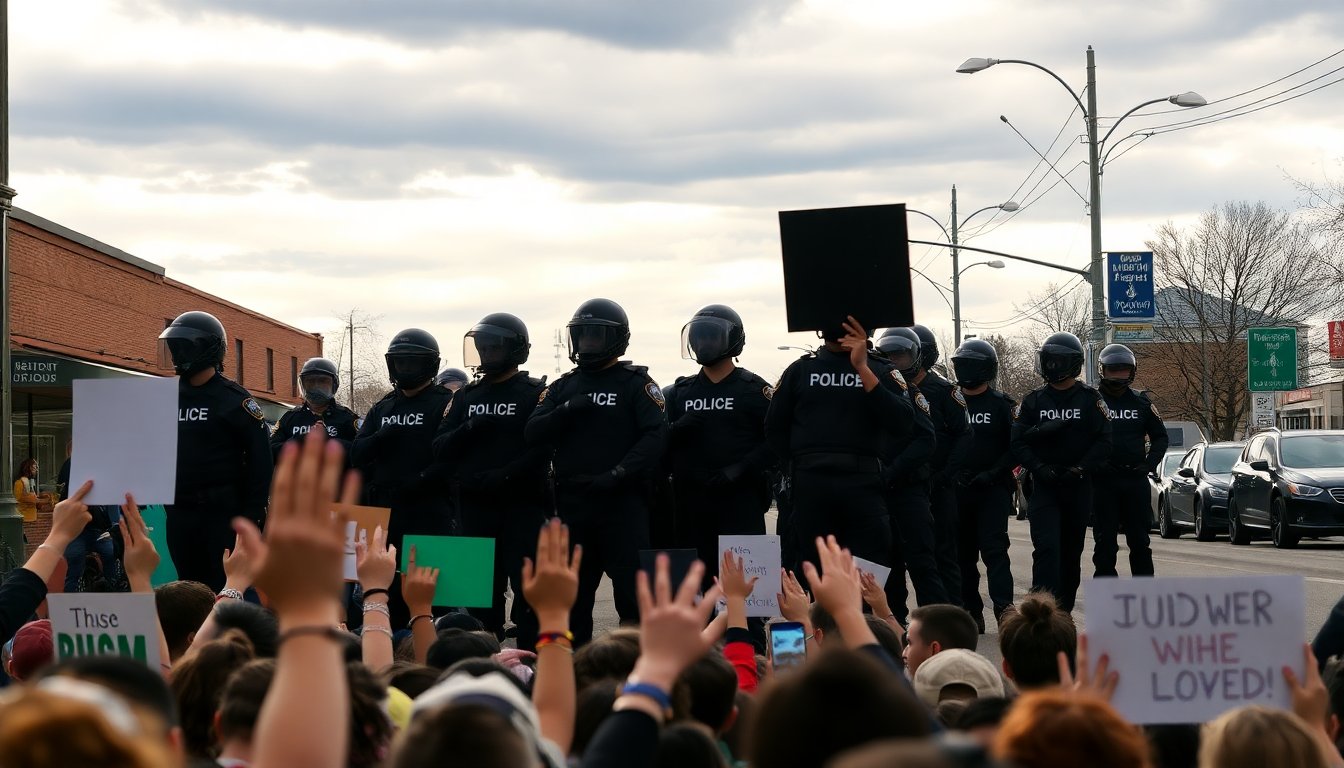
Across the country, more than a thousand rallies took place as citizens expressed their dissatisfaction with federal immigration policies and the tragic death of Good. In Minneapolis, protests were particularly intense, with demonstrators demanding justice and accountability following her death. Marchers chanted slogans and carried signs condemning both ICE operations and the broader immigration enforcement strategy.
Video footage from various cities, including Chicago and Pittsburgh, reflected similar sentiments among the crowds, although none matched the size of the gathering in Minneapolis. In New York, demonstrators blocked traffic outside Trump Tower, amplifying their calls for change and directing chants at political leaders.
Details surrounding the shooting
The shooting took place on a Wednesday morning when ICE agents attempted to detain Good, who was reportedly involved in community efforts monitoring ICE activities. According to the federal agency, she allegedly drove her vehicle toward officers, prompting the deadly response. However, local authorities, including Minneapolis Mayor Jacob Frey and Governor Tim Walz, have deemed the shooting unjustified, referencing bystander footage suggesting that Good’s vehicle was moving away from the agents when she was shot.
Conflicting accounts and investigations
Following the incident, Noem has maintained that the officer acted in self-defense, asserting that Good posed an imminent threat. However, the complexities surrounding the incident have led to a criminal investigation initiated by local law enforcement. This inquiry is further complicated by reports of the FBI’s reluctance to cooperate with state investigators.
As tensions heightened, Noem appeared on multiple news platforms, reiterating the need for a thorough investigation while emphasizing the officer’s perspective. The situation raises questions about the protocols governing ICE operations and their implications for community safety.
The community’s response
Good, described by her family and friends as a compassionate and caring individual, left behind three children. Her mother expressed profound grief, describing her daughter as one of the kindest people one could know. The community’s mourning has been evident, with memorials appearing near the site of the shooting.
Statements from local leaders reflect significant concern about the implications of such violent encounters. Senator Tina Smith expressed her heartbreak over Good’s death, emphasizing the need for accountability and reform in immigration enforcement practices.
The role of federal authorities
The decision to send additional federal agents to Minnesota can be viewed as a direct response to the protests and ongoing scrutiny of ICE operations. The DHS’s prior deployment of around 2,000 officers to the Minneapolis-St. Paul area was noted as one of the largest operations in its history. With the increase in federal presence, community members are left to consider the implications for public safety and trust in law enforcement.
During a weekend marked by demonstrations, thousands gathered in Minneapolis to voice their outrage over the fatal shooting. The incident has garnered national attention, with officials such as Homeland Security Secretary Kristi Noem defending the actions of the involved agents. However, many local officials and community members contest the narrative presented by federal authorities.0