
Table of Contents
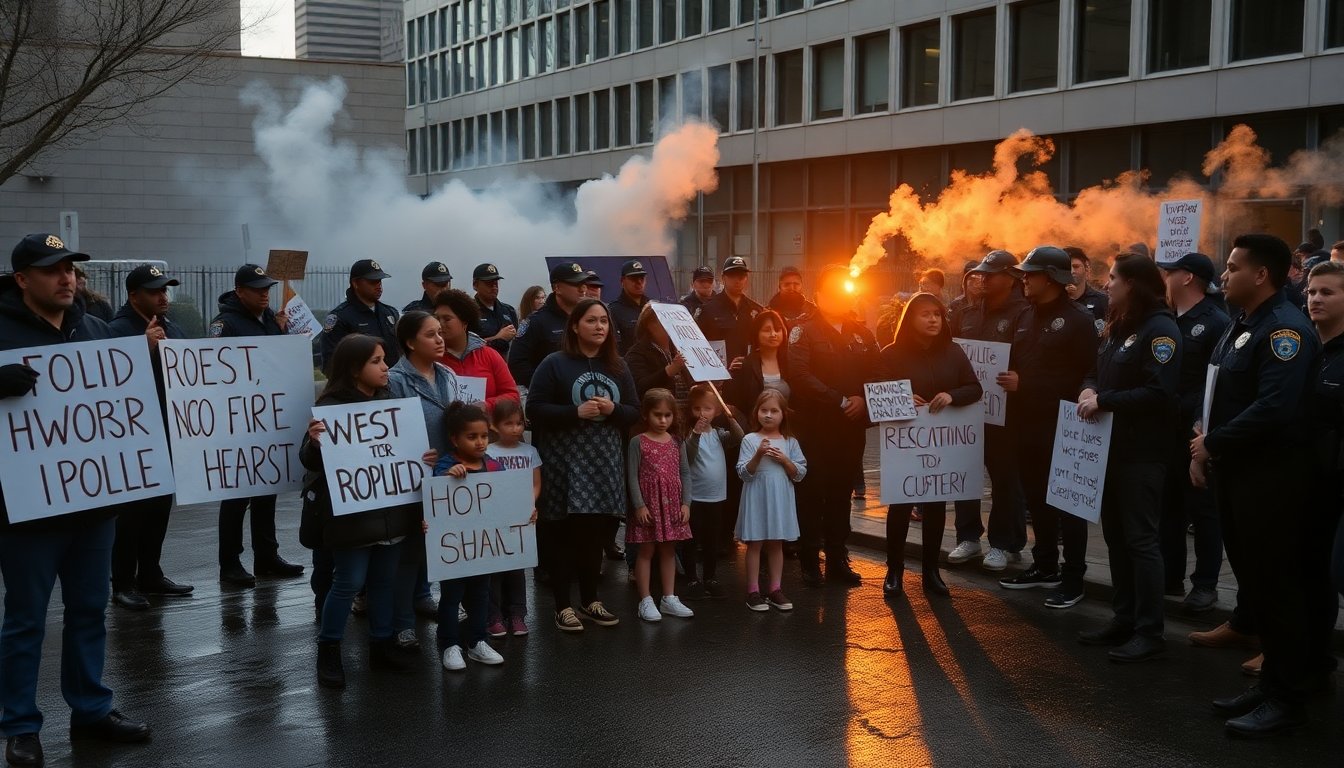
In a pivotal legal ruling, U.S. District Judge Michael Simon has temporarily prohibited federal agents from using tear gas during protests outside the U.S. Immigration and Customs Enforcement (ICE) facility in Portland, Oregon. This decision comes in response to multiple instances where federal officers deployed gas against demonstrators, including families and children, despite local officials claiming the protests were predominantly peaceful.
Details of the court order
Judge Simon’s directive explicitly instructs federal law enforcement to abstain from using any chemical agents or projectile munitions against individuals who do not pose an immediate threat of physical harm. Additionally, the ruling requires federal officers to avoid targeting critical areas such as the head, neck, or torso unless there is a substantial justification to employ deadly force.
Constitutional implications
In his written order, Judge Simon emphasized that the United States is at a significant crossroads. The principles of free speech and peaceful protest must be upheld and celebrated. He stated, “In a well-functioning constitutional democratic republic, free speech, courageous newsgathering, and nonviolent protest are all permitted, respected, and even celebrated.” The judge highlighted the essential role of an impartial judiciary in maintaining the constitutional integrity of the nation.
Background of the lawsuit
This ruling stems from a lawsuit filed by the American Civil Liberties Union (ACLU) of Oregon. The organization sought to address the excessive use of force by federal officers during protests, arguing that these actions violate the protesters’ First Amendment rights. The ACLU contended that the use of chemical munitions represented retaliation against individuals exercising their constitutional rights.
Federal response to protests
The Department of Homeland Security defended its actions by stating that federal agents are trained to use the minimum force necessary to protect themselves and the public. A spokesperson for the department emphasized that the measures taken were both appropriate and constitutional. However, the American Civil Liberties Union (ACLU) and various local officials have raised concerns over the escalation of violence during protests. This concern has intensified following tragic incidents of police violence reported across the country.
Local reactions and ongoing tensions
In the wake of the ruling, Portland Mayor Keith Wilson voiced his strong disapproval of federal agents’ actions, calling for their immediate withdrawal from the city. He described the recent protests as peaceful and condemned the deployment of tear gas and other crowd-control tactics against demonstrators who posed no threat. Wilson’s remarks reflect a wider community concern regarding the federal government’s approach to handling protests and immigration-related matters.
Community impact and further legal actions
Residents near the ICE building have expressed concerns about health and safety issues stemming from exposure to tear gas. In response, some community members have initiated lawsuits aimed at restricting the use of tear gas by federal agents near their homes. These legal actions underscore the ongoing tension between local communities and federal authorities regarding immigration enforcement and the rights to protest.
The temporary restraining order, which is set to last for 14 days, raises questions about its potential effects on future protests and federal actions. The community’s reaction to this ruling may influence the ongoing discourse about law enforcement practices and civil liberties across the United States.