
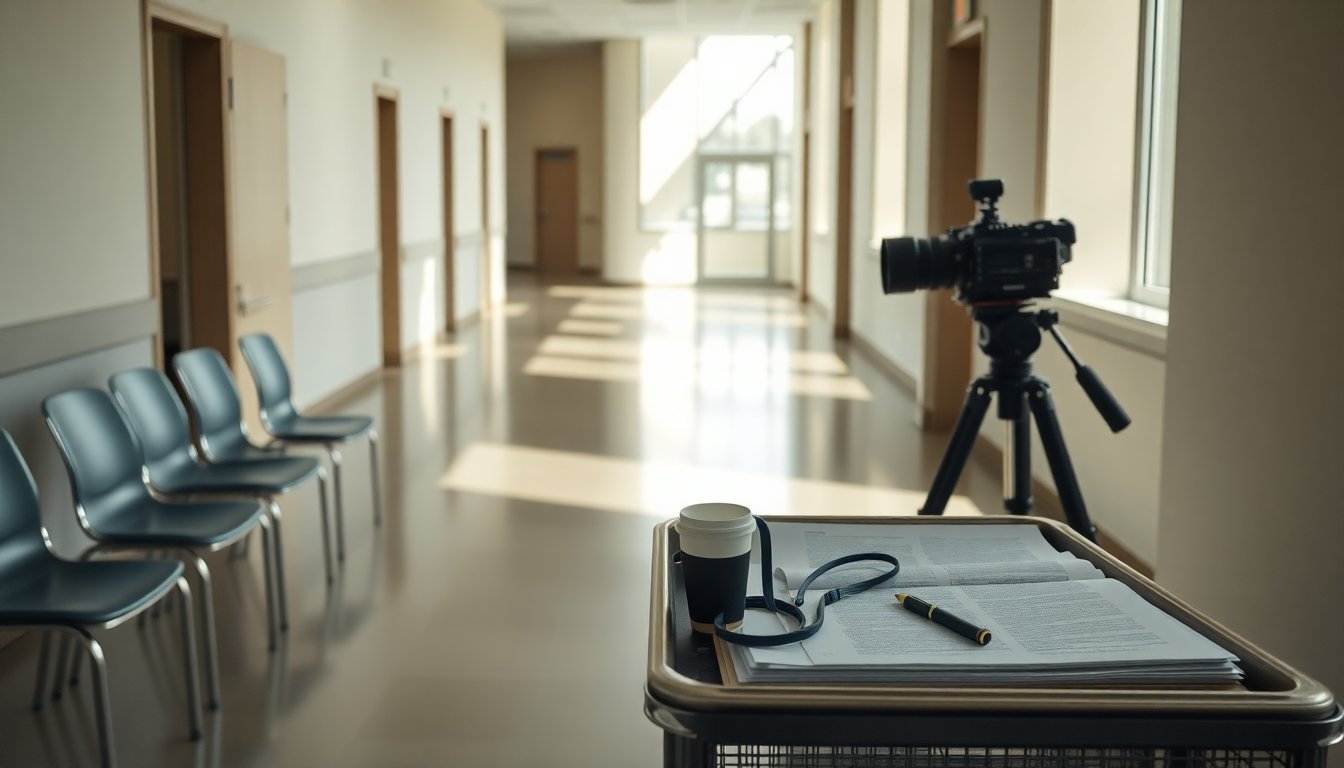
Frederick Wiseman (1930–2026) reshaped what a documentary could be. For more than fifty years he turned the cinema’s lens toward institutions — schools, hospitals, courts, libraries, municipal agencies — and treated their everyday procedures as material worthy of sustained attention. Working through his independent company, Zipporah Films, he assembled a singular body of work that watches rather than tells.
His signature approach was spare and disciplined. Eschewing voice-over, conventional interviews and musical cues, Wiseman favored long takes, careful framing and patient editing. In the cutting room he stitched sequences together like sentences, letting juxtaposition and rhythm do the argumentative work. The result feels less like journalism with a thesis and more like an ethnography of civic life: you watch how systems operate, how power circulates, and how people navigate the routines that organize communal existence.
That observational mode proved quietly provocative. By refusing an overt narrator’s judgment, his films invite viewers to make their own moral and political reckonings. They expose priorities and blind spots — the ways institutions manage care, enforce rules, allocate resources — without spoon-feeding conclusions. Films such as Titicut Follies, Hospital, Welfare and Juvenile Court are built from procedural detail: meetings, rounds, hearings, candid conversations. Rather than crafting character-driven arcs, Wiseman focused on patterns — the choreography of everyday authority.
Watching his work is also an ethical exercise. Early controversy around Titicut Follies, which documented life in a psychiatric facility, forced public debate about consent, vulnerability and the filmmaker’s responsibilities. Throughout his career Wiseman returned to that tension: how to make institutions transparent while respecting dignity. His answer was practical and modest — sustained, unobtrusive observation that reveals systems without imposing a didactic voice.
His films map recurring themes across civic and cultural life. High School and Law and Order dissect authority and discipline; Public Housing, In Jackson Heights and City Hall track negotiation and municipal management. He turned the same patient gaze on cultural institutions — Ex Libris: The New York Public Library and National Gallery make visible the labor, decisions and routines that keep public access possible. He even brought his method into more intimate settings: Ballet and La Danse record the regimen behind performance; Menus-Plaisirs – Les Troisgros and A Couple apply the approach to kitchens, families and private archives. Across venues, one subject persists: the forms and practices through which people live together.
Critics, scholars and institutions have steadily acknowledged Wiseman’s influence. His films reshaped debates about representation, public space and the ethics of filming everyday life, and now serve as resources for researchers and teachers. Colleagues remember him as methodical and uncompromising — a filmmaker who prized fidelity to the scene over rhetorical flourish. His archives and prints continue to inform documentary practice and institutional studies.
There is also a practical side to his legacy for organizations and companies thinking about transparency and stewardship. Wiseman’s work suggests that careful, long-form documentation can foster accountability: showing how things actually work invites scrutiny, builds trust, and points toward improvement. Cultural institutions in particular face a trade-off between preservation and access; the stewardship he modeled makes the case that safeguarding collective memory has social as well as cultural value.
Wiseman’s career was recognized with major honors late in life, including a Golden Lion for lifetime achievement at Venice and an Academy Honorary Award. Those accolades underscore a singular contribution to film language and civic imagination: a practice of patient observation that prizes evidence over exhortation.
He worked independently for decades through Zipporah Films. He was widowed after the death of his wife, Zipporah Batshaw Wiseman, in 2026; they had been married 65 years. He is survived by his sons David and Eric, three grandchildren, and longtime collaborator Karen Konicek.
For filmmakers and institutions alike, the practical lesson is clear. Long-form observation — the kind of steady, attentive looking Wiseman practiced — uncovers routines and relationships that fast-paced formats miss. It can help institutions become more transparent and accountable, and it offers a model for documentary work that is patient, ethically minded and civic in scope. Above all, his films leave a simple but powerful invitation: look closely, listen long, and let the rhythms of ordinary public life tell their own story.