
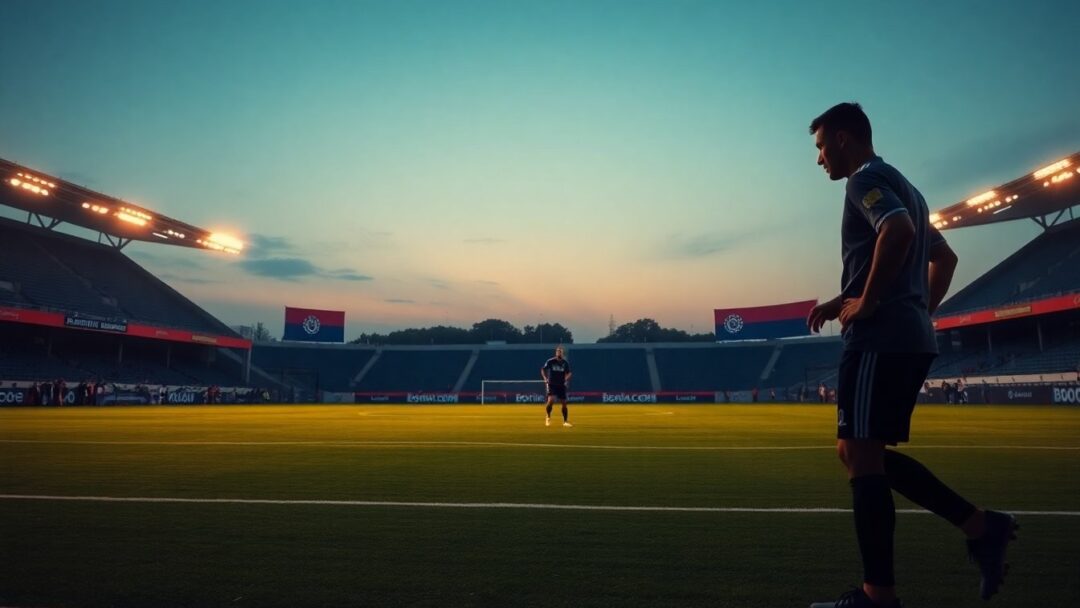
The stage is set for a historic clash on July 1, as Bosnia and Herzegovina prepares to face the United States at the San Francisco Bay Area Stadium in the World Cup’s round of 32. This is more than just a football match; it’s a testament to a nation’s resilience and unity. Thirty years after a devastating war, Bosnia’s players have achieved the unprecedented, reaching the knockout stage of the tournament. This feat, however, is just the beginning of a story that resonates deeply with Bosnians worldwide, from St. Louis to Stockholm and Sarajevo to Sydney.
The Bosnian team’s journey is a powerful narrative of hope and unity. In 1995, the Srebrenica genocide claimed the lives of more than 8,000 Bosnian men and boys. Today, several players taking the field for Bosnia are the children of survivors of that genocide. Others are the offspring of families displaced by ethnic cleansing. Players like Esmir Bajraktarević, born in Wisconsin to parents from Srebrenica, carry Bosnia’s painful history in his blood.
The Diaspora’s Role in Bosnia’s Football Success
The Bosnian football team’s success is a paradoxical outcome of the war that tore the country apart. The diaspora created by the conflict has ironically become one of Bosnia and Herzegovina’s greatest national strengths. Young men raised in the United States, Sweden, Austria, Germany, the Netherlands, and elsewhere have chosen to represent a country they first knew through family stories of pain and loss. Their commitment reminds us that national identity is about more than birthplace; it is about belonging.
The lyrics of Dubioza Kolektiv’s unofficial World Cup anthem, I Am from Bosnia – Take Me to America capture this paradox beautifully. The song’s refrain, Take me to the Golden Gate; I will assimilate reflects the duality of Bosnia’s modern identity. The team’s success has become a symbol of a shared civic identity that transcends ethnic divisions.
A Meritocracy on the Pitch
For more than thirty years, Bosnia and Herzegovina’s political life has been organized around the management of ethnic difference. The Dayton Peace Accords ended the war in 1995 but also embedded ethnicity as the organizing principle of politics. This compromise secured peace but has rewarded politicians who seek office based on ethnic identity rather than competence.
The national football team operates on a different principle. Nobody earns a place in the squad because of their ethnicity. Players are selected because they are the best. Position is earned through high performance. Authority rests with manager Sergej Barbarez, whose task is to build the strongest possible team, not balance competing political constituencies. On the pitch, Bosnia and Herzegovina becomes something its politics has too rarely allowed it to be: a meritocracy.
The team also embodies a civic ideal largely absent from Bosnia’s politics. It represents one country rather than competing constituent peoples and ethnicities, helping to explain why it resonates so deeply across Bosnia and among its diaspora.
Challenging Political Divisions
Reports that authorities in some predominantly Serb-controlled towns have sought to discourage or restrict public screenings and celebrations of the national team’s World Cup run are revealing. A football team capable of bringing citizens together poses a challenge to a political project built on keeping people apart.
Every spontaneous celebration beneath the flag of Bosnia and Herzegovina challenges the central claim of ethnic nationalists: that the country’s people have no meaningful future together. As someone put it, a politics that fears joy is deeply insecure.
Football cannot resolve Bosnia and Herzegovina’s constitutional deadlock. It cannot reform institutions, strengthen the rule of law, or reverse the exodus of young people seeking opportunity abroad. However, it can show that merit can prevail and that when citizens unite around a common purpose, they are stronger than any narrow political project.
Across Bosnia and its diaspora, children are discovering heroes whose greatest achievement is not simply winning football matches but showing that talent matters more than identity and that leadership can unite rather than divide. This generation of Bosnian footballers—Džeko, Lukić, Dedić, Vasilj, and many others—has inherited the memory of war without inheriting its backward logic.
Whatever happens on the pitch, these players have already changed their country. Not because they have reached the last 32 of a World Cup, but because they have shown that Bosnia’s future need not be imprisoned by its past. For ninety minutes at a time, they have offered a vision of Bosnia and Herzegovina in which merit outweighs division, trust overcomes fear, and a shared civic identity is allowed to flourish.
That is more than a football lesson. It is a political one. May it prevail.


