
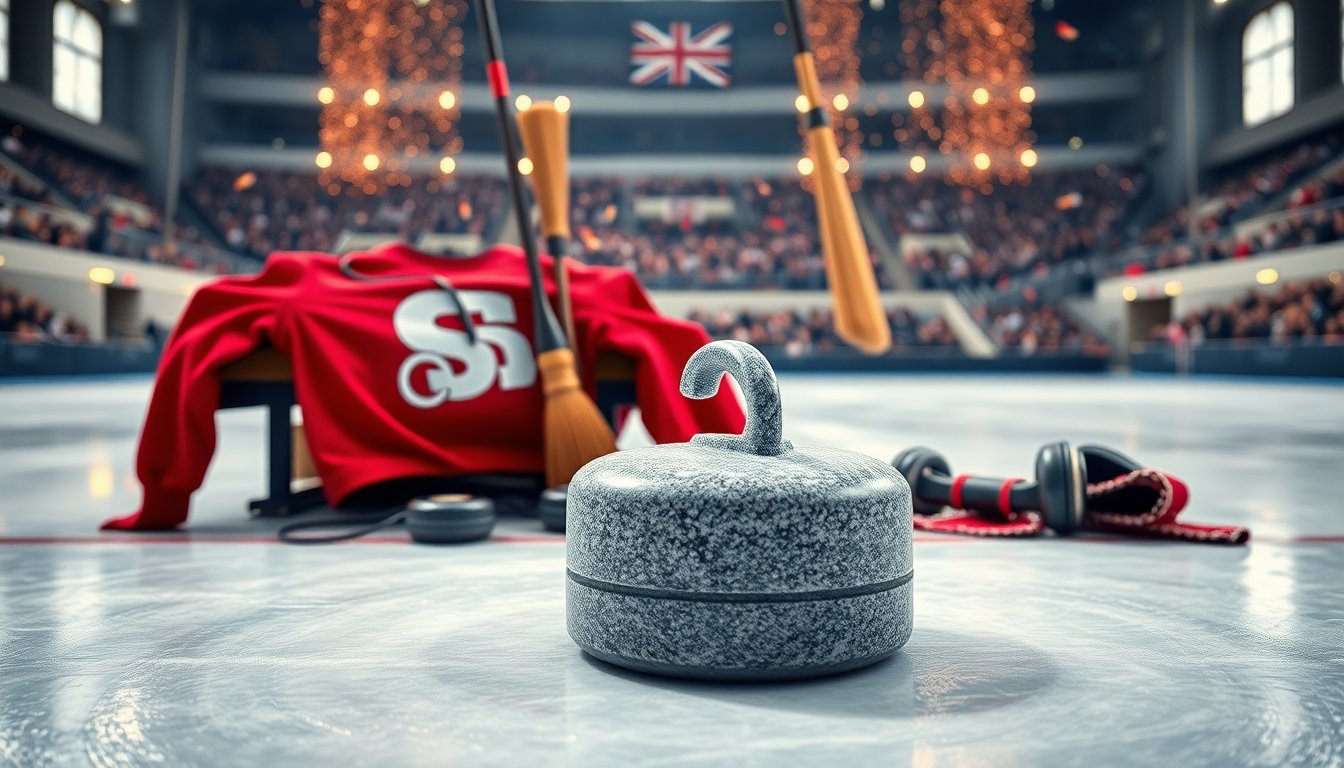
The Rock League in Toronto produced one of its most memorable moments when Stefania Constantini came back after a 16-hour trip home to Italy and immediately altered the course of Frontier’s week. Teammates had been treating her team jersey like a talisman, and when Constantini stepped onto the sheet she turned a looming defeat into a narrow victory that kept her team in contention. The scene — teammates huddled, rivals conferring across the ice, and hundreds of fans erupting — underscored how much of the league’s energy comes from live, unpredictable competition.
That finish carried more than emotion; it had implications for the standings and for how the league’s short-season format is being judged. While organizers continue to tweak broadcast and in-venue production, the on-ice drama has given early proof that the format and new team structures are engaging both athletes and viewers. Behind the scenes, the ownership group is tracking metrics and investor interest, but the most visible validation so far has been the kind of competitive tension that fans remember long after they leave the arena.
The comeback that mattered
Frontier trailed Northern United 6-2 entering the seventh end in a match that would hinge on the women’s game. With the hammer — the final-stone advantage — Constantini faced a high-stakes draw that could swing multiple points. A league rule that awards extra value when a stone covers the pinhole in the final end added strategic weight; a stone over the pinhole could count as two, making placement critical. Constantini first produced a massive draw that forced a tiebreaker and then executed the pressure shot again in the determining play, prompting a roar from the crowd and flipping a potential loss into a 2-1 overall team victory.
On the ice, veterans and new partners conferred constantly: long-time rivals were seen plotting together and Frontier’s Grant Hardie and general manager Chris Plys were actively advising. Hardie later noted how the group leaned on each other’s reads and instincts during that stretch. The result preserved Frontier’s playoff hopes and provided a vivid example of why the league’s condensed format can create intense, consequential moments quickly.
Format, production and the business case
Nic Sulsky, CEO of The Curling Group, which operates the Rock League, framed the week as a trial for product, broadcast and investor appetite. He acknowledged there have been technical hiccups and adjustments to the in-arena videoboard, but emphasized the central win: curlers embraced the format and produced memorable plays. Sulsky described the kind of live moments the league wants to create — emotional, shareable and conversation-starting — and stressed that product fixes can come later, while athlete engagement is harder to buy.
Sulsky also pointed to behind-the-scenes indicators of traction: a notable uplift in U.S. social followers and the exposure from streaming on ESPN+. At the same time, attendance hasn’t matched some expectations, which he said is a predictable challenge for early draws and a factor critics disproportionately highlight. From a fundraising perspective, the early social and athlete buy-in are being used to court additional capital to scale the product.
Standings and key matches
The table tightened further in the afternoon session when Typhoon Curling Club rebounded from a sweep to post a 2-1 team victory over Alpine Curling Club. Alpine’s Alina Paetz won the women’s game against Anna Hasselborg 7-3, but Niklas Edin answered with a 9-4 men’s victory over Joel Retornaz and the mixed doubles pairing of Tori Koana and Tsuyoshi Yamaguchi clinched the tie with a 7-4 win. Typhoon moved to 3-2 while Alpine slipped to 3-2 as well.
In an all-Canadian clash that shook the leaderboard, Brad Jacobs’ Shield Curling Club swept Rachel Homan’s Maple United — winning 9-3 in men’s, 10-6 in mixed doubles and 5-4 in women’s — to vault into first place. Those results show how quickly momentum can shift in the league’s compact schedule.
Path to the final
With seeding for mixed fours matches coming next, each game will carry more direct weight as teams jockey for semifinal positioning. The top four clubs will move on to the semifinals, with the championship contest scheduled later the same day. The winning team will take home $100,000 US, with scaled payouts for other finishers — a prize structure meant to sharpen competition across the short run of the tournament.
Athlete takeaways and the next stretch
Participants say the pace and prize incentives have changed how they approach matches. Rachel Homan summed it up bluntly: she’s in Toronto to win, treating each draw as a learning opportunity to sync throws and tweak strategy. Alpine’s Paetz reflected on the oddity of individual satisfaction and team disappointment — beating an Olympic rival in a head-to-head but still losing the overall encounter — evidence of the format’s team-first calculus.
With just six draws remaining, the margins are thin and every decision carries extra consequence. Sulsky believes the components are aligning — athlete buy-in, social growth, and memorable in-arena moments — and that early metrics point toward evolution. Whether the league can translate that momentum into sustained attendance and investment will be decided in the coming rounds, but on the ice the competition has already delivered the sort of moments that justify the experiment.


