
Table of Contents
The humanitarian situation in Gaza has reached a critical point, with aid deliveries failing to meet the urgent demands of its residents. Following the ceasefire brokered by the United States in October, it was agreed that up to 600 trucks of aid would be permitted to enter Gaza daily. However, recent analyses reveal a stark contrast between what was promised and what has actually been delivered.
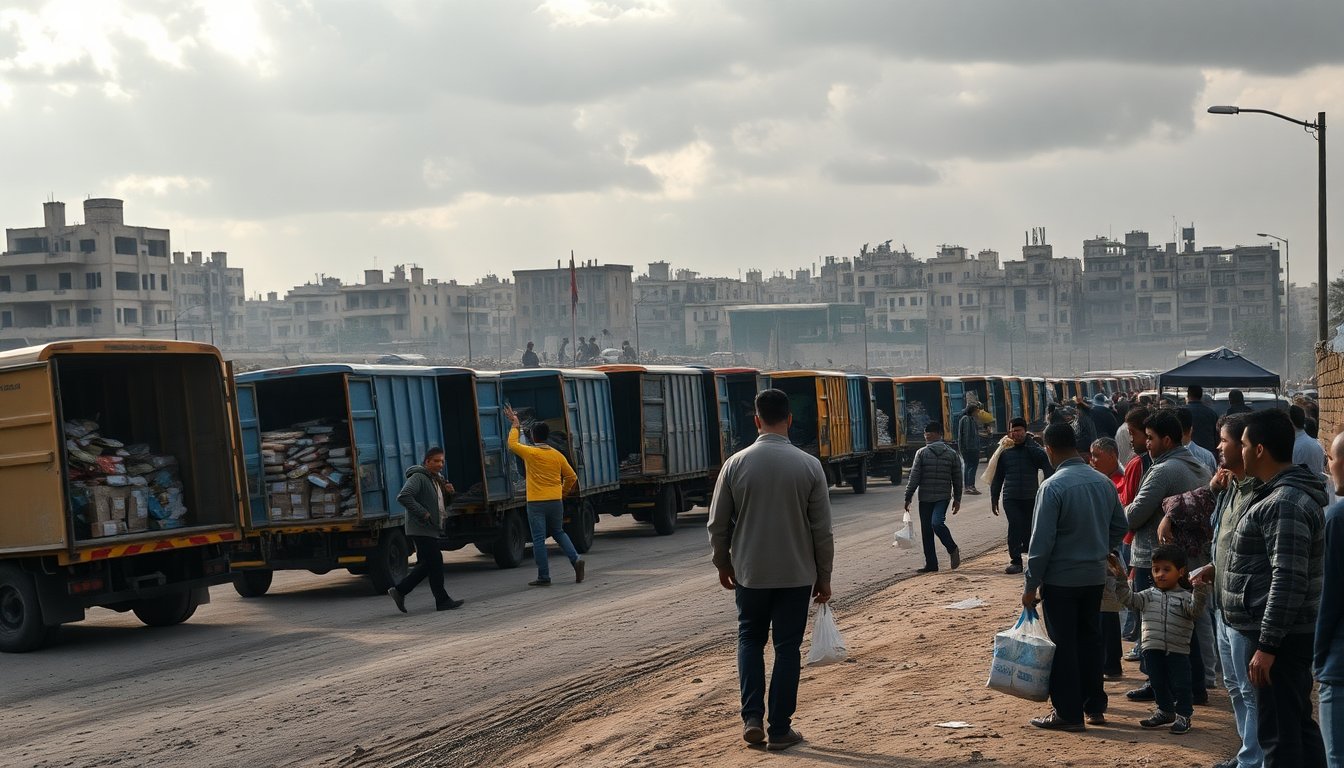
According to reports from the Associated Press, the average number of trucks entering Gaza since the resumption of aid on October 12 has been approximately 459 per day. This figure falls significantly short of the agreed-upon amount, raising serious concerns among humanitarian organizations about the well-being of the two million inhabitants of the region.
Aid delivery statistics and discrepancies
Data provided by COGAT, the Israeli military body responsible for coordinating aid, indicates that around 18,000 trucks containing food supplies have entered Gaza from the commencement of the ceasefire until the latest reports. This equates to around 70% of all aid delivered since the truce began. However, when considering the total of various aid items, including non-food essentials such as medical supplies and shelter materials, the total figure rises to just over 25,700 trucks.
Despite these numbers, there remains a significant shortfall when compared to the expected 33,600 trucks. In response to inquiries regarding this discrepancy, COGAT has claimed that the daily entry of trucks exceeds the 600 mark, yet has refrained from providing detailed data to substantiate these assertions.
Contrasting reports from different sources
The United Nations has been vocal about the insufficiency of aid entering Gaza, stating that only 6,545 trucks were recorded at crossings up to December 7, averaging merely 113 trucks daily. This data does not account for aid delivered by organizations outside the UN framework. Additionally, a report from Hamas indicated that only 7,333 aid trucks have entered since the ceasefire, further complicating the narrative surrounding aid deliveries.
The humanitarian impact on Gaza’s population
The repercussions of these inadequate aid levels are dire. Humanitarian organizations have condemned the insufficient flow of supplies, which has severely hampered recovery efforts for a population already reeling from conflict. Reports indicate that over 9,000 children in Gaza were hospitalized due to malnutrition in October alone. The lack of food, water, and basic necessities has led to a humanitarian crisis that intensifies with each passing day.
As winter approaches, those displaced by the ongoing conflict face harsh conditions, often living in tents that offer little protection from the elements. UNICEF has highlighted the tragic reality of mothers giving birth to malnourished infants, some of whom do not survive due to the lack of medical care and nutrition.
Challenges hindering aid delivery
Various obstacles impede the flow of humanitarian assistance into Gaza, including security concerns, complex customs processes, and delays at crossing points. COGAT previously provided daily updates on truck deliveries during the conflict but ceased this practice after the ceasefire commenced, leading to criticism from rights groups who argue that transparency is crucial for accountability.
Israel has intermittently halted aid deliveries in response to alleged violations of the ceasefire by Hamas, complicating the situation further. While Hamas contends that it has struggled to locate the bodies of hostages due to the extensive destruction in Gaza, Israel claims that Hamas has not adhered to the terms of the ceasefire.
Looking ahead: The need for urgent action
The situation in Gaza is increasingly precarious, with humanitarian needs far exceeding the available resources. The ongoing restrictions imposed on aid deliveries are not only detrimental to immediate recovery efforts but also pose a significant threat to long-term stability. The international community must prioritize the urgent need for increased humanitarian assistance and pressure for the lifting of restrictions that hinder the delivery of essential supplies.
According to reports from the Associated Press, the average number of trucks entering Gaza since the resumption of aid on October 12 has been approximately 459 per day. This figure falls significantly short of the agreed-upon amount, raising serious concerns among humanitarian organizations about the well-being of the two million inhabitants of the region.0