
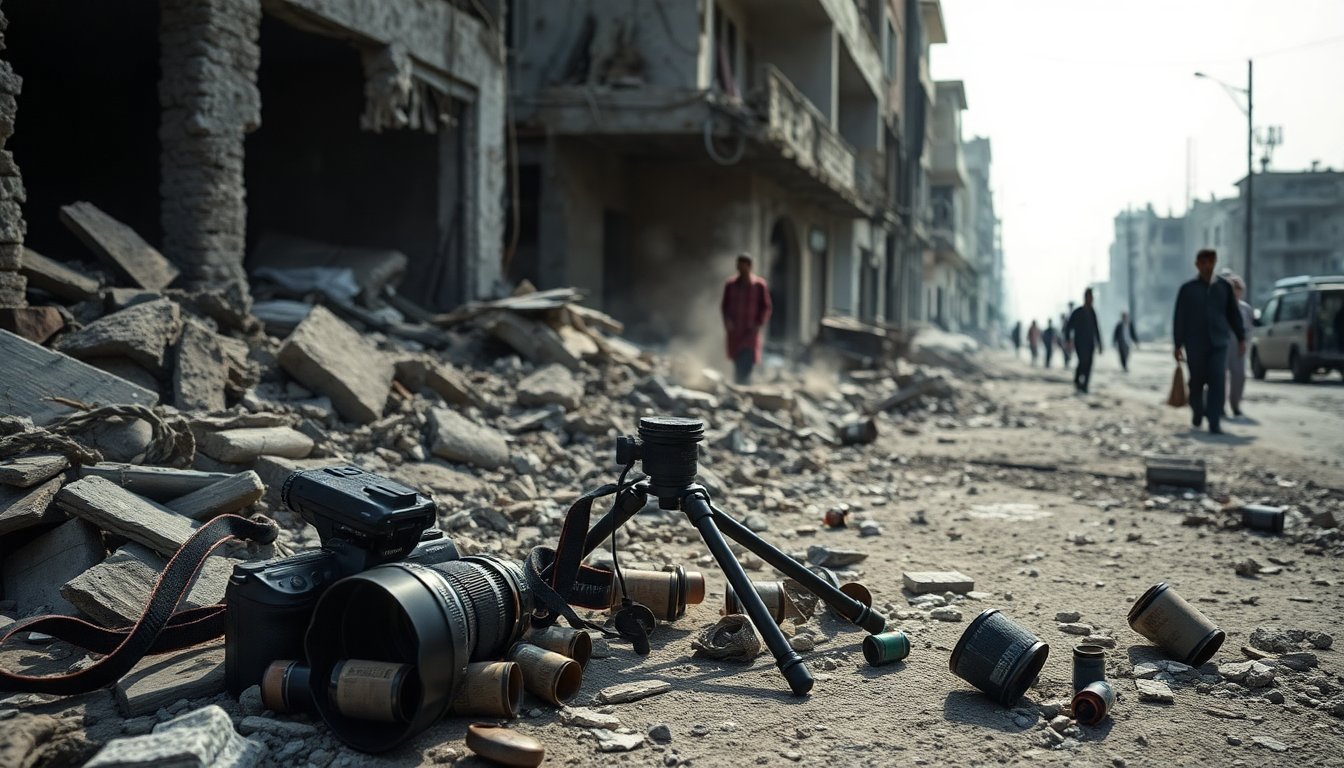
Tragic loss of journalists in Gaza airstrike
Three freelance photojournalists were killed in an Israeli airstrike on January 21, 2026, while documenting the conditions faced by displaced civilians in Gaza. This incident contributes to a troubling record of Palestinian reporters who have lost their lives amid the ongoing conflict. The deaths of Anas Ghneim, Abdul Sha’at, and Mohammed Qashta have raised alarms about the perception of journalists as legitimate targets in this volatile environment, despite a ceasefire being established between Israel and Hamas.
Context of the incident
The photojournalists were accompanying members of the Egyptian Relief Committee to document the humanitarian crisis in central Gaza, particularly focusing on displacement camps. While navigating the devastated landscape, their vehicle was struck by an Israeli airstrike, leading to their deaths. Eyewitness accounts indicate that the attack obliterated their car, underscoring the perilous conditions that journalists encounter in this conflict.
Impact on the journalistic community
The Committee to Protect Journalists has designated Gaza as the most dangerous location for reporters worldwide, outpacing all other conflict zones in recent memory. Jodie Ginsberg, the organization’s spokesperson, highlighted the severe and constant risks journalists face, noting that they frequently find themselves caught in crossfire unexpectedly. With most foreign media barred from entering Gaza, local freelancers are left to shoulder the responsibility of reporting, often at significant personal risk.
Continued violence despite ceasefire
Despite the ceasefire that has been in place since October, violence persists in the region. Reports indicate that Israeli airstrikes have continued to inflict casualties, with more than ten individuals killed last week alone, including three journalists. Ahmed al-Batta, a fellow reporter, expressed the profound fear that grips journalists in Gaza, stating, “We are facing real risks here, and they come at us without warning.” This atmosphere of fear is compounded by the perception that Israeli forces may intentionally target media personnel to prevent coverage of their military actions.
Reactions from the community
During the funerals of the slain journalists, emotions were palpable as colleagues and friends gathered to pay their respects. The sight of bodies draped in white shrouds, accompanied by bulletproof vests labeled “PRESS,” resonated painfully with many attendees. Shams Shana’a, a fellow journalist, expressed the widespread anxiety in the community: “As a journalist, I’m afraid to go out and film. I’m afraid that the Israelis will target me too, because they don’t want the world to see their crimes here.” This shared grief among mourners highlights the collective trauma faced by journalists working in hostile environments.
International response and accountability
The deaths of several journalists have drawn significant attention internationally. Organizations such as Reporters Without Borders have condemned the violence, stating that the targeted killing of journalists could amount to a war crime. Martin Roux, the head of RSF’s crisis desk, emphasized that recent attacks on identifiable journalists reflect a disturbing trend that demands thorough investigation and accountability. As the conflict escalates, the safety of journalists remains a pressing concern. Countries including Canada are advocating for stronger protections for media personnel operating in Gaza.
The backdrop to these tragedies is the ongoing conflict, which has resulted in over 71,400 Palestinian deaths since hostilities began. The humanitarian situation in Gaza remains critical, with many families displaced and residing in makeshift shelters. Amid this turmoil, personal stories emerge, such as that of Abdul Sha’at, who had recently married before his untimely death. Such narratives highlight the profound human cost of war.
As international efforts persist in seeking a resolution to the conflict, the situation for journalists in Gaza remains a significant concern. The need for enhanced protections and recognition of the dangers faced by those documenting the truth is increasingly urgent. Countries, including Canada, are advocating for stronger safeguards for media personnel operating in Gaza, underscoring the importance of their role in conveying accurate information amidst the chaos.


