
Table of Contents
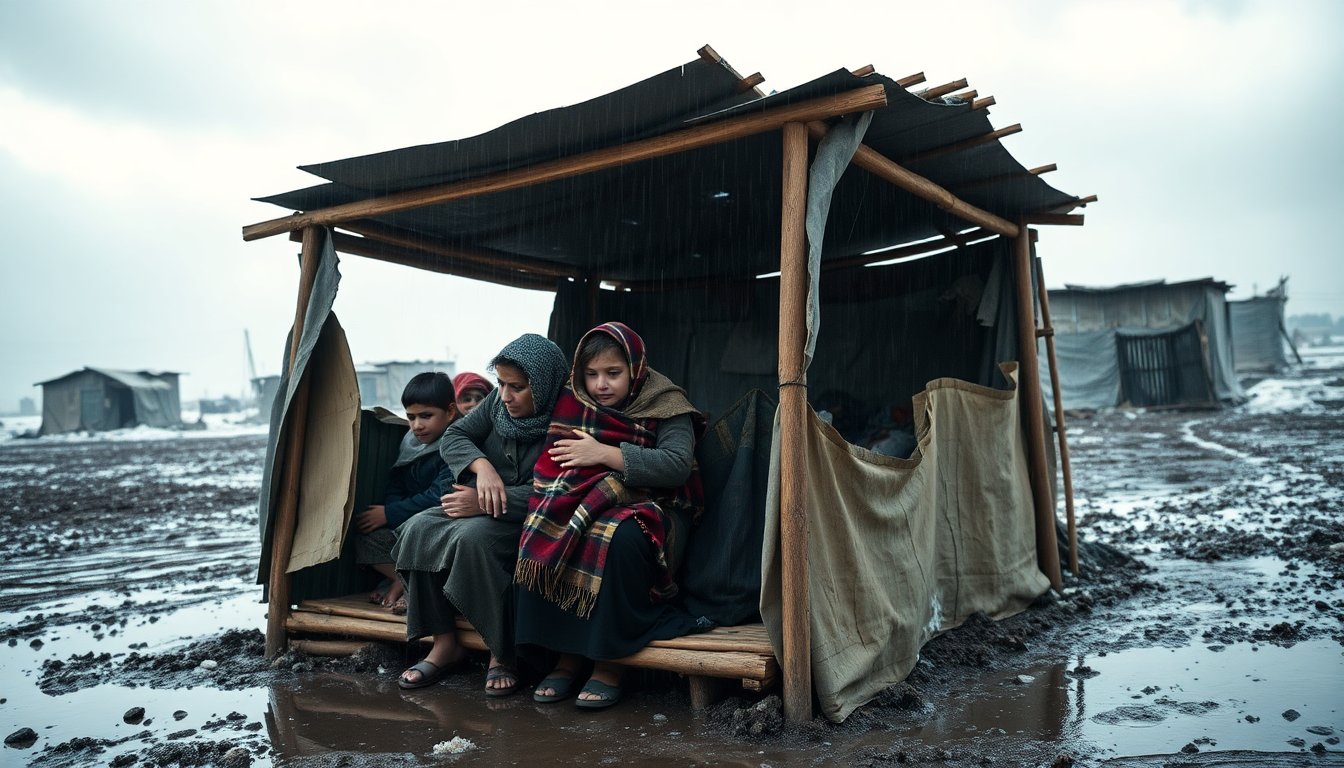
The humanitarian crisis in Gaza has escalated as winter storms severely impact an already vulnerable population. Displaced families are living in makeshift shelters, facing the serious threat of harsh weather and inadequate supplies. Ongoing conflict and restrictions on aid have intensified their plight, resulting in tragic incidents, including the death of an infant due to extreme cold.
Tragic consequences of winter storms
Reports reveal that an eight-month-old girl named Rahaf Abu Jazar died from exposure during a night of heavy rainfall that flooded her family’s tent in Khan Younis. Her mother stated that they had settled in for the night unaware of the impending disaster. When they awoke, the infant was surrounded by water and cold, resulting in her tragic death. This incident underscores the urgent need for tents, blankets, and warm clothing as temperatures plummet to dangerous levels.
Humanitarian response under strain
The situation in Gaza is increasingly critical, with the civil defense agency reporting more than 2,500 emergency calls in a single day as families seek urgent assistance. Despite these pressing needs, the flow of aid into Gaza remains severely limited. The Norwegian Refugee Council (NRC) indicates that only a small portion of the necessary supplies has crossed the borders since the ceasefire commenced in October, leaving millions without adequate shelter.
Currently, approximately 1.29 million individuals in Gaza urgently require housing solutions; however, only 15,600 tents have been distributed. This situation leaves many families vulnerable to harsh weather conditions. Reports show that over 6,500 trucks loaded with essential winter supplies are stalled at the border due to restrictions imposed by Israel.
Health risks escalate with inadequate supplies
Health experts emphasize that insufficient shelter and hygiene facilities significantly threaten public health. These dire conditions may result in outbreaks of waterborne diseases, particularly affecting children who already face malnutrition and other health challenges. According to Jonathan Crickx, UNICEF’s communications chief in Palestine, the situation is growing increasingly alarming as children navigate the camps without adequate footwear or clothing.
Winter exacerbates existing challenges
The winter season has intensified the difficulties faced by families affected by conflict. Many have relocated from coastal areas to the relatively safer interior of Gaza City, seeking shelter in undamaged buildings. However, as night descends, these temporary accommodations offer limited protection from the harsh weather conditions. The ongoing violence, combined with the elements, adds a new layer of suffering for families who have already endured significant hardships.
Ongoing displacement and humanitarian funding issues
The United Nations reports that the crisis is escalating beyond the immediate impact of winter storms. Increased military raids and settler violence in the West Bank have resulted in further displacement and disruption of essential services. Thousands of individuals have been forced to relocate in a short time due to rising tensions. The health system in Gaza is nearing collapse, with over 60% of health facilities currently non-functional.
Despite these overwhelming challenges, humanitarian organizations are working diligently to deliver aid. However, funding shortfalls pose a significant obstacle, with only 40% of the required $4 billion for humanitarian assistance in Gaza and the West Bank secured as of early December. The UN continues to coordinate efforts to provide essential supplies, yet many families remain in urgent need of support.
The urgent need for international assistance in Gaza
The devastating impact of the ongoing conflict is evident in the lives of the people in Gaza. As winter storms continue to batter the region, the need for international assistance becomes increasingly urgent. Children and vulnerable populations are at the highest risk. Without a swift response, the situation may worsen in the coming months.