
Table of Contents
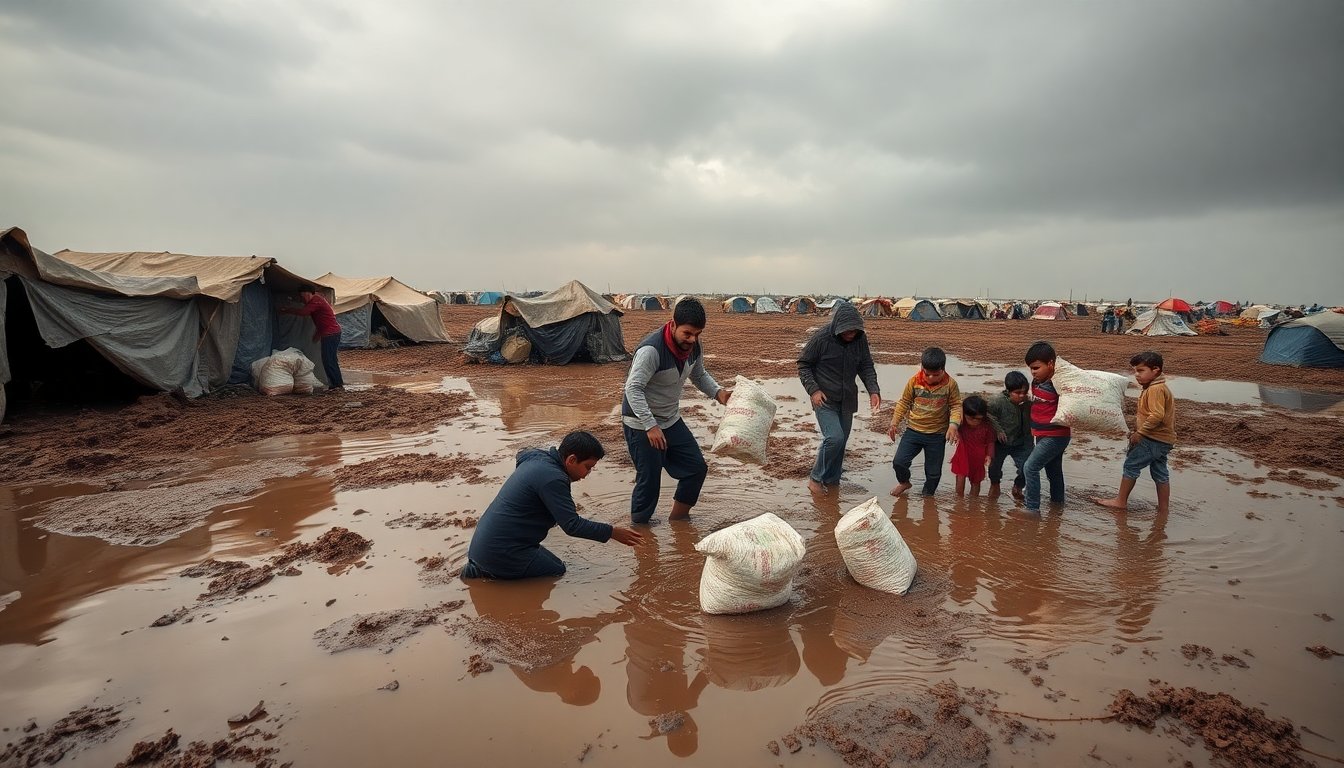
In Gaza, displaced families are confronting a severe challenge as heavy rainfall has inundated their temporary shelters. The ongoing humanitarian crisis is exacerbated by restrictions on aid, leaving many families exposed to harsh winter conditions. The United Nations has issued warnings regarding the alarming situation, indicating that hundreds of thousands of Palestinians lack adequate shelter.
The impact of flooding on displaced families
Residents of makeshift camps in Gaza City reported that their belongings, including mattresses and clothing, have been damaged by the flooding. One displaced individual, Abdulrahman Asaliyah, conveyed the urgent need for new tents that offer improved protection against the cold. “This winter rain is a blessing from God, but families are terrified for their children’s safety and their own survival,” he remarked, underscoring the precarious circumstances.
Urgent calls for assistance
The local civil defense agency reported that flooding primarily impacted the northern regions of Gaza. Many families had returned to these areas following a ceasefire agreement between Israel and Hamas. Despite this ceasefire, the United Nations Relief and Works Agency (UNRWA) has faced significant challenges in delivering essential aid due to ongoing Israeli restrictions. The agency has urged the international community to respond swiftly to the needs of the displaced, especially with winter approaching.
Winter challenges for vulnerable populations
As winter approaches, approximately 260,000 Palestinian families, totaling nearly 1.5 million individuals, face increasingly dire circumstances. The United Nations agency for Palestinian refugees reports that while they have sufficient shelter supplies for about 1.3 million people, the ongoing blockade severely hampers their efforts.
Humanitarian aid delivery issues
Following the ceasefire on October 10, there has been a slight improvement in the flow of humanitarian aid into Gaza. Despite this progress, the amount remains grossly insufficient. Reports indicate that only a small percentage of the necessary aid has passed through Israeli checkpoints. Aid organizations have highlighted a critical shortage of food, medical supplies, and shelter materials, especially as winter weather worsens.
Living conditions in makeshift camps
Following recent floods, many families have lost their temporary shelters, resulting in overcrowded and unsanitary conditions. Al Jazeera’s correspondent, Hind Khoudary, reported the distressing sight of children walking barefoot and lacking essential winter clothing. Despite the presence of aid trucks, numerous families claim they have received little to no assistance, heightening their anxieties as they prepare for the harsh winter ahead.
In a particularly moving account, a man named Abu Ghassan shared the despair of his family’s circumstances. “We can’t even keep our mattresses dry,” he lamented, highlighting the lack of proper tents and the pervasive sense of loss and instability that characterizes their daily existence.
Each rainstorm heightens the precarious situation for families in the camps. Insufficient aid and ongoing restrictions hinder humanitarian organizations’ ability to meet the population’s needs. Meanwhile, the international community observes as the struggles of these families intensify.
As winter draws near, calls for action intensify. Families in Gaza are not merely seeking temporary relief; they are demanding sustainable solutions that secure their survival and dignity amid overwhelming challenges.