
Table of Contents
Gaza’s rubble crisis: a daunting challenge for recovery
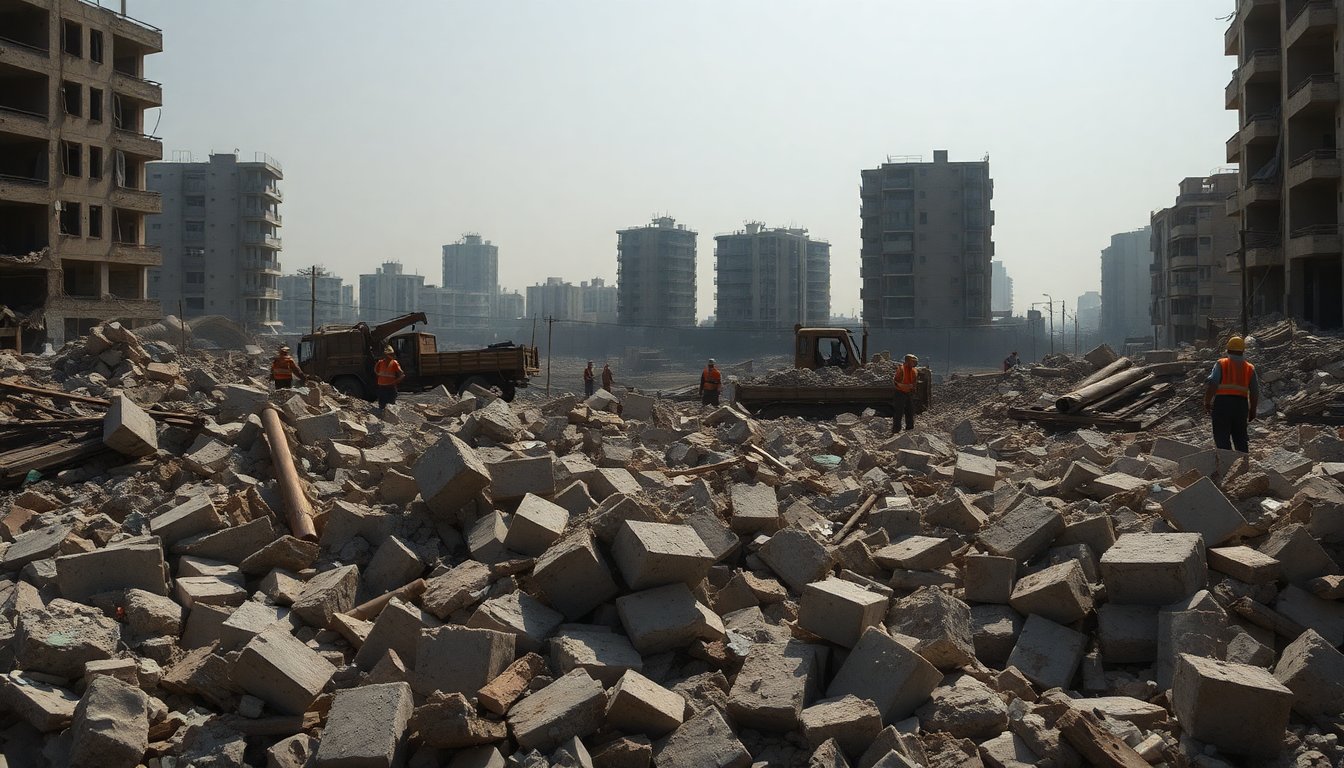
The ongoing conflict in Gaza has left a devastating landscape. Over the past two years, relentless bombardments have resulted in approximately 61 million tons of rubble covering the region. This vast amount of debris poses serious health and safety risks for the remaining population.
International organizations, including the United Nations, emphasize the urgent need to clear this hazardous rubble. Such efforts are essential for any rebuilding initiatives. However, experts warn that the clearance process could take as long as seven years without sufficient access, resources, and ongoing support.
The impact of destruction on recovery
The extensive damage in Gaza has led to significant physical destruction, severely disrupting essential services and humanitarian aid delivery. Despite a ceasefire being initiated, violence persists, complicating recovery efforts. Humanitarian agencies report some progress, noting the distribution of critical supplies, but stress that the situation is still dire.
Children and ongoing violence
Children in Gaza remain disproportionately affected by the ongoing violence, with reports indicating that over 100 children have died since the ceasefire began in early October. This tragic statistic reflects an alarming rate of approximately one child lost each day. While the frequency of bombings and shootings has decreased, they still pose a significant threat to safety. The ongoing shortage of essential resources, such as medical supplies and fuel, further complicates the dire circumstances faced by families striving to survive.
Urgent need for humanitarian access
Access to humanitarian aid remains critically limited. Many non-governmental organizations face significant barriers in delivering essential assistance. The United Nations has urged for increased pressure to allow international journalists and humanitarian workers to monitor and report on the dire conditions within Gaza. The need for medical evacuations is urgent, with over 4,000 individuals in need of evacuation, including approximately 2,000 children. Nevertheless, bureaucratic obstacles continue to hinder these urgent requests, resulting in tragic delays.
Long-term recovery challenges
The recent ceasefire has led to some improvements, including the expansion of primary health services and waste removal. However, the recovery process remains complicated. Over 700,000 children still need urgent educational support, with many attending temporary learning facilities. The ongoing violence and restrictions emphasize the significant challenges that lie ahead for stability in Gaza.
The situation in Gaza underscores the pressing need for comprehensive solutions to address the humanitarian crisis. As the international community observes, the region’s struggle for recovery highlights the importance of providing access to essential resources and support. Without these efforts, many will continue to face a long and uncertain road to recovery.