
Table of Contents
Gaza Braces for Winter Amid Ongoing Strife
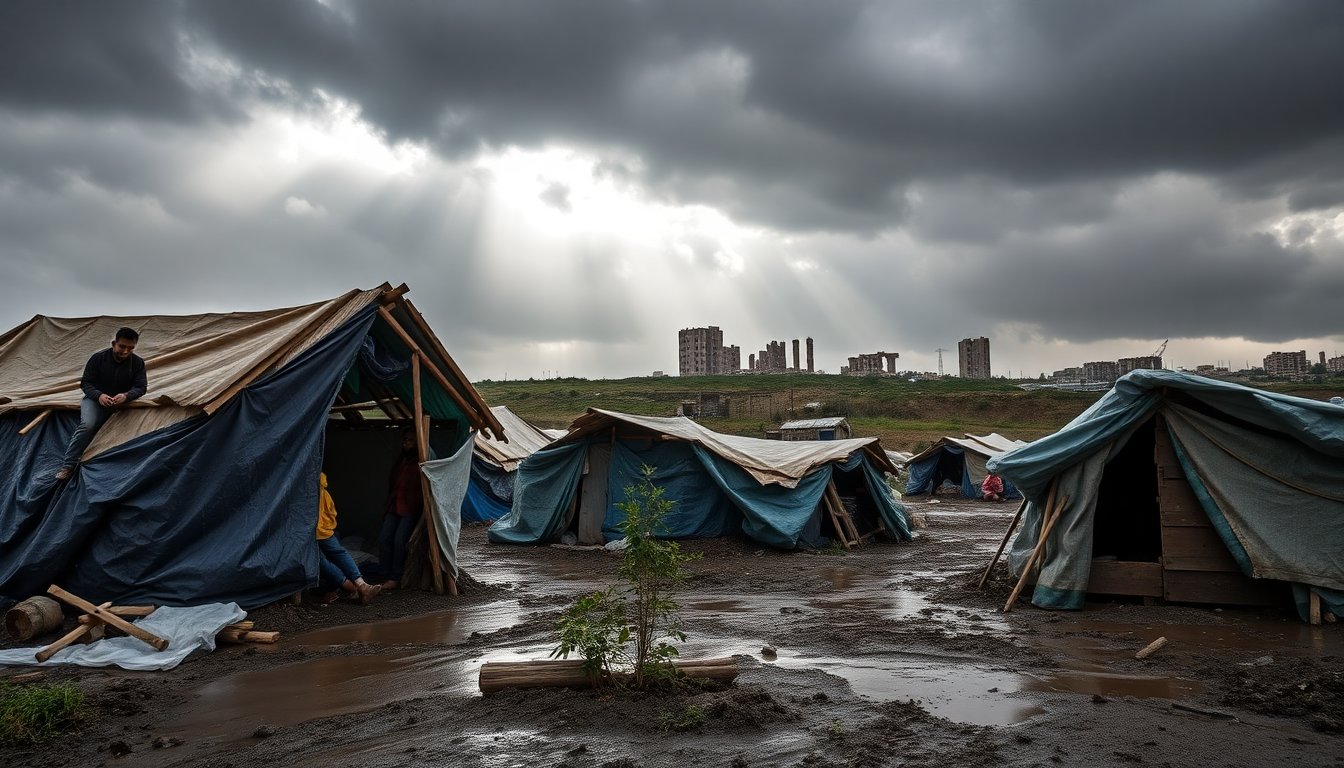
The harsh winter weather has compounded the already dire situation in Gaza, where nearly two million residents are struggling to survive. Freezing rain and powerful Mediterranean winds have wreaked havoc on makeshift shelters, leaving countless individuals vulnerable and homeless in the face of chilling temperatures.
Although a ceasefire was put in place three months ago, the region remains unsettled. Local health authorities have reported that over 450 lives have been lost due to ongoing Israeli airstrikes and violent confrontations with Hamas militants, casting a shadow over the fragile peace that many had hoped would take hold.
The Human Cost of Conflict
Civilians like Mustafa Abu Jabeh find themselves caught in a relentless cycle of violence, as both sides point fingers at one another. “It’s been a tsunami. Our world’s been turned upside down,” he reflects, poignantly illustrating the profound disruptions the conflict has wrought on everyday life.
Tragically, UNICEF has noted that more than 100 children in Gaza have lost their lives since the ceasefire took effect. This alarming statistic only accounts for documented cases, suggesting that the true toll is likely much higher, especially with the onset of winter exacerbating the already dire living conditions.
Aiming for Peace and Reconstruction
In a bold move, U.S. President Donald Trump has introduced the second phase of his peace initiative, seeking to guide Gaza from turmoil towards stability and development. This ambitious plan follows a rocky first phase, which, despite the release of hostages by Hamas, was plagued by ongoing Israeli restrictions on humanitarian aid and relief efforts.
Inviting 60 world leaders to join his newly formed ‘Board of Peace,’ Trump aims to foster a collaborative approach to resolving global conflicts. Canadian Prime Minister Mark Carney has tentatively agreed to participate, voicing concerns regarding the initiative’s funding and organizational structure.
Funding and Governance Concerns
The proposal suggests that countries contribute $1 billion for a permanent seat on the Board of Peace, sparking skepticism among various nations. Carney stressed Canada’s commitment to ensuring that humanitarian aid reaches Gaza freely before considering any financial contributions.
Critics have also raised questions about the charter associated with the Board of Peace, which appears to position Gaza as a prototype for future conflict resolutions. This approach risks undermining the established role of the United Nations in these matters. Carney reiterated the necessity for unhindered humanitarian access as a fundamental requirement for any meaningful progress.
Barriers to Disarmament and Reconstruction
A new technocratic Palestinian government is slated to take the reins in Gaza, replacing the current Hamas-led administration. This transition comes after years of governance marked by repeated conflicts with Israel. Ali Shaath, who has been appointed to lead the National Committee for Gaza’s Administration, has set ambitious goals, including the removal of an estimated 68 million tonnes of war debris within three years.
Yet, significant challenges loom large. Israeli policies continue to restrict the entry of essential construction materials into Gaza, stalling recovery efforts. Even basic items like metal poles for tents are in short supply, making the path to reconstruction all the more arduous.
Internal Resistance and Global Hesitation
Although a ceasefire was put in place three months ago, the region remains unsettled. Local health authorities have reported that over 450 lives have been lost due to ongoing Israeli airstrikes and violent confrontations with Hamas militants, casting a shadow over the fragile peace that many had hoped would take hold.0
Reconstruction Funds and Future Outlook
Although a ceasefire was put in place three months ago, the region remains unsettled. Local health authorities have reported that over 450 lives have been lost due to ongoing Israeli airstrikes and violent confrontations with Hamas militants, casting a shadow over the fragile peace that many had hoped would take hold.1