
Table of Contents
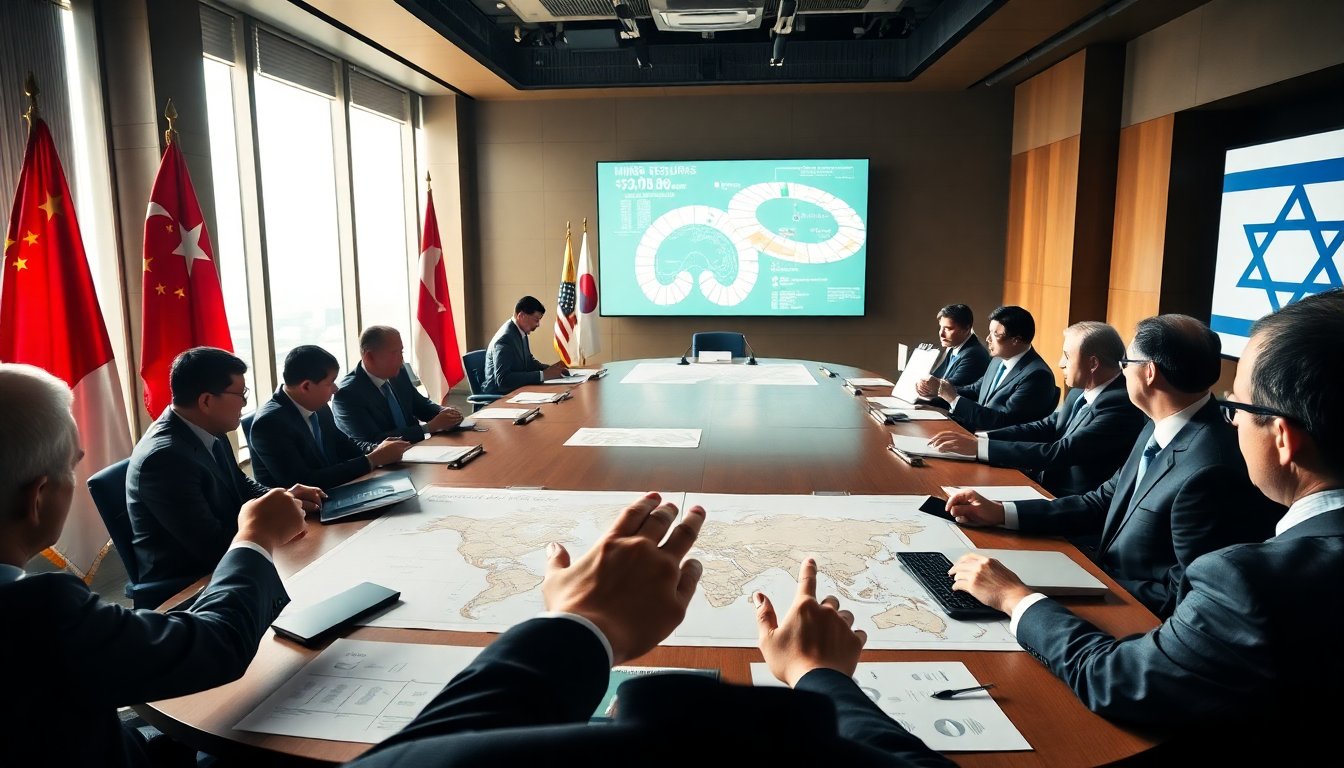
The global landscape is undergoing significant changes as nations come together to address a pressing issue: China’s substantial influence in the field of critical minerals and technology. In response, the Trump administration has led efforts to establish a coalition, marked by the signing of the Pax Silica Declaration. This coalition consists of important partners, including Singapore, Australia, Japan, South Korea, and Israel, all working to reduce the risks associated with China’s dominance.
Understanding the significance of the Pax Silica Declaration
The Pax Silica Declaration establishes a crucial framework for international cooperation among nations aiming to secure access to essential minerals. These minerals are vital for both civilian applications and military operations. The administration under Donald Trump identifies China’s dominant position in the rare earth elements market as a significant concern. Beijing’s capacity to influence global supply chains through export limitations poses a risk, especially as these restrictions frequently serve as retaliatory measures against tariffs imposed on Chinese products.
Global response to China’s economic strategies
The urgency for a coalition among nations is heightened by China’s significant investments in sectors such as artificial intelligence and quantum computing. These investments may provide China with a competitive advantage in the 21st-century economy. Experts, including Helberg, assert that this initiative extends beyond economic interests; it embodies a comprehensive industrial policy designed to enhance economic security among member countries. By synchronizing their strategies, these nations aim to counter China’s Belt and Road Initiative, which seeks to bolster its global influence through extensive infrastructure investments.
Expansion and collaboration among allied nations
The signing of the Pax Silica Declaration marks the start of a broader initiative. The Trump administration plans to expand this coalition by inviting additional countries to join. The focus will be on sharing resources in mineral extraction, technological innovation, and manufacturing. An inaugural event, the Pax Silica Summit, is scheduled to occur, featuring discussions with representatives from the European Union, Canada, the Netherlands, and the United Arab Emirates. This summit aims to foster collaborative efforts in advanced manufacturing and logistics.
Shaping the future of international economic cooperation
Helberg noted that this coalition aims to be to the era of artificial intelligence what the G7 was to the industrial age. By establishing a framework for cooperation, these countries are committing to a proactive agenda that includes aligning export controls and screening foreign investments. This strategic approach addresses potential challenges such as anti-dumping and securing critical choke points within the global supply chain.
In the face of legal challenges to existing tariffs, the U.S. government has multiple avenues to protect its interests and those of its allies. The goal is to enhance communication and cooperation among nations, especially considering the dynamics of U.S.-China relations. Remarks from the Defense Secretary highlight the necessity for improved dialogue to manage and de-escalate any tensions that may arise.
The formation of this coalition represents a significant shift in international relations, as nations unite to tackle shared concerns about China’s influence. The Pax Silica Declaration not only emphasizes a commitment to mutual support in technology and mineral access but also signals a new era of collaboration. This partnership could potentially reshape the balance of power within the global economy.