
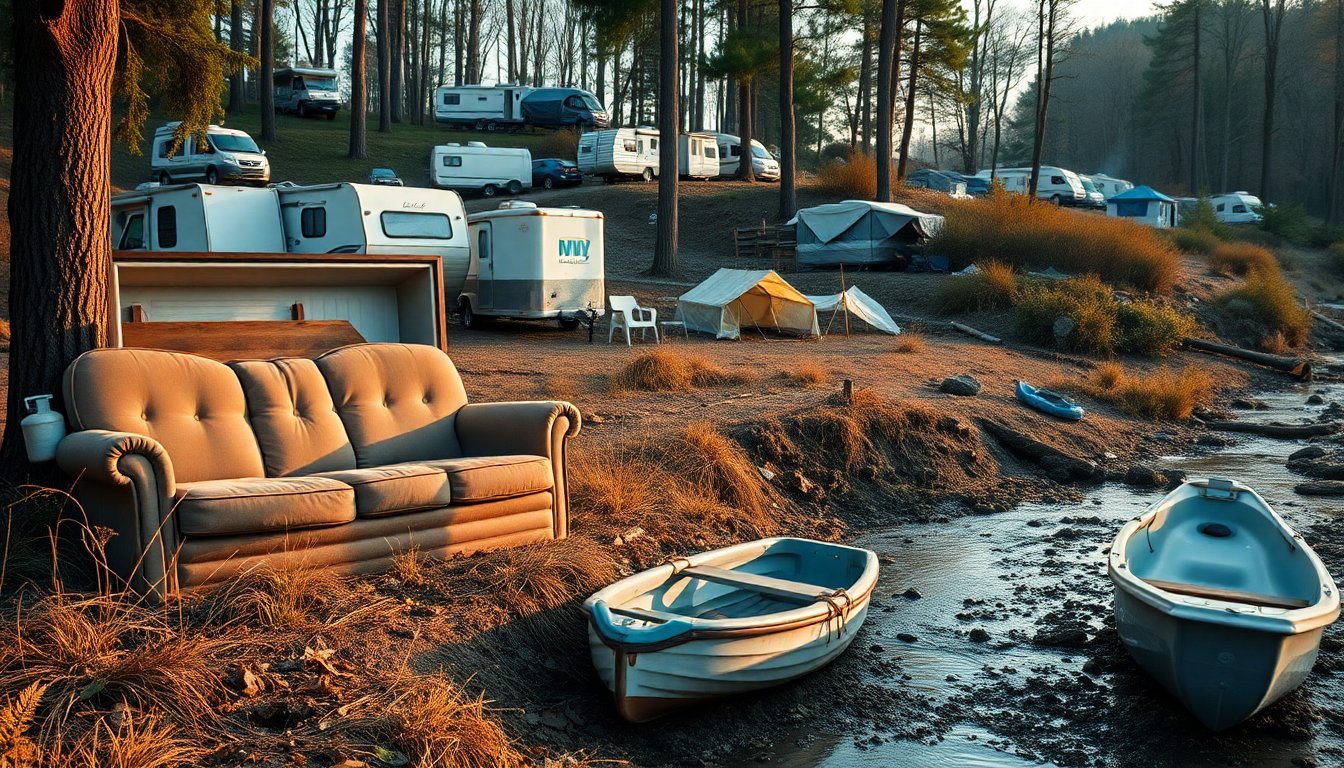
The wooded slope above Peachland along Trepanier Creek has become home to an increasing number of people camping on provincial Crown land. Neighbors describe the site as having grown significantly over the past year, with more than three dozen individuals sharing the area alongside roughly 20 recreational vehicles and numerous tents and tarped shelters. Items normally kept indoors — furniture, appliances and other household goods — have been brought into the trees, and residents say boats, trailers and vehicles propped on jack stands litter the site. Some people have installed hoses that appear to be drawing creek water into the camp, a detail that has amplified local alarm.
What neighbors are seeing and why it matters
Locals have catalogued not only the number of campers but also accumulating debris: piles of tires, trailers stacked with garbage and ad hoc structures built from tarps and scrap. For those living nearby this is more than an eyesore; it represents a potential public health issue because the encampment sits above a drainage that feeds private wells. Residents have said they will be testing their well water and are concerned about possible wastewater and sewage contamination entering the system. The area is described on signage as an sensitive watershed area, which heightens the stakes for contamination and cleanup.
Health and wildfire risks
Beyond contamination fears, the encampment has raised alarms about fire safety. People who live nearby note that while local building rules prohibit installing a wood stove in permanent houses, many trailers and structures at the site appear to be heated with improvised units. These makeshift wood stoves, together with dry undergrowth and a cluster of stored materials, create a combustible mix in what residents call high risk fire area. People in the community worry the combination of informal heating, discarded tires and accumulated refuse could quickly turn a single spark into a major emergency.
Environmental hazards in plain sight
Observers point to visible signs of environmental stress: water-diversion hoses, exposed refuse near the creek and vehicle fluids from broken-down cars. These conditions raise legitimate questions about runoff and groundwater infiltration. If contaminants migrate into the watershed, private wells and the broader ecosystem could be affected. Local residents emphasize that many households in the vicinity depend on natural sources, which is why neighbours are arranging well testing and pressing for remediation. The presence of derelict boats and automotive parts also increases the complexity and cost of any future cleanup effort.
Authorities’ response and the legal backdrop
Frustration among residents has mounted as they report making repeated inquiries to different levels of government and agencies. They describe a pattern of jurisdictional transfers, with officials deferring responsibility and citing other authorities. The provincial Natural Resource Officer Service (NROS) has acknowledged awareness of the people on the Crown land near Trepanier Creek. The provincial ministry responsible for social supports — the Ministry of Social Development and Poverty Reduction — has indicated plans to visit the site in the coming month to speak with occupants and explore what additional assistance or services might be available. Provincial rules in B.C. also allow camping on Crown land in one location for up to camping limit of 14 days, a regulation that frames enforcement options.
Local sentiment and possible next steps
People in the area say they are not indifferent to the plight of those living outdoors but are concerned about the situation escalating into a larger public-safety or environmental emergency. Residents describe a mixture of compassion and exasperation: they want humane solutions for the people camping there while also seeking a cleanup of the site to protect water and reduce fire danger. Some have asked for a coordinated response that balances outreach and support with environmental remediation and enforcement. For now, the community awaits agency visits and clearer plans that address both human needs and the fragile watershed.
What to watch for
In the weeks ahead, neighbors will be watching for any on-site visits by provincial agencies and for testing results that might confirm or allay contamination fears. The interaction between social supports and land management agencies will likely determine how quickly the encampment changes. Until then, residents remain vigilant about wildfire risk, wastewater concerns and the visible spread of debris on Crown land above Trepanier Creek.


