
Table of Contents
The geopolitical landscape is becoming increasingly precarious as the United States initiates the withdrawal of military personnel from its Al Udeid airbase in Qatar. This decision arises amidst heightened fears of renewed conflict with Iran, which is grappling with internal strife and violent protests. The situation is further complicated by the recent reopening of Iranian airspace, which airlines are still avoiding due to safety concerns.
Military movements and diplomatic responses
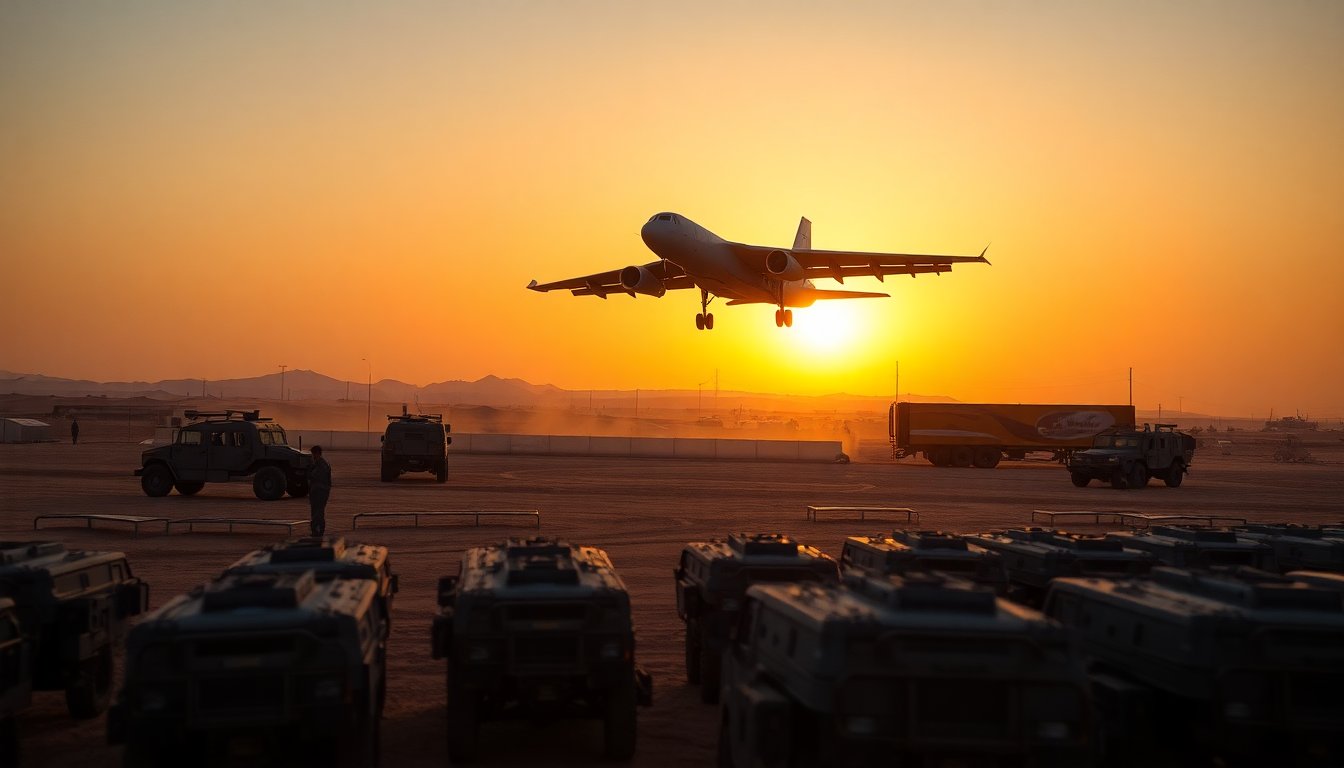
Reports indicate a reduction in the security alert level at Al Udeid airbase, a critical location housing around 10,000 US troops. The base had previously heightened its security due to threats from Iran, which warned of retaliation against US installations in the region. In a twist of fate, some military personnel who were advised to evacuate have now been allowed to return, signaling a complex and fluid situation.
Airlines adapt to regional instability
Despite Iran reopening its airspace after a temporary closure, many European airlines, including British Airways and Lufthansa, continue to reroute flights to avoid Iranian and Iraqi airspace. A spokesperson for Wizz Air confirmed that certain flights from the UAE now require refueling stops in Cyprus or Greece, underlining the cautious approach airlines are taking in response to ongoing tensions.
Domestic unrest and international reactions
Within Iran, the atmosphere is thick with unease as the government enforces a stringent crackdown on protests. Reports of mass funerals for those killed during recent demonstrations reflect the dire situation. While official sources indicate that over 100 security personnel have died, opposition groups claim the true toll exceeds 1,000 protesters, with estimates from human rights organizations suggesting more than 2,600 fatalities.
Global condemnation and calls for restraint
International voices are expressing outrage regarding the Iranian government’s heavy-handed approach. New Zealand’s Foreign Minister condemned the violence against protesters, emphasizing the right of Iranians to peaceful protest and freedom of expression. This sentiment resonates globally, as countries like China and Turkey urge diplomatic solutions and warn against military interventions.
Iran’s defiance and future implications
Amidst these challenges, Iranian officials maintain a stance of defiance, accusing foreign powers of inciting unrest. The Iranian Foreign Minister asserted that the initial peaceful protests were hijacked by external forces, labeling them as terrorist elements. This narrative has been used to justify the government’s crackdown and to rally nationalistic sentiments among the populace.
In a recent communication with India’s External Affairs Minister, Iranian officials emphasized their resolve to safeguard national sovereignty while calling for regional stability. The backdrop of military threats complicates diplomatic efforts, as both nations navigate the treacherous waters of international relations.
Impact of international diplomacy
As the United Nations Security Council plans to convene regarding the Iranian situation, the implications of these discussions could shape the future trajectory of both regional stability and US-Iran relations. The global community watches closely, with the potential for escalating tensions that could lead to broader conflict.
In conclusion, the intersection of military movements, domestic unrest, and international diplomacy presents a complex and evolving narrative. The coming days will be critical as various stakeholders seek to navigate this tumultuous environment, balancing national security with calls for peace and stability.