
Table of Contents
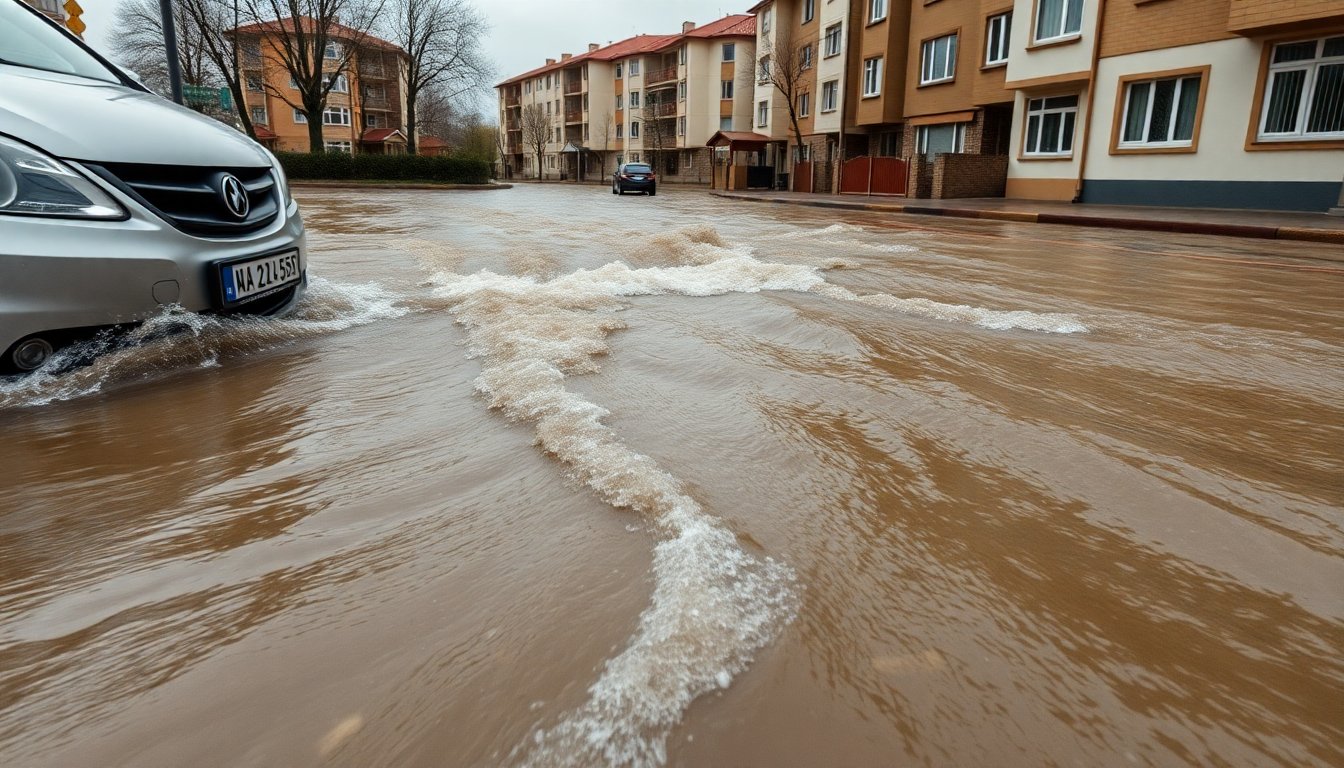
The capital of Russia’s Dagestan region, Makhachkala, was hit by intense rain and flash flooding, with widespread reports published on 28 Mar 2026. Video and eyewitness material show streets turned into fast-moving waterways, cars partially or completely submerged, and residential buildings forced to contend with rising basements and ground floors. Local outlets say the storm left tens of thousands without electricity, while municipal crews and emergency teams mobilized to respond. The scale of the event has drawn attention across the North Caucasus as authorities work to restore services and account for damaged property.
Beyond Makhachkala, other parts of Dagestan also reported severe effects: rivers in Derbent overflowed their banks, sweeping debris onto roads and overturning vehicles, while in Khasavyurt a railway bridge collapsed under the strain of floodwaters. Media sources indicated that a train was not on the bridge at the time, averting a potential catastrophe. Utility companies have been racing to repair lines and substations after widespread power outages, with local reports citing more than 60,000 customers affected by the blackouts.
Local impacts and emergency response
City services in Makhachkala and surrounding districts declared a heightened state of readiness as crews worked to pump out flooded homes and clear blocked drains. The municipal response included search-and-rescue teams, water-pumping units, and electricians addressing downed lines. Residents described roads that were impassable and vehicles abandoned where flood currents had swept them. The immediate priorities were protecting lives and critical infrastructure, restoring the electricity supply, and reopening main transport corridors. Coordination between municipal authorities and regional services has been emphasized as essential to stabilizing the situation.
Housing and transport damage
Dozens of private houses reported interior flooding, forcing temporary relocations and creating sanitation concerns. In many neighborhoods, sewage and runoff mixed with rising water, complicating cleanup efforts. The loss of a railway bridge near Khasavyurt interrupted rail links and demonstrated how vulnerable transport infrastructure can be to extreme weather. Repairing such structures will require engineering assessments and could delay rail service for an extended period. These physical impacts underline the broader social consequences of the storm for families and local economies.
Why radiation monitoring was stepped up
Parallel to flood response, public health authorities in Dagestan intensified radiation monitoring, conducting checks multiple times per day. Officials cited recent military strikes in Iran as the trigger for heightened surveillance: on March 18 a shell reportedly struck near the Bushehr nuclear power plant, and on March 20 local regulators said they were measuring background radiation within the republic. Monitoring had in fact been expanded earlier, after orders issued in June 2026 following reports of an incident in Iran. The tests aim to provide reassurance and early detection should any distant release of radionuclides occur.
Expert assessments and technical context
Specialists consulted by regional media have largely assessed that Dagestan is not at immediate risk from a significant radioactive plume from Iran, given geography and distance. Experts referenced the VVER-1000 reactor design at Bushehr and warned that, while reactors have protective measures, the worst-case scenario would involve the release of isotopes such as iodine, cesium and strontium. They explained that conducting a cold shutdown—a controlled reactor shutdown that equalizes temperature and pressure—would greatly reduce the odds of a wide-area contamination event. Analysts also noted that enrichment facilities at Natanz and Fordow are deep underground, where damage would tend to create localized hazards rather than broad atmospheric dispersal.
Historical examples and ongoing precautions
Experts drew comparisons with past nuclear accidents for context: the Fukushima Daiichi disaster in March 2011 showed how natural forces can trigger reactor failures, although international assessments later concluded the public health impact was limited. The World Health Organization’s analysis in 2013 and reports citing a later radiation-related fatality in September 2018 have been referenced in regional briefings, including reporting by RBC on 11 March 2026. Authorities stress that geographic distance—around 1,500 kilometres to Bushehr in some estimates—and prevailing winds make widespread contamination of the Caucasus unlikely, but they maintain routine monitoring to detect any changes early.
For now, the immediate focus in Dagestan remains on rescue, repair and public safety after the floods, while health and environmental agencies keep measuring background radiation as a precaution. Emergency services continue to coordinate relief, and officials have asked residents to follow safety guidance regarding flood-affected areas and updates from the regional regulator. Together, the twin responses underline a dual challenge: dealing with the tangible damage caused by extreme weather and staying vigilant against remote but potentially serious hazards.