
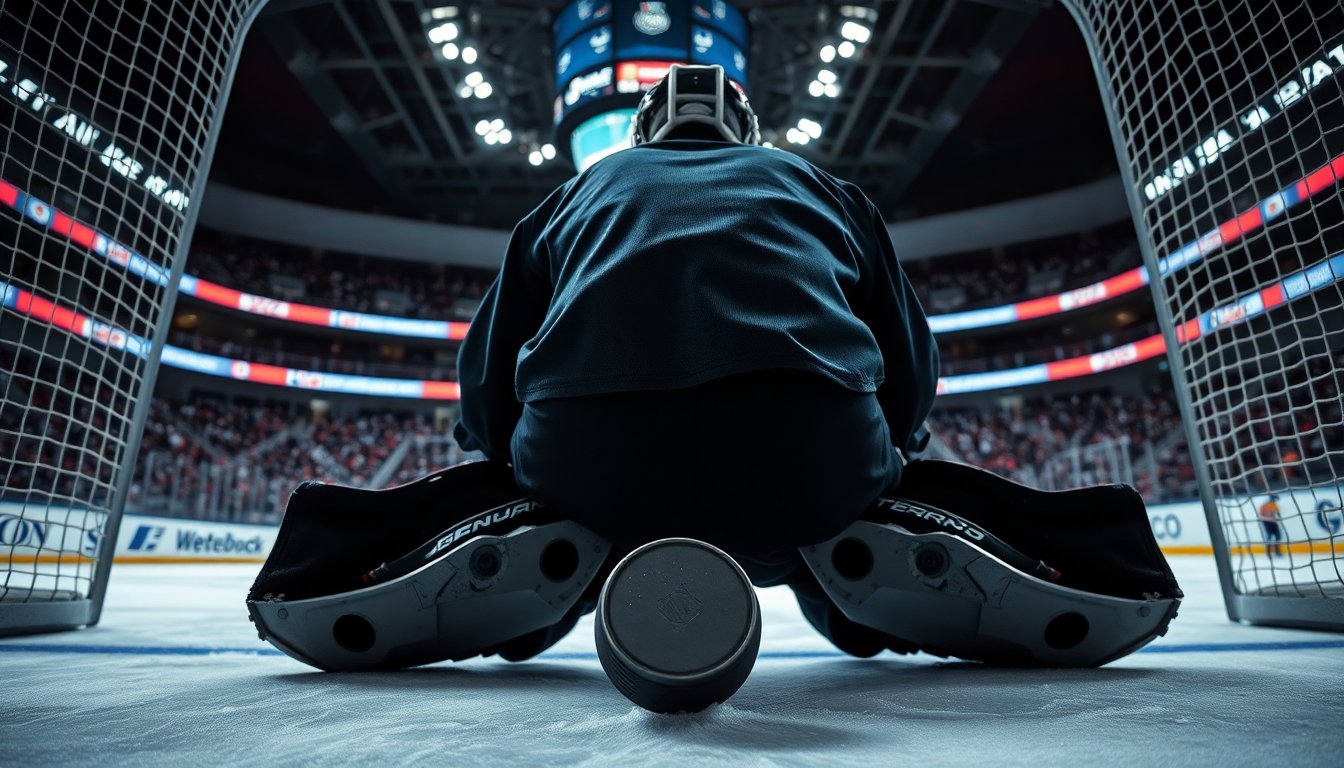
Connor Hellebuyck wrote the headline: on February 22, at Santaguilia Arena in Milano Cortina, he turned in a career-defining performance—41 saves in a 2–1 overtime win over Canada that delivered the United States its first Olympic men’s hockey gold since 1980 and only the third in program history. Faced with relentless pressure for 65 minutes, Hellebuyck made a string of high-leverage stops that kept the Americans in the game and, by the end, forced commentators, teammates and analytics models to label his night the decisive factor in a tightly contested final.
A single save that changed everything Late in regulation came the sequence everyone remembers: a point-blank chance that looked destined to break the tie. Hellebuyck, sprawling and quick with his stick, extended his pad and nicked the puck away in a split-second deflection. The stick save not only denied a goal — it snapped Canada’s momentum and altered how both teams played the rest of the game. United States players tightened rotations, defended more compactly and shifted into a controlled counterattacking posture. In short, the save changed the match’s risk calculus and injected a visible psychological lift into Team USA.
The other turning moments Earlier, Devon Toews redirected a slot shot that looked like another sure scorer; Hellebuyck, positioned with his back to the play, recovered his stick and batted the puck free in one smooth motion. And during a brutal 93-second 5-on-3, he turned aside a flurry of high-danger attempts and breakaways, withstanding the kind of concentrated pressure that normally swings an elimination game. The only goal he allowed was a powerful finish from Cale Makar in the second period — otherwise he was near-perfect.
How the numbers tell the story The box score tells part of the tale: 41 saves and a game save percentage reported at.976. Deeper metrics paint the rest—his high-danger save rate spiked above his season norms (rates in the 90-percent range were reported in the final period), and expected-goals models show a substantial swing in Team USA’s favor thanks to his interventions. Canada controlled more of the shot share and created multiple quality chances, but Hellebuyck repeatedly erased those opportunities and kept the official scoreline stubbornly low.
Psychology, tactics and short-term dynamics Big saves do more than keep pucks out of the net; they change how players behave. After Hellebuyck’s key stops Canada grew marginally more tentative around the crease, while American skaters displayed clearer decision-making with possession. Coaches tightened matchups and adjusted breakout schemes to protect angles, giving the netminder better sightlines and rebounding control. Those tactical tweaks—shorter player rotations, more conservative defensive pairings—extended the impact of individual saves across entire shifts and periods.
What this means off the ice A performance like this reverberates beyond the rink. Scouts, general managers and national programs will re-examine goalie development pipelines and valuation models: single-game, high-leverage displays in short tournaments can meaningfully reprice a player’s perceived upside. Sponsorships, media rights interest and federation revenues are sensitive to marquee moments; the narrative of clutch goaltending in a gold-medal game draws attention and commercial value. Expect discussions about contract positioning and scouting priorities to place greater weight on situational save rates, rebound control and psychological resilience.
Tactical and developmental ripple effects Teams may shift more practice time toward finishing under pressure and crease work for goalies. Coaches could alter roster construction—leaning into goaltending depth where it exists or insourcing defensive reliability when it does not. Analytics departments will fold this game into models that value how a netminder suppresses high-danger chances in short windows, and youth programs might nudge curricula to give the crease a larger share of developmental focus.
Looking ahead If Hellebuyck sustains elevated high-danger save rates and manages workload across pro and international calendars, today’s re-rating will stick. Future tournaments will be the proving ground: minutes played, opponent quality, and situational save efficiency (penalty kills, odd-man rushes, late-game sequences) will determine whether this was a durable revaluation or a singular, brilliance-driven spike. For Team USA, the headline is immediate—momentum and a gold medal—but the longer-term story will depend on replication and management of the conditions that made this performance possible.
Legacy on the ice Teammates and rivals alike credited him with dictating tempo; Canadian forwards said they got the chances they wanted but were repeatedly denied. Analysts drew comparisons to the great tournament netminders, and locker-room reaction framed his night as a defining moment in U.S. hockey history. For now, Hellebuyck’s Santaguilia Arena performance will serve as both a highlight reel and a case study: a vivid example of how one goalie, at one pivotal hour, can tilt a game, a tournament and, quite possibly, market perceptions about the value of elite goaltending.