
Table of Contents
Idf releases footage of air-to-air engagement claiming f-35 shot down yak-130 over tehran
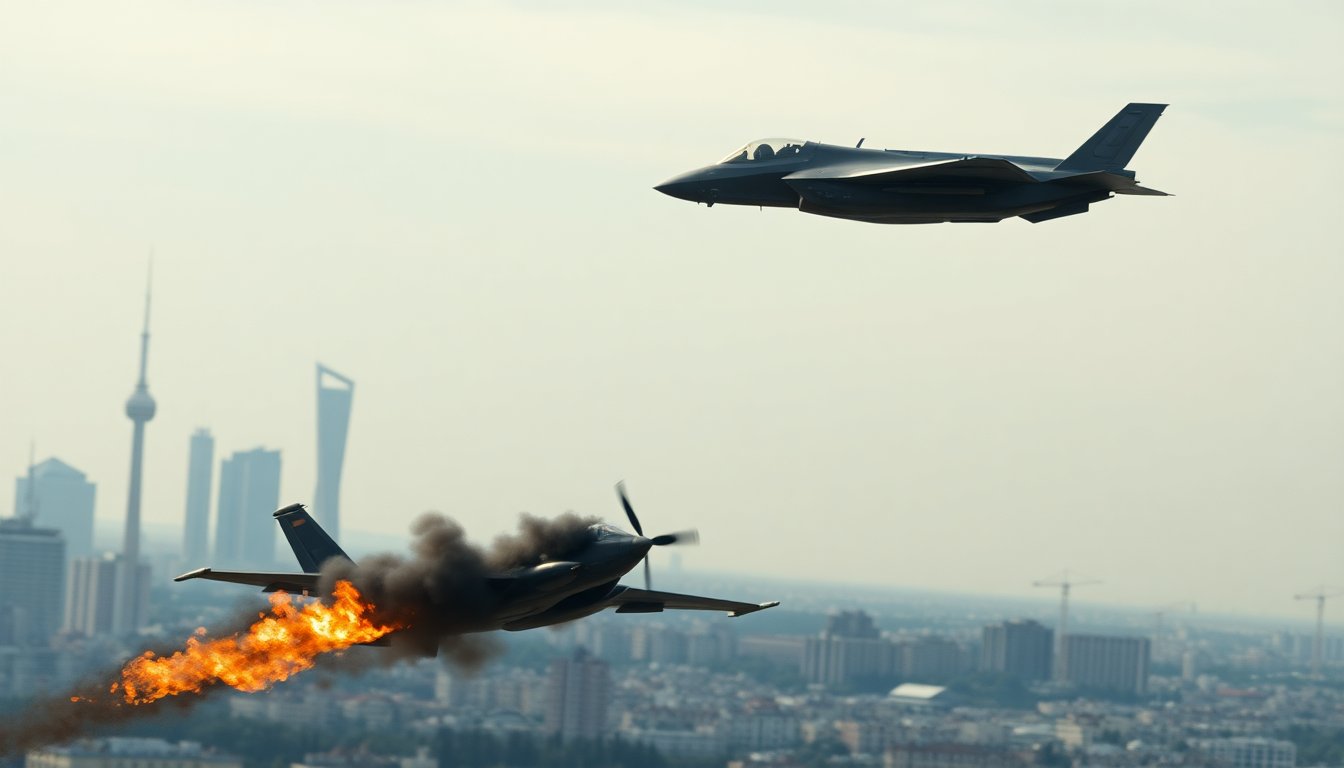
The Israeli Defense Forces (IDF) published video footage they say shows an air-to-air engagement in which an Israeli F-35 shot down an Iranian Yak-130 over Tehran. The IDF described the clip as an aerial intercept sequence that culminates in a visible strike.
The released recording shows an aircraft trailing fire and debris as it descends. In the audio, personnel are heard stating that the target is down. The IDF also overlaid the footage with celebratory audio and a musical backdrop.
The IDF said the engagement marks the first time an F-35 «Adir» has achieved a kill against a manned fighter aircraft. The ministry presented the footage and its commentary as evidence for that claim.
Observers should note that these details and the characterization of the event come from the IDF. Independent verification and corroborating assessments from other sources were not included in the material released by the military.
In real estate, location is everything; in air combat, situational awareness and sensors define outcomes. Transaction data shows that clear evidence matters as much in reporting military engagements as it does in assessing market deals.
What the released footage shows
Following the comparison to transaction data, the clip presents targeting and tracking sequences consistent with a beyond-visual-range intercept. The on-screen imagery and audio record a clear call of “target down” and subsequent operator directions. The struck platform is identified by multiple sources as a Russian-made Yak-130, a subsonic advanced trainer and light attack aircraft deployed by Iran.
Visuals in the footage show a bright trail and the platform’s subsequent loss of control. Independent verification of the engagement remains limited to the IDF release at the time of reporting. In real estate, location is everything; in open-source reporting of military actions, precise sourcing and geolocation matter just as much.
Context and historical perspective
In real estate, location is everything; in open-source reporting of military actions, precise sourcing and geolocation matter just as much. The IDF’s framing of the episode foregrounds both the operational reach of the platform involved and the strategic message conveyed by an intercept executed over or near an adversary’s capital.
The published material underscores three technical and doctrinal issues. First, the engagement highlights the role of sensor fusion in enabling a stealth aircraft to detect, track and prosecute an airborne contact at range. Second, it raises questions about the applicable rules of engagement when operations occur inside contested airspace near population centers. Third, it points to the complex coordination required among airborne assets, airborne early warning platforms and ground-based controllers to accomplish a shootdown.
These elements sit within a longer history of air-to-air encounters that have tested both capability and restraint. Past incidents show that pilots and commanders make split-second decisions under limited information. Transaction data and open-source imagery now allow analysts to reconstruct timelines more precisely than in previous decades.
Observers should note the operational trade-offs. Using a low-observable platform for an intercept can provide tactical surprise. It can also complicate attribution and escalation dynamics when the engagement occurs close to a capital. The strategic implications extend beyond the single engagement and affect regional deterrence calculations.
Transaction data shows that such intercepts require layered sensor coverage, rigorous command-and-control links and clear legal authorities. The incident therefore offers both a technical case study and a cautionary example of the geopolitical risks inherent in high-end air operations.
The incident therefore offers both a technical case study and a cautionary example of the geopolitical risks inherent in high-end air operations. It also marks a notable milestone for the F-35 family, which has been showcased primarily for stealth, networked sensing and strike roles rather than classic air-to-air dogfighting.
The Israeli Defense Forces described the engagement as the platform’s first recorded manned air-to-air kill. The last confirmed Israeli manned fighter air-to-air victory occurred when an Israeli F-15 downed two Syrian MiG-23s on Nov. 24, 1985, an event long cited as the previous instance of Israeli manned aerial combat success.
Military analysts will examine sensors, missile employment and electronic warfare support to determine how the outcome was achieved. Policymakers must weigh diplomatic and escalation risks linked to the encounter. In real estate, location is everything; here, the reported proximity of the engagement to Tehran amplifies its geopolitical significance and will shape regional and international responses.
Operational implications
Following previous reports that placed the engagement near Tehran, the encounter would affect tactics among operators of fifth-generation fighters.
F-35 capabilities—low observability combined with advanced avionics and sensor fusion—support missions that mix air superiority and precision strike roles.
Training programs could shift to emphasize sensor-management, networked targeting, and suppression of enemy air defenses at longer ranges.
Air forces may revise countermeasure doctrine, updating electronic warfare packages and tactics for contested airspaces.
Procurement priorities could tilt toward platforms and systems that enhance distributed lethality, survivability, and interoperability with allied networks.
Strategic fallout
The reported proximity of the engagement to Tehran increases its diplomatic and military consequences for the region and beyond.
States monitoring the encounter will reassess force posture and forward basing, with potential adjustments to rules of engagement and escalation controls.
Allies may accelerate cooperative air-defense improvements and intelligence-sharing to mitigate risks in high-end contests.
For defense planners, the episode reinforces that in air operations, location is everything: control of contested airspace shapes both tactical outcomes and strategic calculations.
The episode reinforces that in air operations, location is everything: control of contested airspace shapes tactical outcomes and strategic calculations.
Verification, reaction and next steps
The Israeli Defense Forces released video footage of the strike. Independent verification from multiple intelligence streams remains standard practice before analysts draw firm conclusions.
Open-source material will be weighed against satellite imagery, signals intelligence and classified reporting. Observers will also seek corroborating on-the-ground reporting to confirm the sequence and effects of the engagement.
Official reactions from the governments involved and regional actors will clarify whether the incident alters policy or prompts immediate reprisals. Diplomatic exchanges and back-channel communications are likely to shape next steps.
Transaction data shows that strategic assessments will be revised by nations with vested interests. Military planners and policymakers will reassess readiness postures and rules of engagement in response to new intelligence.
Brick and mortar always remains central to strategic influence; here the analogy holds: territorial control of air corridors affects deterrence, escalation dynamics and long-term planning.
Looking ahead
The Israeli Defense Forces publicly presented the footage as an operational success and a deterrent message. The released clip included apparent celebratory audio, underscoring the psychological dimension of modern information operations.
Analysts will continue to parse technical details of the engagement and assess broader effects on air combat, regional security and international diplomacy. In real estate, location is everything; here the analogy holds. Control of contested air corridors shapes deterrence, escalation dynamics and long-term planning.
Military planners and defence analysts are likely to study the episode for tactical lessons and strategic consequences. The incident will inform how air forces and governments prepare for possible escalations in the region and adapt rules of engagement, force posture and signalling approaches.