
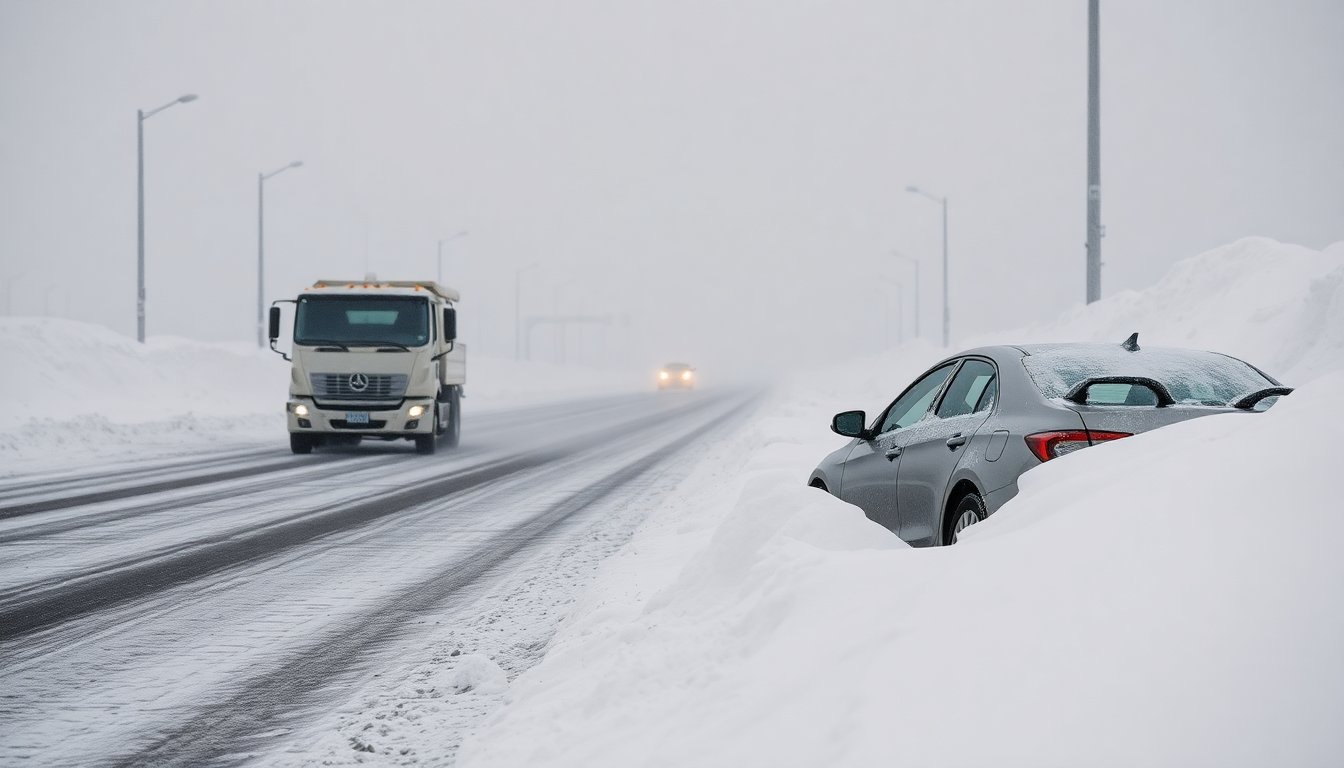
A powerful winter storm hammered the U.S. Northeast on Sunday, knocking out travel, closing schools and prompting emergency declarations from Maryland to Maine. Heavy, wind-driven snow and howling onshore gusts produced blizzard conditions along the coast, forcing governors and mayors to impose travel bans and urge residents to stay off the roads while crews scrambled to keep critical routes open.
Neighborhoods were transformed into wind-swept, nearly featureless landscapes as blowing snow reduced visibility to a few yards in many places. Trees and power lines sagged under the weight of dense, wet snow, and utilities reported hundreds of thousands of customers losing electricity at one point. Restoration efforts were slowed by the same hazardous weather that caused the outages: crews often had to pause work until conditions improved.
Cities opened warming centers and mobilized snow-removal teams to help people most at risk. Transit agencies suspended service, commuter trains and buses were canceled, and officials issued emergency orders to accelerate the deployment of crews and coordinate clearing operations. Schools and public buildings shut their doors, and many employers told staff to work remotely where possible.
Air travel and cultural life were also disrupted. Airlines canceled thousands of flights nationwide — more than 5,000 by one count — with New York, Newark and Boston among the hardest-hit hubs. Delivery services were delayed, and scheduled events from Broadway shows to local performances were postponed as authorities focused on safety and recovery.
Meteorologists warned the system could be historic for some coastal areas. A deepening low-pressure center pumped ample maritime moisture over a cold coastal air mass, producing intense snowfall rates that created whiteout conditions and stranded vehicles on major roadways. Forecasters also pointed to a significant coastal flooding risk as strong onshore winds piled water against already high tides.
Snow totals were heavy and uneven, with pockets of two feet or more reported in isolated locations. Selected measurements included:
– Long Island MacArthur Airport: 22.5 inches
– Some Long Island communities: up to 23 inches
– Newark: about 18 inches
– Central Park: roughly 15 inches
– Parts of Rhode Island: near 20 inches
– Philadelphia: more than a foot — its largest single-storm total in a decade
Winds were brutal in exposed coastal spots, with gusts topping 80 mph and frequent 70-plus mph gusts across Cape Cod. Those winds not only drove coastal flooding but also increased the odds of structural damage and extended power outages. Inland, fallen trees and limbs created additional hazards and slowed repair teams trying to restore service.
Officials repeatedly urged residents to avoid nonessential travel, keep emergency supplies on hand and check on neighbors who may need help. As crews continue to assess conditions, officials said they would provide updates on travel bans and service resumptions. For now, the message from authorities and utility companies was the same: stay home, stay warm and let the recovery teams do their work.