
Table of Contents
Following a significant fire in Tai Po, Hong Kong’s Secretary for Development, Bernadette Linn Hon-ho, has reaffirmed her support for bamboo scaffolding. This statement responds to increasing calls for a shift to metal scaffolding due to safety concerns in construction practices.
The incident at Wang Fuk Court has raised serious questions about the safety of traditional scaffolding methods. However, Linn asserted that the bamboo framework was not responsible for the fire, indicating that an outright replacement with metal structures is unwarranted. Her comments mark a departure from the previous stance of Chief Secretary Eric Chan Kwok-ki, who had favored a shift to steel scaffolding.
Understanding the implications of scaffolding materials
The debate surrounding scaffolding materials is critical in urban planning and construction. Bamboo, a traditional material in Hong Kong, is valued for its flexibility and cost-effectiveness. It enables rapid assembly and is lightweight, making it a preferred option among contractors. Despite the recent fire, Linn’s support for bamboo underscores its enduring presence in the city’s architectural heritage.
The role of bamboo scaffolding in Hong Kong
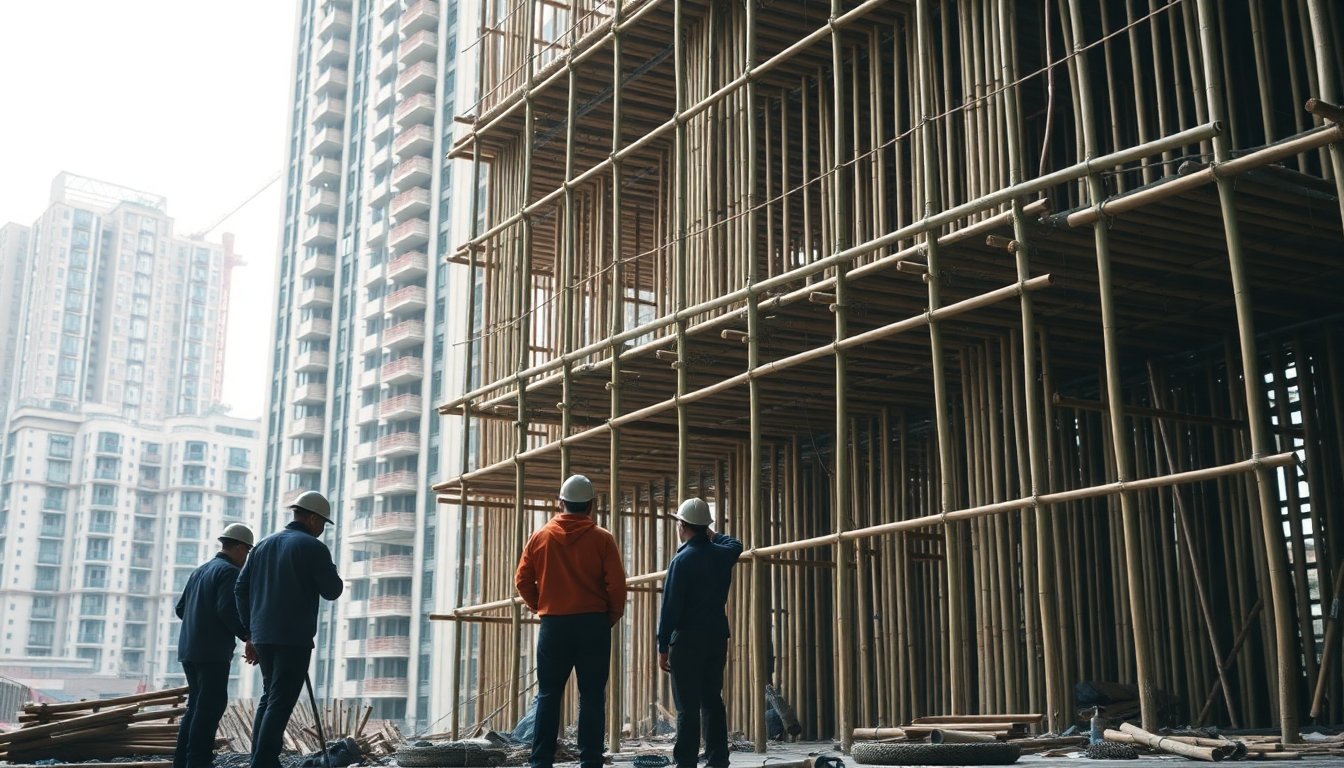
Bamboo scaffolding boasts a rich history in Hong Kong, known for its strength and durability, particularly in high-rise buildings. Furthermore, it is a sustainable and environmentally friendly material, often sourced locally. The decision to continue using bamboo scaffolding reflects a deeper cultural appreciation for traditional construction methods.
Additionally, the speed of erecting and dismantling bamboo scaffolding surpasses that of metal alternatives, which can be cumbersome. This efficiency is particularly advantageous in a bustling city where construction timelines are crucial. Linn’s remarks highlight the need to balance modern safety standards with traditional practices.
Shifting perspectives in construction safety
While the fire incident has undeniably prompted a reassessment of safety protocols, it is essential to investigate the root causes rather than merely focusing on the materials used. Linn’s statement that bamboo scaffolding was not the cause of the fire encourages a more comprehensive understanding of construction safety measures. Investigations into the fire are ongoing, and all contributing factors must be considered before implementing significant changes.
Addressing safety concerns
In the aftermath of this tragedy, safety concerns have intensified among residents and construction workers. Although some advocate for an immediate shift to metal scaffolding, it is crucial to recognize that safety is not solely dependent on the materials employed. Comprehensive training, strict adherence to safety regulations, and proper maintenance of scaffolding systems are equally vital in preventing accidents.
Linn’s position underscores the necessity for a balanced approach where traditional methods can coexist with modern safety practices. A thorough review of construction regulations and ongoing education for industry workers can help mitigate risks without sacrificing the cultural heritage associated with bamboo scaffolding.
Engaging in informed discussions
The discourse surrounding scaffolding materials in Hong Kong remains unresolved. As the city navigates the ramifications of the Tai Po fire, it is imperative for policymakers, construction firms, and the community to engage in informed discussions about best practices for ensuring safety while preserving valuable traditions. Linn’s defense of bamboo scaffolding serves as a crucial reminder that advancements in safety do not have to come at the expense of cultural identity.
While transitioning to metal scaffolding may appear to be a straightforward solution, it necessitates careful consideration of various factors, including safety, sustainability, and the historical context of construction practices in Hong Kong. The focus should remain on enhancing safety measures while honoring the unique architectural and cultural landscape that bamboo scaffolding embodies.