
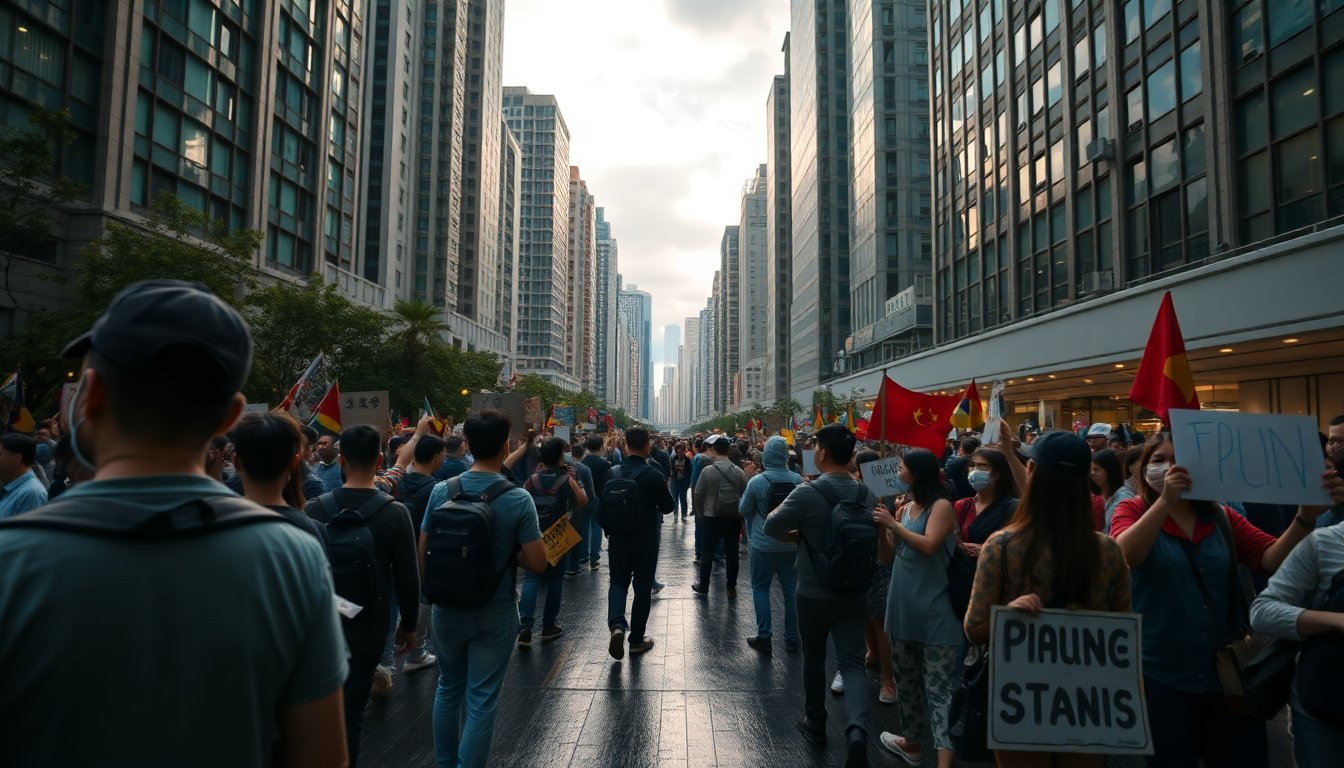
In a significant political maneuver following a tragic fire incident that resulted in loss of life, the Hong Kong government has initiated actions aimed at suppressing dissent. This response appears to mirror strategies employed by Beijing, designed to quell unrest and consolidate power amid a volatile political environment.
The elections that followed the deadly incident have underscored the ongoing tensions between the local government and its citizens. As frustrations grow and public sentiment shifts against the authorities, Hong Kong’s leadership is increasingly resorting to repressive tactics to maintain control.
Government strategies to curb dissent
The Hong Kong administration’s response has been both swift and severe. Following the fire that ignited public outrage, officials have enacted measures intended to prevent any potential mobilization of large groups dissatisfied with government actions. These strategies reflect a calculated approach, echoing methods used by the Chinese government in similar situations.
Utilizing Beijing’s playbook
The tactics employed by the Hong Kong government indicate a reliance on the Beijing model of crisis management. This model involves strict measures against protest activities and an aggressive response to perceived threats to authority. By invoking national security laws and emphasizing the necessity of stability, the administration aims to justify its actions to the public.
As part of this crackdown, authorities have enhanced their surveillance capabilities and restricted access to social media platforms often used for organizing protests. This response seeks not only immediate containment but also serves to convey a broader message about the consequences of dissent.
Public reaction and implications
The public’s reaction to these governmental measures has been one of disbelief and anger. Many citizens feel that their rights to free expression and assembly are being systematically eroded. Critics argue that the government’s actions are not merely reactive to unrest but part of a larger agenda to stifle opposition.
Fear and compliance among citizens
In the face of increased repression, many residents grapple with feelings of fear and helplessness. The narrative pushed by the government suggests that any form of dissent equates to treason, fostering an atmosphere of compliance among those who might otherwise voice their grievances. This chilling effect has led to a noticeable decline in public protests, with many choosing silence over potential repercussions.
Moreover, the media landscape in Hong Kong has shifted dramatically. With independent outlets facing closure or heavy censorship, the space for critical reporting has diminished. This has resulted in a media environment where information is heavily filtered, and dissenting voices struggle for visibility.
A turning point for Hong Kong’s democracy
As the situation evolves, many observers question the future of democracy in Hong Kong. The ongoing suppression of dissent raises alarms about the erosion of civil liberties and the potential for long-term consequences on the political landscape. The events following the tragic fire illustrate a crucial moment for Hong Kong, where the balance of power between the government and its citizens is being tested.
With international attention focused on these developments, the Hong Kong administration may face pressure to reconsider its approach. However, as history suggests, the tendency to prioritize control over dialogue often prevails, leaving citizens to navigate a precarious path forward.
The elections that followed the deadly incident have underscored the ongoing tensions between the local government and its citizens. As frustrations grow and public sentiment shifts against the authorities, Hong Kong’s leadership is increasingly resorting to repressive tactics to maintain control.0


