
Table of Contents
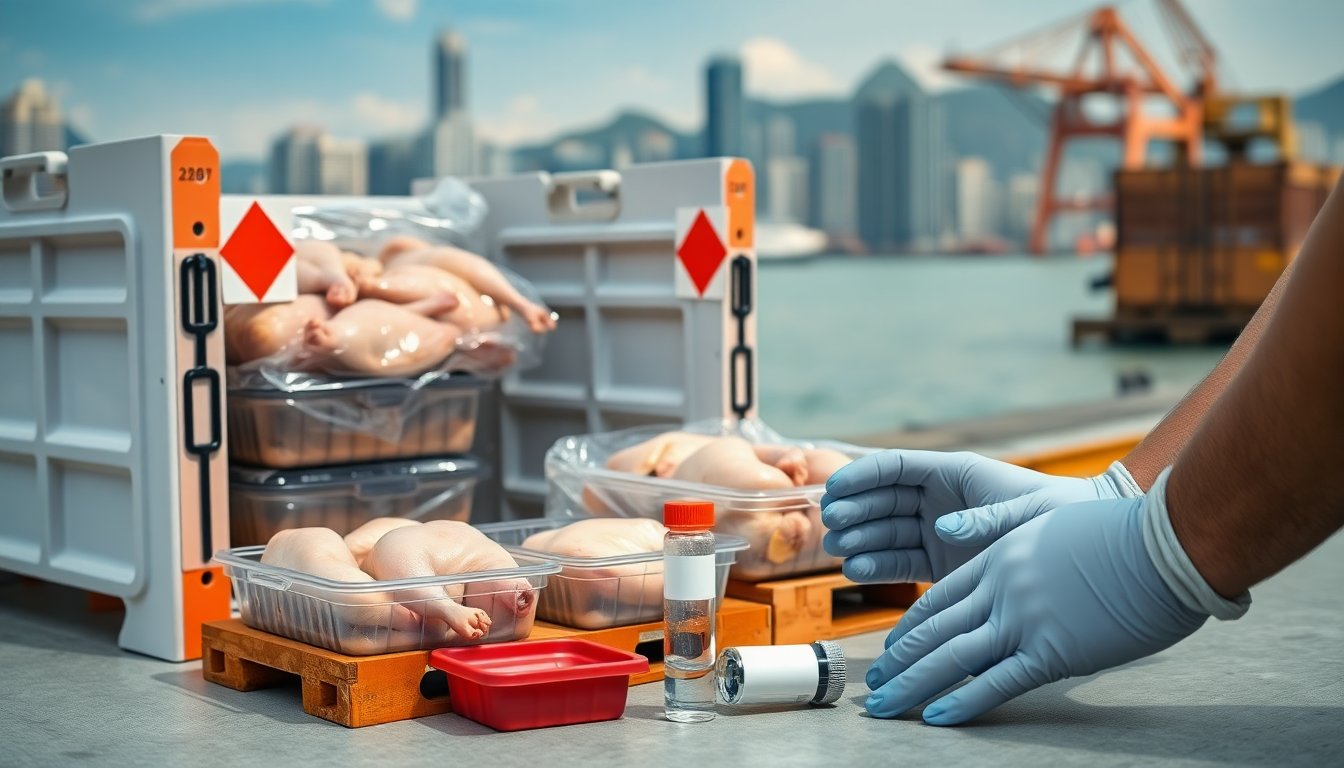
Hong Kong officials have announced a targeted suspension of poultry and related products coming from parts of Japan and Denmark after reports of outbreaks of highly pathogenic avian influenza. The measure affects shipments from Iwate prefecture in Japan and Holbæk municipality in Denmark. Authorities described the step as a precaution aimed at protecting public health and maintaining the integrity of the local food supply chain. The action was publicly disclosed on 23/02/and directs importers and traders to halt affected consignments immediately.
The move follows international notifications of avian influenza activity in the identified areas and aligns with Hong Kong’s established import controls under its food safety framework. Under these rules, the government can suspend imports from specific regions when animal disease outbreaks pose a potential risk to consumers. The decision impacts raw and processed poultry meat as well as eggs and related products, while authorities said they will continue to monitor developments and coordinate with overseas partners.
Why Hong Kong took this step
Hong Kong’s food safety authority stressed that the suspension is a protective, science-based response triggered by reports of bird flu outbreaks in the source regions. The policy reflects a wider principle: when an exporting area reports cases of an infectious poultry disease, receiving authorities may restrict imports from that area to prevent introduction of the pathogen. The ban aims to reduce the likelihood of infected animal products entering the territory and to ensure ongoing consumer confidence in the local market.
How import controls work
The city’s import regime relies on documented health assurances and defined sourcing rules for certain high-risk foods. Under the relevant legislation, imports of meat, poultry, and eggs must come from sources recognised by the Food and Environmental Hygiene Department, and shipments typically require accompanying health certificates issued by the competent authority in the exporting jurisdiction. If a particular region is identified as affected, the department may withdraw recognition or issue a temporary suspension for that region until the risk subsides.
Requirements for traders and importers
Importers are required to present valid health certificates for the release of goods and to comply with inspection and testing protocols. The department maintains a set of guides and operational procedures that outline how to apply for permissions and how consignments are assessed at points of entry. Those bringing prohibited items without proper documentation may face legal penalties. The government also publishes updates to help traders track which regions are authorised or suspended for poultry imports.
Advice for travellers and consumers
Travellers should note that it is an offence to bring game, meat, poultry, or eggs into Hong Kong without the necessary paperwork or prior permission. The rules are enforced to prevent the introduction of animal diseases and to protect local public health. Individuals planning to carry such items must consult the issuing entities in the place of origin about the availability of health certificates; in most cases, official certificates are issued only for commercial consignments, not for personal baggage.
Penalties and contact points
Penalties for breaching the import controls can include substantial fines and imprisonment under the applicable ordinance. For guidance, traders and travellers are directed to official resources such as the Food and Environmental Hygiene Department guides and the Centre for Food Safety’s information pages. Contact details for enquiries include the Food Import and Export Section (Tel: 2867 5577) and the 1823 Government Hotline; written queries can be sent by e-mail to [email protected].
Ongoing monitoring and updates
Hong Kong’s authorities emphasise that import suspensions are subject to change as epidemiological information evolves. The Centre for Food Safety regularly publishes notices that lift or impose restrictions in response to developments overseas. These announcements provide transparency for the trade and help businesses adjust their sourcing. Stakeholders are encouraged to follow official updates closely to ensure compliance and to avoid disruption in supply chains.
By taking targeted, region-specific action the government aims to balance disease prevention with trade continuity. The suspension related to Iwate prefecture and Holbæk municipality is an example of a measured response designed to minimise public health risk while keeping channels open for safe, certified imports when conditions allow.