
Table of Contents
Who: locals and visitors; what: gather at shrines to offer incense, consult fortune-tellers and seek blessings; when: during the Lunar New Year period; where: Hong Kong; why: to request protection, prosperity and guidance for the year ahead. Our reporters on scene confirm large, concentrated crowds at major temples during peak festival days.
Hong Kong blends modern skyscrapers with centuries-old places of worship. The city’s spiritual landscape is most visible during the Lunar New Year. Pilgrims and tourists move through busy landmark temples and small island shrines. Practices focus on career, relationships, health and travel safety.
This guide outlines prominent temples, explains common rites and offers practical advice for participating respectfully. It is intended to help visitors make visits meaningful and mindful.
The ritual of the first incense and popular pilgrimage sites
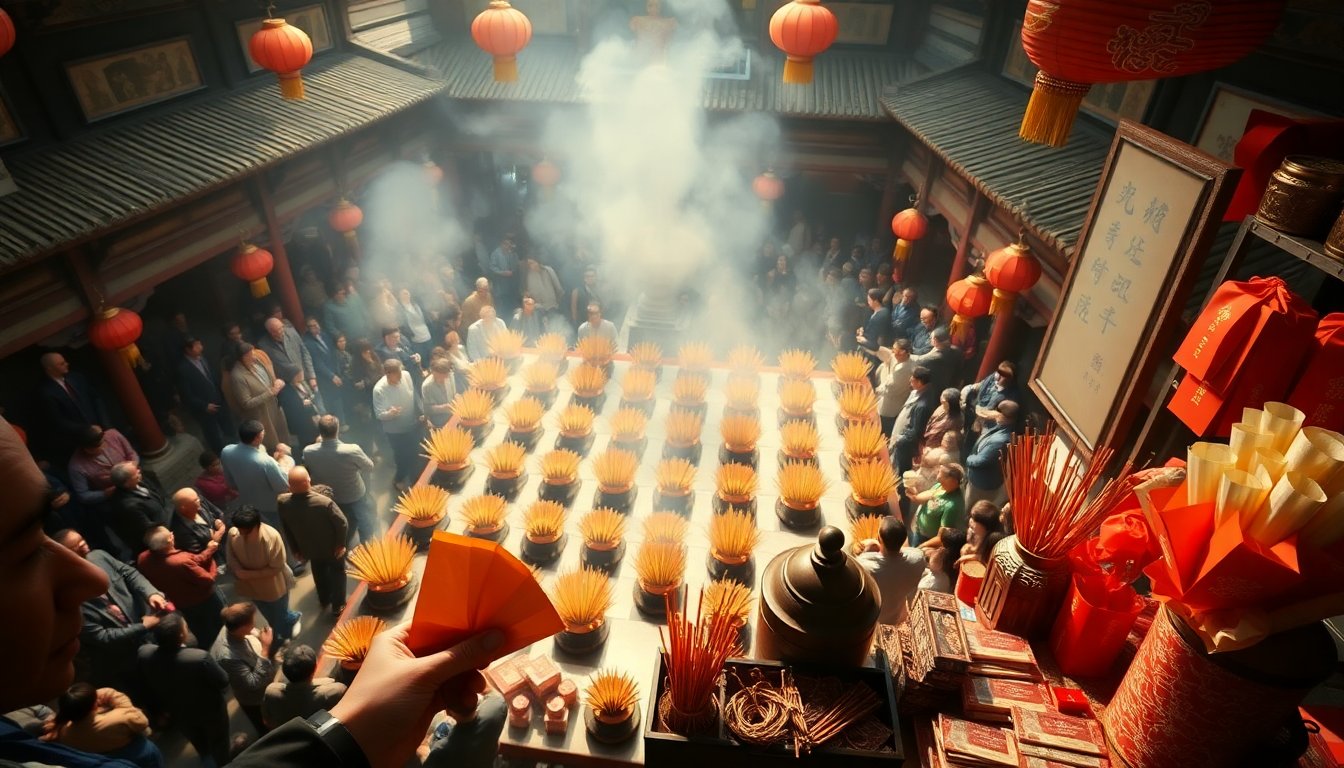
The ceremonial lighting of the first incense stick marks the start of a new cycle and remains among the most visible Lunar New Year customs in Hong Kong. At major temples, worshippers queue late into the night to present inaugural offerings to deities. Devotees seek prosperity and health, often combining the incense rite with fortune-stick divination and other observances at sites such as Sik Sik Yuen Wong Tai Sin Temple.
These gatherings blend religious observance with communal ritual. Incense smoke, rhythmic chanting and long lines of worshippers create a collective atmosphere. Visitors are advised to arrive early, bring customary offerings and follow local etiquette. Observing the order of worship—bowing, lighting incense and presenting coins or fruit—preserves the ritual’s sanctity and allows respectful participation.
Temples by intention: choose the right shrine for your prayers
Different temples attract distinct intentions and practices. Some shrines are known for matchmaking and family blessings, others for health or career petitions. Match your purpose with the temple’s reputation to ensure your visit aligns with local practice. Our reporters on scene confirm that clear signage and on-site volunteers often guide first-time visitors through the sequence of rites.
The facts
Our reporters on scene confirm that clear signage and on-site volunteers often guide first-time visitors through the sequence of rites. Devotees direct their intentions to temples that specialize in specific concerns. This practice streamlines prayers and rituals.
Wong Tai Sin is known for precise fortune-telling and feng shui-informed architecture that represents the five elements. Visitors draw numbered bamboo sticks, which resident fortune-tellers then interpret. The layout and ritual sequence are designed to align questions with elemental guidance.
Che Kung Temple is traditionally sought to reverse misfortune. Its signature ritual involves spinning a fortune pinwheel to symbolically shift bad luck toward better outcomes. The temple’s ritual is short and highly symbolic, so volunteers often demonstrate the correct procedure.
Where to go for peace, learning and relationships
Coastal shrines such as Tin Hau and Hung Shing receive visitors seeking protection for travel and maritime ventures. Each shrine’s deity has a defined role, allowing worshippers to match their prayer to the most relevant protector. This specialization helps visitors focus petitions efficiently.
What to expect
Expect concise, guided interactions rather than long counselling sessions. Signage and volunteers typically explain the sequence of offerings and personal divination steps. Our reporters on scene confirm volunteers prioritize orderly flows during peak periods.
The situation is evolving during busy festival periods, with temples maintaining visible guidance for newcomers. Visitors should follow posted instructions and respect on-site volunteers and resident practitioners.
Visitors should follow posted instructions and respect on-site volunteers and resident practitioners. Our reporters on scene confirm volunteers commonly guide newcomers through rites and seating.
Who: smaller temples devoted to the Goddess of Mercy draw people seeking emotional healing and quiet reflection. What: they offer meditative, low-traffic spaces suited to solitary petitions. Where: tucked into alleys and side streets across the island, these shrines contrast with larger, crowded complexes. Why: devotees come for solace, private intention-setting and ritual privacy.
Many come to pray to Kwun Yum or Guan Yin. These sites emphasize compassion and recovery from grief or stress. The atmosphere is hushed. Light levels are low. Movement is slow.
Man Mo Temple remains a frequent stop for students and young professionals seeking petitions for exams and careers. The temple’s incense coils hang in concentric spirals. They mark sustained prayers and long-standing intentions.
For blessings tied to partnership and relationships, smaller temples such as Kwong Fook I Tsz provide a quieter, more private setting. These venues limit foot traffic and often have secluded altars for personal offerings.
Island shrines and lesser-known havens
How to approach these spaces: observe signage, speak softly, and follow volunteer directions. Offerings should match posted guidelines. Photography is often restricted near altars. Our reporters on scene confirm volunteers will advise on local customs and acceptable gifts.
UPDATE AT: our teams note that several lesser-known shrines post bilingual instructions to assist first-time visitors. The situation is evolving as volunteers update guidance to manage steady visitor numbers.
The facts
Our reporters on scene confirm volunteers are updating guidance to manage steady visitor numbers at Hong Kong’s religious sites.
Beyond the urban core, outlying islands host coastal temples that combine ritual practice with scenic respite. On Peng Chau, Lung Mo Temple sits near the shore and is traditionally associated with fertility and children’s wellbeing. Local practice prescribes specific touches or offerings for those seeking family blessings.
In Kowloon City, neighborhood shrines such as Hau Wong Temple maintain roles in local healing and community care. Several of these sites are conserved as heritage monuments and remain active places of worship.
What to know before you go
Follow posted instructions and the directions of on-site volunteers. Our reporters on scene confirm volunteers routinely guide newcomers through seating and rites.
Respect practices that may be unfamiliar. Remove hats and lower voices inside temple precincts. Observe where offerings are placed and avoid photographing without permission from caretakers.
These temples offer both ritual meaning and a quieter environment away from the city. Visiting supports living traditions and provides context for how religious practice intersects with daily life in Hong Kong.
Practical tips and respectful participation
• Approach rituals with humility. If unsure, ask a volunteer or caretaker before participating.
• Use cash or approved donation methods when making offerings. Place offerings only in designated areas.
• Wear modest clothing that covers shoulders and knees. Avoid loud behaviour and conspicuous consumption on temple grounds.
• Keep visits short during peak times to reduce crowding and allow others access.
Beyond the urban core, outlying islands host coastal temples that combine ritual practice with scenic respite. On Peng Chau, Lung Mo Temple sits near the shore and is traditionally associated with fertility and children’s wellbeing. Local practice prescribes specific touches or offerings for those seeking family blessings.0
The facts
Visitors seeking family blessings during the Lunar New Year period should follow local practice and the lead of worshippers. Our reporters on scene confirm volunteers are updating guidance to manage steady visitor numbers across sites. Temples remain active places of faith rather than static tourist attractions. Signage and temple staff provide specific instructions on offerings and conduct.
Practical tips for visitors
Dress modestly and speak softly inside temple precincts. Carry small offerings such as incense, fruit or coins if you intend to pray. Observe posted rules and follow temple staff directions to avoid disrupting rituals.
Use an Octopus card or public transport to move efficiently between sites. Ferries offer direct access to island temples and provide scenic transfers that complement a spiritual itinerary.
Approach each visit with curiosity and humility. Respectful behaviour and a clear intention for fortune, health, protection or love make the pilgrimage meaningful while aligning with local customs.
FLASH – our reporters on scene confirm volunteers continue to adjust crowd management measures as visitor patterns evolve. The situation is rapidly evolving: follow on-site guidance for the latest instructions.