
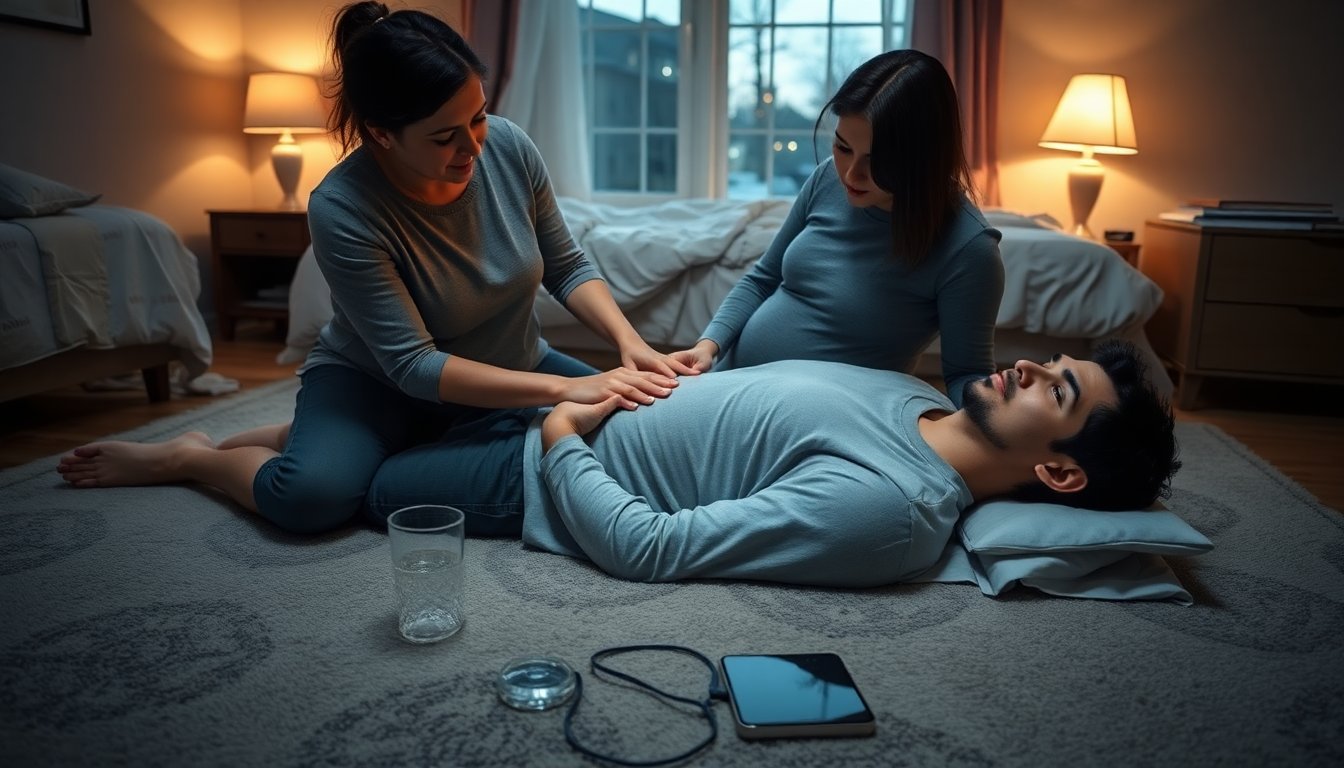
What started as an ordinary evening at home turned urgent when a North Carolina man suddenly went into cardiac arrest while lying in bed. His wife—early in her pregnancy and a physician assistant with more than a decade of clinical experience—saw him collapse, sprang into action, and never hesitated. She began chest compressions immediately, guided the scene calmly, and called 911. Her quick, steady response kept blood flowing until paramedics arrived and took over. In the hospital, clinicians discovered a rare, previously undiagnosed heart condition that had triggered the event and required prompt treatment and ongoing cardiology follow-up.
A single moment that changed everything
The collapse came without warning. One instant he was there, the next he was unresponsive and not breathing. Because his wife recognized the signs of cardiac arrest within seconds, she initiated CPR and gave clear directions to emergency dispatch. Paramedics performed advanced cardiac life support on arrival and transported him to a medical center, where doctors identified an unusual cardiac disorder that had produced no obvious symptoms beforehand. Rapid intervention likely protected his brain and other organs during the crucial minutes before advanced care.
Why those first minutes matter
When a heart suddenly stops, every minute counts. Continuous chest compressions maintain circulation to the brain and vital organs until defibrillation and advanced therapies are available. Studies show that bystander CPR can double—or even triple—the chances of surviving an out-of-hospital cardiac arrest with a meaningful recovery. Shortening the time to effective compressions and defibrillation dramatically improves neurological outcomes; the odds steeply decline for every minute without adequate circulation.
Practical lessons from one household
This family’s experience underscores a simple truth: preparedness saves lives. A few practical measures that matter:
– Learn hands-only CPR and refresh the skill periodically. – Know where an automated external defibrillator (AED) is located in public places, and encourage AED access at home or in community centers. – Share medical histories and emergency plans within households so responders know important details quickly. Communities that make basic life-support training widely available report higher bystander intervention rates and better survival statistics. Training focuses on compression depth and rate, minimizing interruptions, and recognizing arrest—skills that are straightforward to learn but hard to overstate in value.
Health, lifestyle and next steps
After the acute episode, clinicians recommended immediate medical management for the identified cardiac condition and advised lifestyle changes tailored to his diagnosis. Small, sustained habits—like adopting a Mediterranean-style diet, limiting alcohol and processed foods, and maintaining regular physical activity—can lower cardiovascular risk factors over time. Clinical research links such dietary patterns to reductions in major cardiovascular events, while routine exercise helps improve blood pressure and resting heart rate within months.
Broader ripple effects
Beyond the family, better household readiness has wider implications. Widespread CPR training and AED access can ease strain on emergency systems and reduce long-term disability, generating public-health benefits that ripple into lower costs for families and healthcare systems. Schools, workplaces, and community centers that incorporate first-aid and CPR instruction create safer environments and more resilient neighborhoods.
Numbers that matter
– Bystander CPR can double or triple survival odds in out-of-hospital cardiac arrests. – Response times under five minutes are associated with far better outcomes than longer delays. – Communities with accessible training and AEDs see higher rates of early intervention and improved survival statistics.
Human costs and supports
Surviving a sudden cardiac arrest is only the beginning. Families often face emotional stress, and survivors may need psychological support as well as medical follow-up. Care teams typically recommend structured outpatient monitoring, cardiac rehabilitation where appropriate, and counseling for family members to help process the event and adapt to new routines.
A clear takeaway
This couple’s story is a stark reminder that readiness and action in the home can be decisive. A trained, composed bystander turned a terrifying emergency into a survivable one. Encouragingly, the steps that improve those odds—learning CPR, increasing AED availability, and embracing preventive health—are accessible and affordable. Investing a few hours in training could make all the difference if the unthinkable happens.