
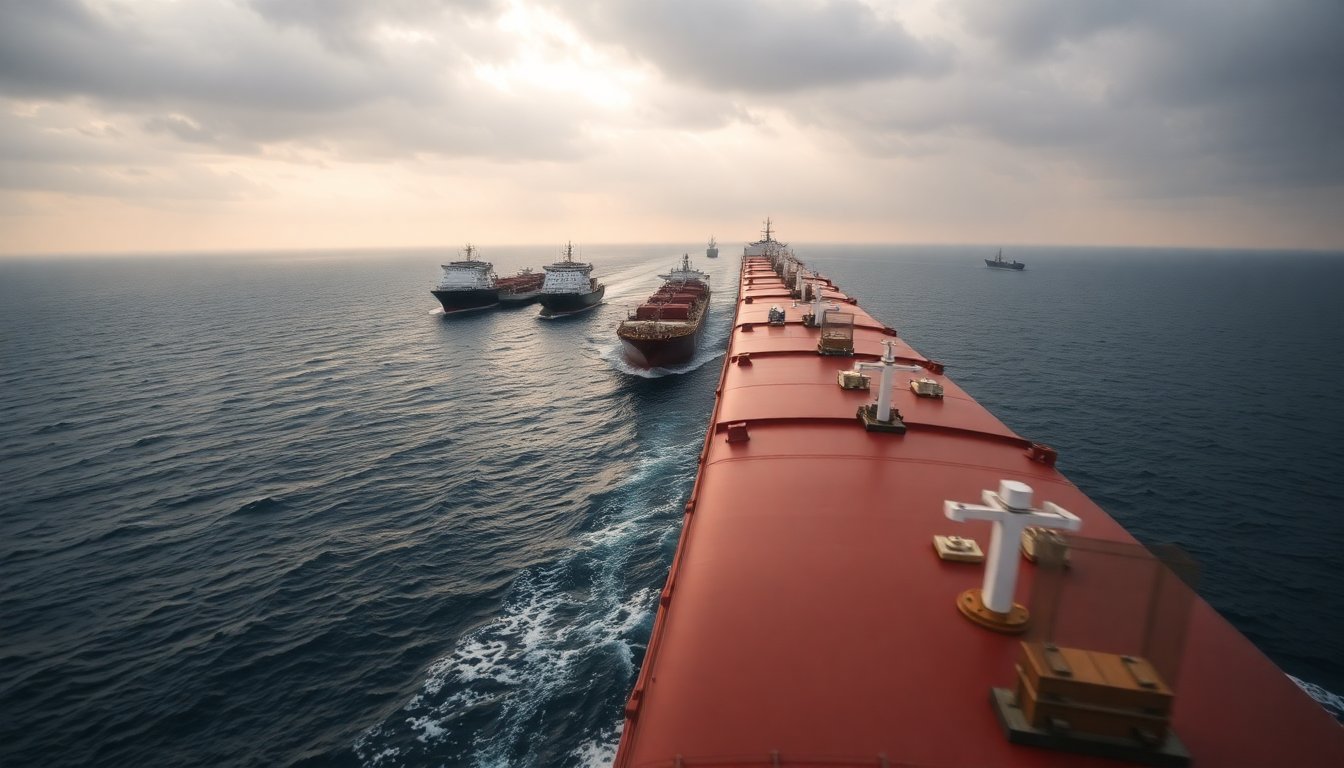
On February 28, 2026, analysts warned that a sustained U.S. military campaign against Iran could rapidly spill beyond a conventional battlefield and become a regionwide confrontation. At the center of this worry sits the Strait of Hormuz — a slim chokepoint where a large share of the world’s crude oil and liquefied natural gas funnels from the Persian Gulf into the Arabian Sea. Because so much energy must pass through such a narrow corridor, even short disruptions can send shockwaves through global markets.
Think of Hormuz as a bottleneck for the global energy supply. Roughly 20 million barrels a day have moved through the strait in recent years, and at its narrowest point the channel is only about 33 kilometers across. That geography corrals commercial tankers and naval vessels into tight lanes, meaning a single incident — from a mined channel to a clipped tanker — can ripple far beyond the water itself.
The economic chain reaction is familiar to traders and supply-chain managers. Delayed or rerouted tankers increase voyage times, raise fuel consumption and push up insurance premiums. Refineries and ports that rely on just-in-time deliveries face operational strain. Freight costs climb, margins get squeezed, and volatile spot prices for oil and LNG make their way into manufacturing budgets and consumer bills within weeks.
There are few fast fixes. Alternate routes — limited pipelines or the long detour around the Cape of Good Hope — exist, but they cannot quickly replace Hormuz’s throughput. Some cargoes can be redirected through the Suez Canal to Europe, while major Asian importers may scramble for supplies elsewhere. Still, these detours are slower and more expensive, so market stress tends to be sudden and pronounced.
Iran has several asymmetric tools at its disposal to disrupt maritime traffic without engaging in a full-scale naval showdown. Measures range from stepped-up inspections and temporary seizures to more aggressive tactics: laying mines, harassment by fast-attack craft, and operations involving submarines or semi-submersible platforms. These actions don’t need to match a superpower fleet ship for ship — raising risk, slowing traffic and reducing tanker availability is often enough to tighten supplies and lift prices.
Market watchers therefore monitor practical, fast-moving signals: vessel rerouting patterns, wait times at choke points, bunker-fuel costs and spikes in marine insurance premiums. Those indicators usually flicker before consumer-facing price changes appear and help traders decide whether to hedge, reroute, or buy on the spot market.
In short, a conflict centered on Iran wouldn’t be confined to missile and aircraft trajectories. Any confrontation that threatens passage through the Strait of Hormuz could quickly translate into higher shipping costs, strained supplies for Asian importers, and volatile energy prices felt around the world.