
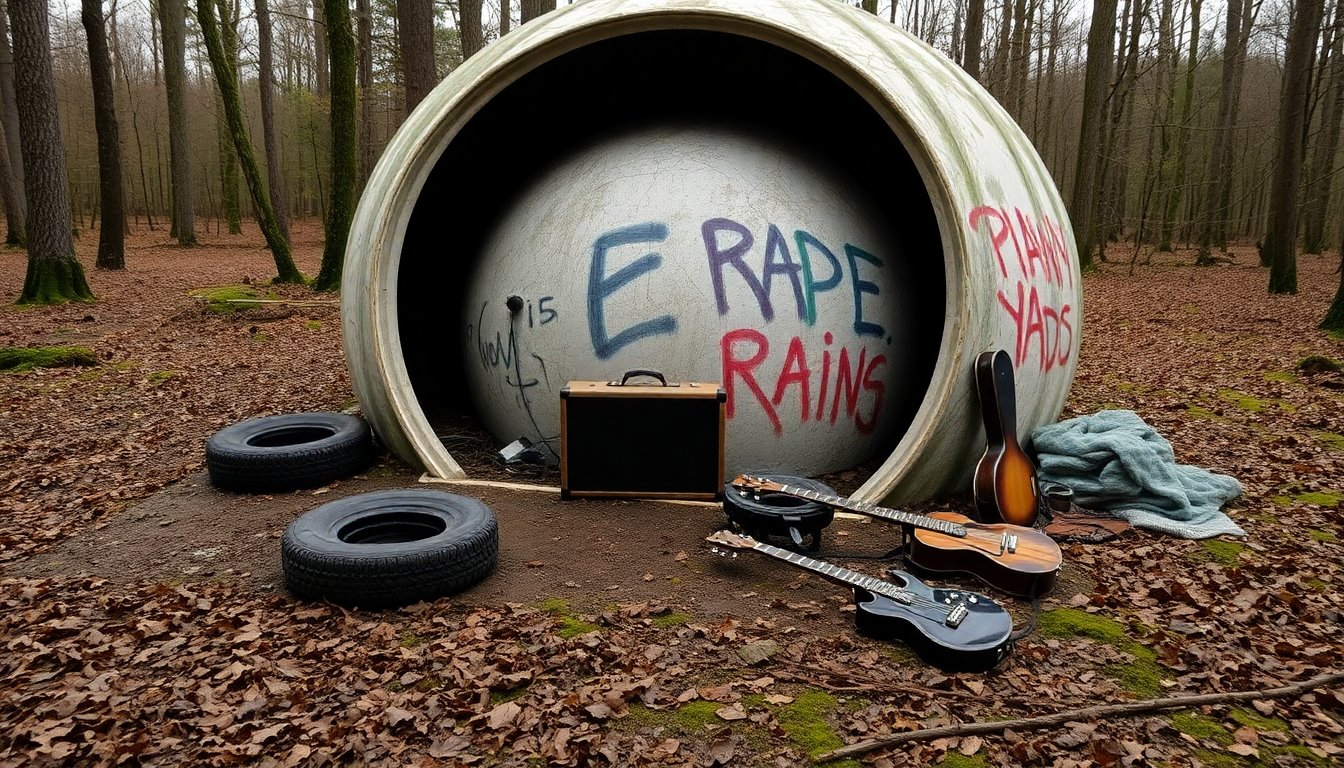
The clearing in the Tver region has long harbored an oddity: an 18-meter fiberglass dome that locals simply call the Sphere. Perched in a remote stand of trees, its hollow, radio‑transparent shell drew off‑road adventurers, musicians chasing strange acoustics, and anyone curious about where it came from. Over time something abandoned and utilitarian became a makeshift stage, a shelter, and a meeting place—part contraption, part community canvas.
Origins and competing stories The first images and eyewitness accounts date the Sphere to the mid‑1980s. It was a sporadic presence through the 1990s and 2000s, then gradually became a regular destination for gatherings around 2012. Vandalism damaged it in 2014, and by the structure had finally split apart, leaving shards across the forest floor.
Explanations for the dome’s arrival divide into two flavors. Engineers who inspected its features point to a radome‑like design—an exterior shell meant to protect antennas while letting radio waves pass through. Independent technical assessments and former workers name organizations such as NPO Almaz and regional design institutes as plausible builders, suggesting maintenance and telemetry roles rather than anything fantastical.
At the same time, rumor and imagination filled the gaps left by sparse records. Online forums spun tales of Cold War test ranges, anti‑satellite projects, and helicoptered modules abandoned during late‑Soviet upheaval. Tabloid reports hinted at dramatic placement mishaps and military secrecy. None of these theories is definitively proven; ownership and transaction records are incomplete, and the truth is braided with speculation.
A place that became a stage Whatever its original purpose, the Sphere’s curved interior proved irresistible to people. Off‑roaders first mapped its coordinates and turned visits into rites of passage. Cyclists, hikers and students followed, documenting the dome’s peculiar acoustics on phones and portable recorders. A physics student from Moscow State University once staged a multimedia night of music, poetry and choreography there; the shell amplified even the lightest sounds—whispers swelled, footsteps thudded like drums—so the space acquired an almost ceremonial feel.
Local volunteers tried to protect the site after the first waves of vandalism. Cleanup efforts, repainting and watch rotations slowed visible decay, but they couldn’t fix deeper problems. Panels flexed and separated as the foundation settled into marshy ground; small repairs were never enough to halt progressive splitting and sagging.
Collapse and repurposing By the dome had collapsed. Rather than vanish entirely, its pieces found new life in the village. Curved fiberglass panels became inexpensive roofing for outbuildings, shards were turned into garden beds or art pieces, and craftsmen sold small souvenirs and magnets made from salvaged fragments. Even modest local markets logged the occasional sale of a panel or two for DIY projects.
Beyond practical reuse, people preserved memories. Photographs, social‑media posts, and informal displays kept the Sphere’s story alive. Elders spoke of nights spent there with tea and music, while others recalled how the shell transformed ordinary sounds into something solemn and communal—a property that made the structure feel like a named place, not just an object.
Cultural afterlife and community value The dome’s material afterlife is entwined with its cultural one. Debris turned into raw materials and small income; stories and rituals became a shared heritage. What began as a mysterious chunk of fiberglass evolved into a locus of local identity: a landmark that shaped gatherings and offered a rough kind of stewardship when official plans collapsed or records went missing.
This episode illustrates how built things outlive their intended function. An obscure technical shell became a stage, a shrine of sound, and eventually a resource for everyday life. The Sphere may be gone, but the fragments—and the memories attached to them—keep its presence in the clearing and in the community’s imagination.