
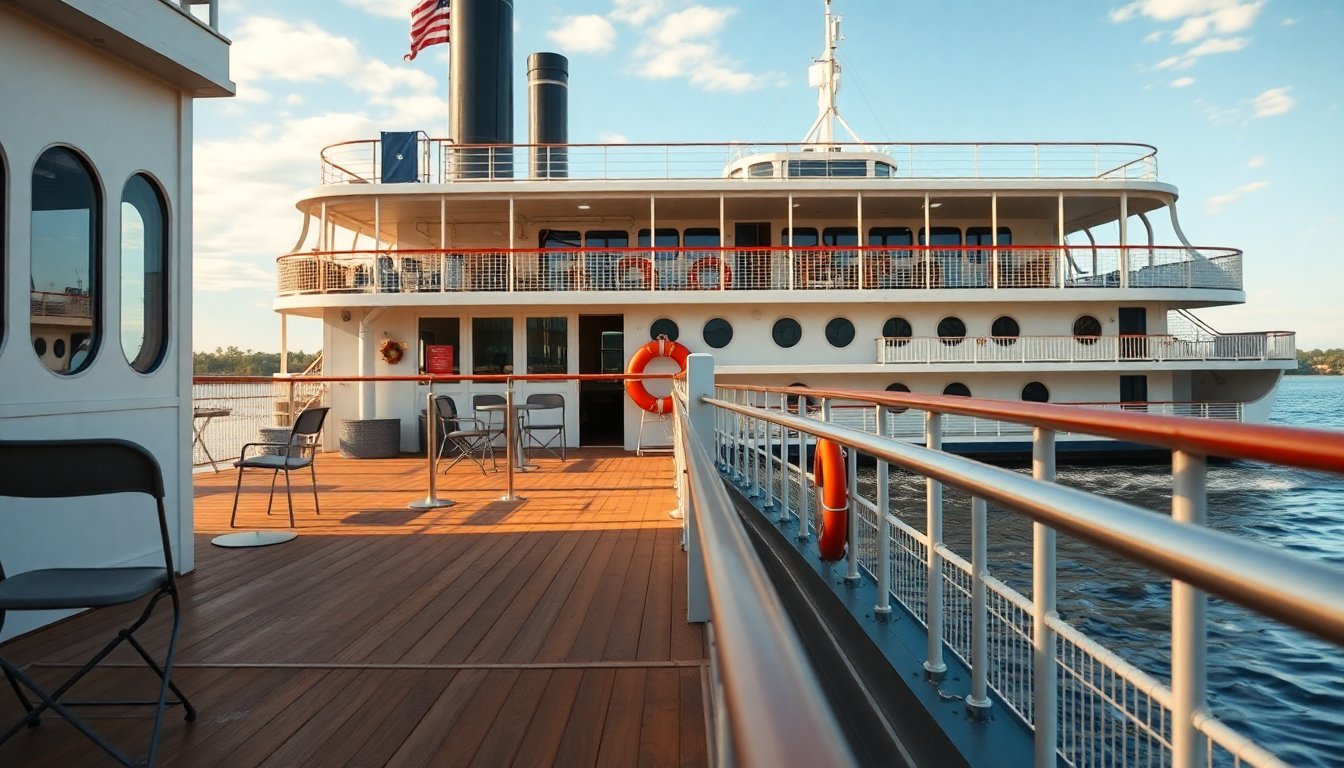
The palate never lies: travel tastes different depending on scale, service and the choices that shape your day. Below I set two very different ships side by side—the small American Pioneer and the large Celebrity Ascent—using the practical numbers that actually shape the experience: tonnage, capacity and staffing. I also summarize film critic A.S. Hamrah’s short visit to Durham, where he’ll screen Taste of Cherry, lead a public conversation, and sign books—events that link criticism, curation and university collections.
How to read this: think in terms of atmosphere and trade-offs. Smaller ships trade variety for intimacy; mega-ships trade quiet for choices and spectacle. Which appeals depends on whether you want slow, personalized service or a nonstop buffet of activities.
Ships and their personalities
Imagine the American Pioneer as a cozy neighborhood restaurant: quiet dining rooms, attentive servers who remember your preferences, menus tuned to regional suppliers. Built around intimacy, it carries fewer passengers and boasts a higher crew-to-guest concentration that lets staff linger, adjust dishes, and design curated shore excursions. The pace is deliberate; public spaces feel calm rather than crowded.
The Celebrity Ascent is a sprawling food hall: many restaurants, specialist staff, and large-scale entertainment that runs late into the evening. Variety is its strength—multiple dining venues, stages for production shows, and round-the-clock options—so passengers can assemble very different days. The flip side is that attention is often specialized rather than personal: logistics and consistency win over bespoke service.
The numbers that shape your day
Operational metrics aren’t abstract—they determine crowding, rhythm and how often staff can interact with you.
- – Crew-to-guest: American Pioneer runs roughly 2.60 guests per crew member; Celebrity Ascent is about 2.33 guests per crew member. That difference reflects approach more than raw efficiency: the Pioneer channels hospitality through fewer hands for a discreet, attentive style; the Ascent spreads staff across more venues and functions.
- Public space and venue count: more public space per guest reduces bottlenecks in lounges and dining rooms. Mega-ships offset crowding by offering multiple dining rooms, bars and entertainment stages, scattering passengers across venues.
- Itineraries: smaller ships can slip into narrow ports and often linger ashore longer; larger ships concentrate on major ports with tighter schedules.
- Cost and footprint: fuel consumption, waste handling and shore logistics scale differently. These operational realities affect ticket price, onboard offers and environmental strategies.
If you want variety, big shows and the carnival of choices, the Ascent is your pick. If you crave solitude, scenery and highly personalized service, choose the Pioneer. Both can be excellent—just in very different ways. On typical reviewer scales, the Pioneer scores around 9.0/10 for solitude and scenery; the Ascent hits about 10.0/10 for social life and entertainment. As in a well-run kitchen, good mise en place—clear organization—makes the whole guest experience sing.
A.S. Hamrah in Durham: screenings, conversation, books
Film critic A.S. Hamrah will be in Durham for two events:
– Monday, March 2, 2026, 7:00 p.m. — Conversation and book-signing at Letters Bookshop (downtown Durham).
– Tuesday, March 3, 2026, 7:00 p.m. — Screening of Abbas Kiarostami’s Taste of Cherry at the Rubenstein Arts Center Film Theater.
Hamrah’s talks blend close readings with practical programming questions: how context, pairing and venue shape audience response. Expect tight analysis of the film followed by a public conversation that ties criticism to curation. The book-signing is a chance to ask follow-up questions and get a signed copy.
Recent books and why they matter
Two recent collections by Hamrah have been influential among programmers and critics:
– Algorithm of the Night: Film Writing 2019–2026 — essays about criticism during a streaming-driven era: festival shifts, award-season narratives, and how recommendation systems alter discovery.
– Last Week in End Times Cinema — short, reactive pieces that tether film trends to broader cultural anxieties; handy for spotting genre revivals and aesthetic patterns.
Both volumes argue that platforms and curatorial choices are as decisive as the films themselves when it comes to who sees what.
How to read this: think in terms of atmosphere and trade-offs. Smaller ships trade variety for intimacy; mega-ships trade quiet for choices and spectacle. Which appeals depends on whether you want slow, personalized service or a nonstop buffet of activities.0