
Table of Contents
The rise of artificial intelligence (AI) offers both significant opportunities and challenges, particularly regarding global inequality. A recent report from the United Nations Development Programme (UNDP) indicates that while developed nations leverage AI’s potential, developing countries may find it difficult to keep up, resulting in an alarming trend of technological disparity.
Entitled “The Next Great Divergence,” the report asserts that technological advancements similar to those of the Industrial Revolution could either enhance global prosperity or exacerbate existing inequalities. During a briefing in Geneva, Philip Schellekens, the chief economist at the UNDP’s Asia and Pacific regional bureau, emphasized this troubling trend, suggesting that the emergence of AI could herald a new era of inequality.
Understanding the implications of AI on global inequality
The widening gap in AI integration among nations
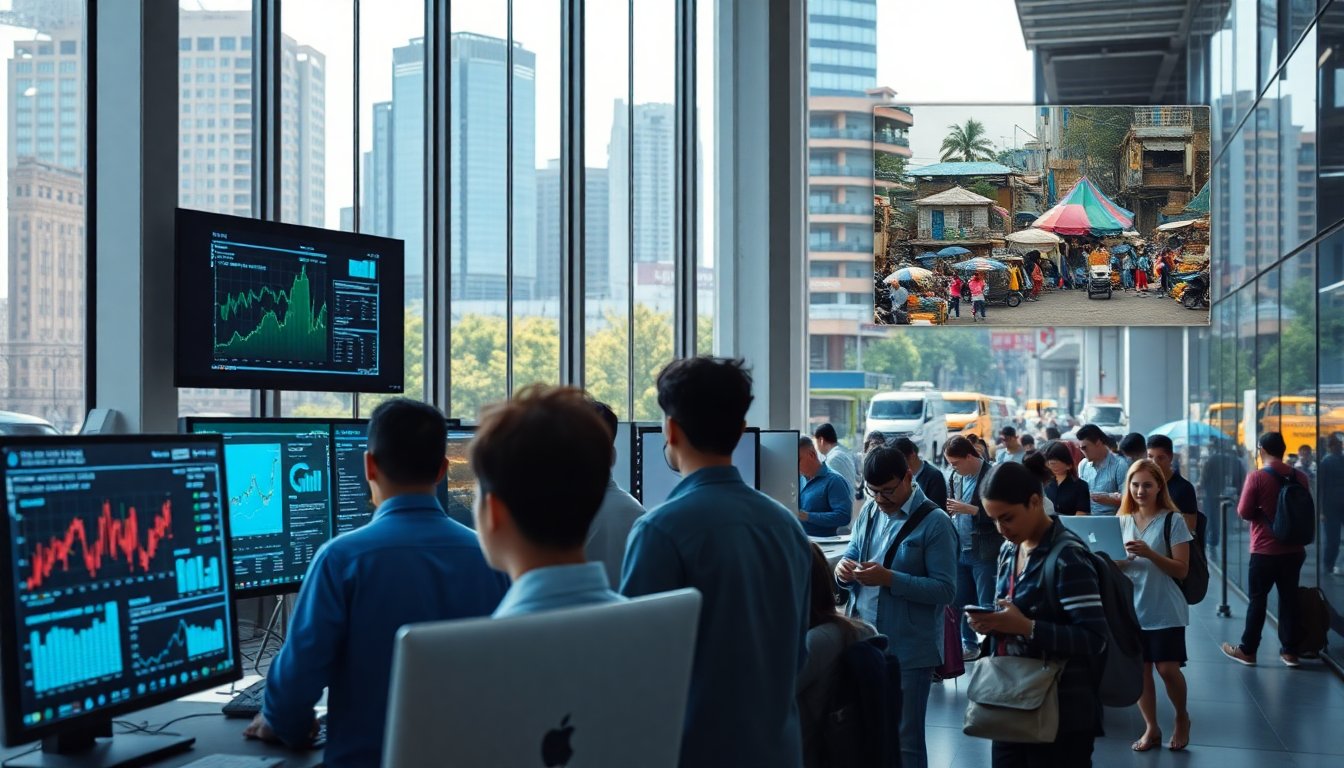
As nations accelerate their efforts to adopt AI technologies, a growing divide between countries is becoming increasingly evident. Over the past five decades, there has been a notable trend toward global convergence, with developing nations making significant strides to reduce inequality. However, the rise of AI could potentially reverse this trend, fostering a situation where wealthier countries benefit disproportionately while their less affluent counterparts struggle to keep pace.
The data tells us an interesting story. Countries with robust technological infrastructure, such as Singapore, Japan, and China, are already witnessing the positive impacts of AI. These advantages include improvements in educational systems, advancements in healthcare, and the creation of new business opportunities. In contrast, nations that lack digital access, dependable power, and essential technological skills face the risk of being left behind in this technological race.
The socio-economic ripple effects of inequality
The implications of rising inequality extend beyond mere economic metrics. Schellekens warns that if the divide between nations continues to grow, it could lead to significant spillover effects impacting security and migration patterns. Increased inequality may drive higher rates of undocumented migration, as individuals from less developed nations seek better opportunities elsewhere.
The report highlights the vulnerability of certain job sectors, particularly those predominantly occupied by women and youth. With the threat of automation looming, millions of jobs are at risk unless proactive policy measures are implemented. Without intervention, these groups could face disproportionate impacts from advancements in artificial intelligence.
Opportunities for balanced growth in the Asia Pacific
The report highlights both challenges and opportunities, particularly in the Asia Pacific region, which encompasses over 55% of the global population. This region is set to emerge as a significant player in the artificial intelligence landscape, contributing a large share of the world’s AI users. The United Nations Development Programme (UNDP) projects that the integration of AI could enhance annual GDP growth by approximately 2 percentage points in this area. Countries within the ASEAN bloc are expected to gain nearly $1 trillion in additional GDP over the next decade.
However, it is crucial that these benefits are distributed fairly to avoid a scenario where only a few nations prosper. The report emphasizes the need for a collaborative global approach, urging coordinated policy actions to ensure that the advantages of AI are shared among all countries, thus preventing further disparities.
Prioritizing human choice in technology adoption
UNDP calls for human-centered policies in AI development
As the world approaches an AI-driven future, the United Nations Development Programme (UNDP) emphasizes that technology should not dictate our path. Instead, it is the decisions made by individuals globally that will shape our future. The organization notes, “No one can predict with certainty where AI will take us in the future, nor can we fully imagine what it might help create or destroy.” This statement underscores the importance of prioritizing human-centered policies that promote equitable access to technology.
The data tells us an interesting story about the potential of AI to transform societies. However, it also highlights a significant risk: the possibility of deepening the divide between developed and developing nations. Global leaders must recognize these challenges and collaborate to foster an inclusive environment. The goal is to ensure that no country is left behind in the ongoing AI revolution.