
Table of Contents
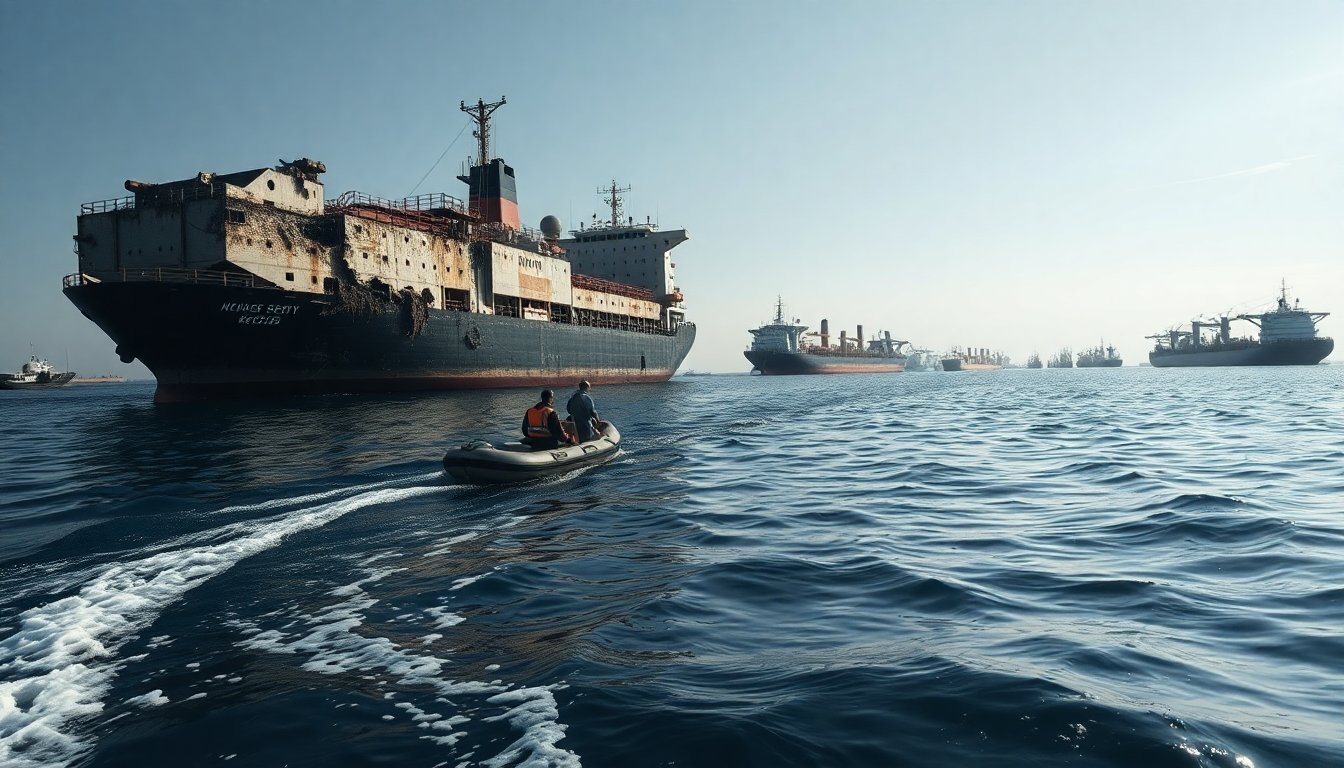
The waters around the Strait of Hormuz have become a flashpoint, disrupting one of the world’s most vital shipping corridors and threatening a wider energy security crisis. Since March 1, commercial traffic through the strait has slowed dramatically after several vessels were struck and insurers either cancelled coverage or raised war-risk premiums from roughly $200,000 to as much as $1 million. Incidents including damage to the Thai bulk carrier Mayuree Naree—whose crew were partly evacuated after a fire—and lighter strikes against the ONE Majesty and Star Gwyneth have underscored the peril. These attacks, combined with rhetoric that Iran could choke exports, have frozen many operators’ plans to transit the waterway.
Beyond the immediate human and commercial toll, the stoppage imperils global fuel flows: roughly 20 percent of the world’s crude oil and liquefied natural gas usually pass through the strait. Some producers have already curtailed output—Iraq cut about 1.5 million barrels per day—and others are rerouting or relying on limited pipeline alternatives. The combination of halted tankers, possible mine-laying activity and higher insurance costs has shifted this from a temporary disruption to a risk of prolonged shortages and sharp price spikes in Asia and Europe.
Why the strait matters and where alternatives fall short
The Strait of Hormuz is narrow—just 21 miles at its tightest point—with only a few designated lanes for large tankers. While some producers can push crude through alternate routes, these options are constrained. Saudi Aramco can ramp capacity on paper—producing up to 12 million bpd—but export limits mean only about 7 million bpd can leave via Yanbu on the Red Sea. The UAE can raise output toward 4 million bpd, yet its Habshan-Fujairah pipeline allows only about 1.5 million bpd to bypass the Gulf. Kazakhstan may add roughly 500,000 bpd beyond OPEC+ quotas, but these steps cannot fully substitute for the daily volumes that transit Hormuz, leaving Asian and European importers vulnerable if tankers do not resume crossings.
Immediate risks to markets and maritime operations
Market observers warn that extended stoppages could push oil prices into the triple digits, with cascading effects on gasoline, diesel and natural gas supplies. The presence or perceived presence of mines is particularly destabilizing: mining need not close the waterway to be effective—just a few devices can make insurers and shipowners extremely cautious. Reports of mine-laying and subsequent strikes by US forces—publicly described as targeting mine-laying vessels—have added to the uncertainty, while naval attacks claiming to have destroyed vessels increase the sense of an active warzone. The interplay of military action, insurance risk and commercial caution is keeping many merchant captains from attempting transit.
Insurance and cost dynamics
War-risk premiums and political-risk policies have become a decisive factor in shipping decisions. When premiums spike toward $1 million for a single passage, charterers and owners often choose to idle a ship rather than expose a crew and cargo to inflated costs and potential damage. Governments can influence this dynamic by offering state-backed coverage or by organizing convoys, but those measures require credible security guarantees and international coordination. Without lower perceived transit risk, many shipments will remain stalled despite alternative supply efforts.
Mine threats and naval escorts
Mining represents a unique strategic lever: it threatens to keep insurers and operators on edge even if navies can neutralize several devices. Convoying tankers under naval escorts is a well-established response—historically used during conflicts to preserve exports—but it demands significant maritime resources and multinational coordination. Some nations have suggested air protection or limited escort missions; others emphasize the need for demonstrations of safe transit to restore confidence. Any escort plan will likely be partial at first and require partners such as the United Kingdom and other naval powers to share the burden.
Policy options to avert a broader energy crisis
Policymakers have a short runway to reduce the economic fallout. Releasing stockpiles through the International Energy Agency can calm markets by directing crude where it is needed, while encouraging increased output from countries with spare capacity can help narrow shortfalls. Mobilizing US domestic producers and urging OPEC+ producers to temporarily raise quotas could provide additional relief, though infrastructure limits will cap the benefit. Creating protected alternative routes—such as reopening previously restricted inshore channels with consent from coastal states and naval protection—would help too, but requires diplomatic and military arrangements.
More assertive measures include coordinated maritime protection, state-backed insurance to lower transit costs, and even limited operations to remove military forces from islands that command local approaches. Any ground action, such as displacing forces on Abu Musa or the Tunb islands, would be complex and would need host-nation cooperation to be lawful and sustainable. The window to prevent a full-blown global energy shock is narrow; a mix of diplomatic, commercial and military measures will be needed to restore safe, if reduced, flows through the Strait of Hormuz.