
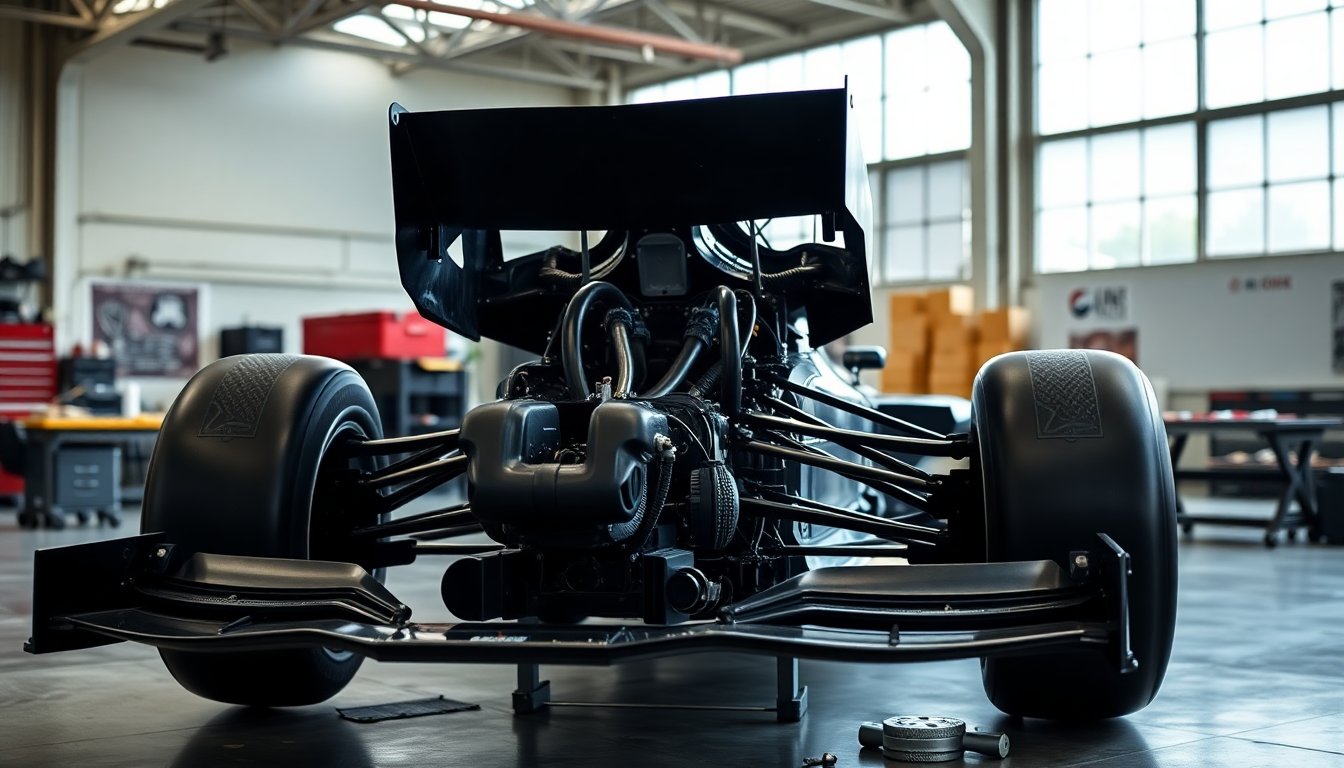
Cadillac’s announcement that it will enter Formula 1 in March 2026 is more than a flashy PR moment — it’s a high-stakes undertaking that will test GM’s engineering muscle, commercial savvy and regulatory know-how. Coming into F1 late forces Cadillac to compress years of work into a few intense cycles: car design, supplier deals, homologation, recruitment and marketing all have to move at once. Pulling that off will require deep pockets, meticulous coordination and a tolerance for setbacks.
The hurdles are straightforward but unforgiving. First, the timeline is brutally tight: the team must design, build and test a car capable of competing with long-established outfits such as Mercedes and McLaren while development, testing and logistics overlap nonstop. Second, modern F1 cars are incredibly complex assemblies — tens of thousands of parts produced by specialist suppliers in composites, aerodynamics, electronics and powertrain. Managing that supply chain is a logistical challenge. Third, the regulatory bar is high: FIA entry rules, homologation procedures and safety standards leave little margin for missing paperwork, certification gaps or traceability errors.
This project serves two purposes at once. On the surface it’s a marketing play — a way to ride growing U.S. interest in F1 and position Cadillac as “America’s team.” Behind the scenes it’s an industrial investment: GM wants to seed engineering capability and manufacturing content in the U.S., even if much early technical work leans on overseas expertise. The aim is long-term: transfer knowledge back home, build supplier ecosystems and create a domestic centre of gravity for high-performance engineering.
To accelerate progress, Cadillac has split operations across borders. A U.K. foothold gives immediate access to aerodynamicists, composite shops and race engineers — a dense ecosystem that shortens supply chains and lowers technical risk during the early, frenetic phase. At the same time, GM is mapping out larger U.S. facilities: final powertrain production near Charlotte and an assembly/homologation site close to Indianapolis are intended to bring core activities stateside over time.
Cross-border work brings its own headaches. Shipping prototype parts, proving provenance, and meeting differing national safety and customs rules add administrative friction. The team needs to map regulatory touchpoints early, designate clear owners for inspections and filings, and build robust traceability from the first prototype to race-day components.
Practical measures that reduce risk during the build-out include:
– Standing up domestic engineering teams quickly and rotating in secondments from the U.K. group to transfer know-how.
– Locking down written contracts with suppliers and dual-sourcing critical components to avoid single points of failure.
– Adopting RegTech and automation tools to manage certification tracking, customs declarations and audit trails.
– Running focused training programmes to cultivate skills in composites, hybrid power units and high-voltage electronics.
Quality control and supplier reliability will determine whether the programme thrives or stalls. Staged validation tests, formal quality gates and rigorous documentation at each assembly milestone should be non-negotiable. Delays in supplier certification or lapses in traceability don’t just slow development — they can trigger homologation reviews and costly schedule slips.
On the technical front Cadillac has chosen a pragmatic route to shorten the learning curve: it’s using Ferrari power units while outsourcing much of the chassis development to experienced U.K. partners. That mix has paid off in early track time, letting the team prioritise durability, cooling and hybrid integration. Unsurprisingly, initial lap times sit toward the back of the grid — a familiar position for new constructors — but the data gathered from miles on track is the real currency at this stage.
People strategy matters as much as parts. The squad combines veteran F1 engineers with North American hires. Day-to-day development is concentrated in the U.K. for now, but the plan is to shift detailed engineering and final assembly to the U.S. over several seasons, using training, supplier links and personnel transfers to embed expertise domestically.
Expect steady, measured progress rather than instant results. Early upgrades will likely focus on aerodynamics and suspension, followed by deeper powertrain integration and software refinements. If the rollout of upgrades is timely and reliability improves, occasional points finishes are a realistic short-term target. Turning Cadillac into a consistently competitive outfit, however, will be a multi-season project — one that rewards patience, disciplined investment and relentless attention to detail.