
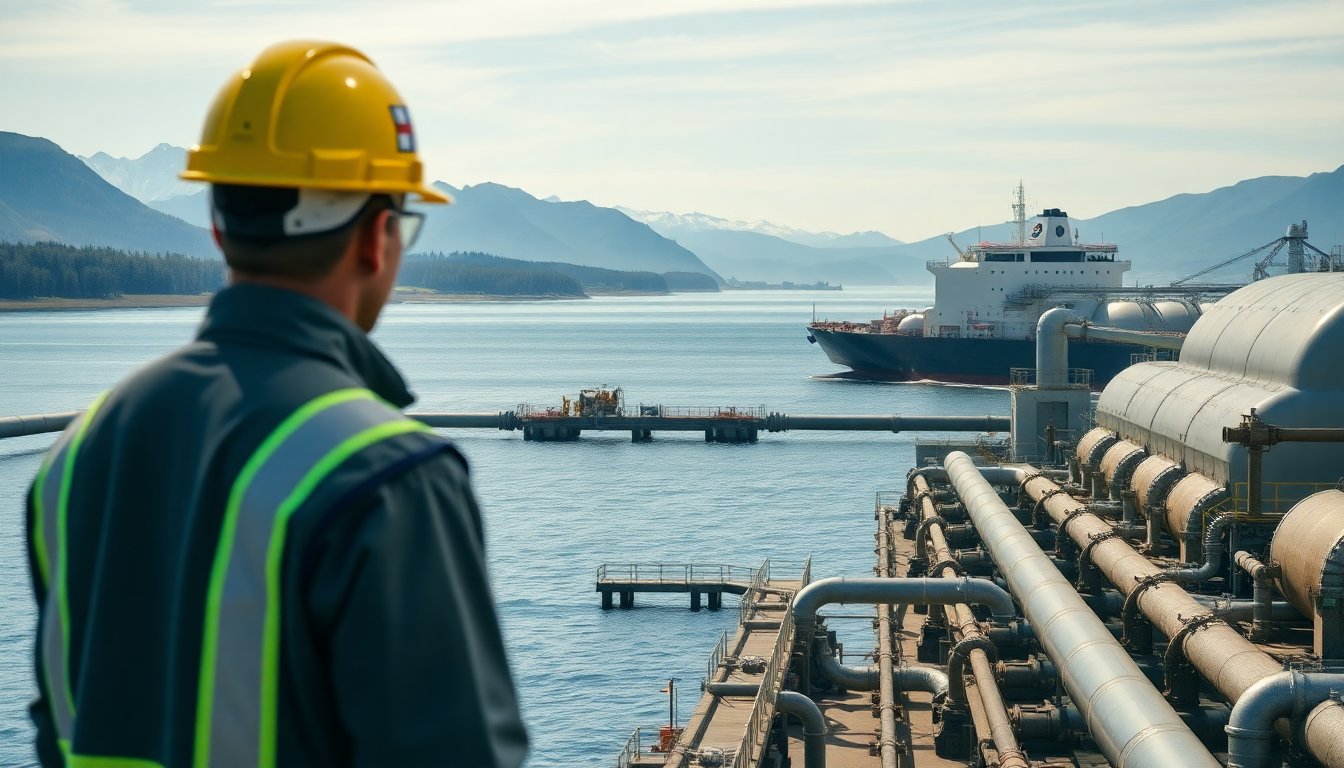
Canada’s bid to become a major LNG exporter
Who’s talking and what’s proposed
Federal Minister of Energy and Natural Resources has put a bold figure on the table: Canada should be able to export as much as 100 million tonnes of liquefied natural gas (LNG) annually. The target was presented to the House of Commons Standing Committee on Natural Resources as several projects in British Columbia move through construction and regulatory review, and as other proposals are floated across the country.
Why the number matters — and why it’s a big stretch
Today’s projects, even if they all reach full capacity, fall far short of 100 million tonnes. Hitting that target would require many more approvals, extra liquefaction facilities, new pipelines and port upgrades — plus successful navigation of market, environmental and Indigenous consultation hurdles. Officials have framed the figure as a national ambition, but so far they haven’t named which projects would be fast-tracked or explained how permitting, logistics and market access would be coordinated. Committee hearings and future announcements will likely provide more details, yet for now there’s a noticeable gap between the aspiration and the reality on the ground.
Where demand would come from
The minister and other proponents point to rising LNG demand in Asia. Japan, South Korea, China and India are the leading potential buyers cited in government testimony. Turning pipeline gas into a seaborne product requires liquefaction plants, which cool natural gas to about −162°C so tankers can carry it. Canada already operates a major terminal in Kitimat, B.C., and several additional projects are under construction or under regulatory scrutiny.
Projects that could expand capacity
Current construction and review-stage facilities would together deliver under 50 million tonnes a year if they reach full output. To bridge the remainder, developers have proposed significant additions — notably a second phase at the Kitimat complex and a floating LNG terminal on the North Coast led by the Nisga’a Nation. Both of those proposals have been referred to the federal Major Projects Management Office and, if approved, could add meaningful capacity.
Key initiatives in British Columbia
B.C. holds the lion’s share of near-term potential. The most discussed projects include LNG Canada phase 2, the Ksi Lisims floating terminal, and onshore plants such as Woodfibre and Cedar LNG. If every one of these went forward and ramped up to full production, they might add roughly 40–45 million tonnes per year. But each faces its own hurdles: environmental assessments, Indigenous consultation processes, market dynamics and permitting timelines — any of which could slow or halt progress.
Proposals elsewhere in Canada
Beyond B.C., proponents are exploring options in Quebec and Newfoundland. Ideas range from a plant and pipeline near Baie-Comeau to converting offshore gas near Newfoundland into export-ready LNG. Most of these projects remain early-stage. They could contribute to the federal goal, but only if permitting, markets and infrastructure evolve in their favour.
Economic upside and environmental debate
Supporters emphasize potential economic gains: export revenue, job creation and regional investment. The minister has framed an expanded LNG sector as one of Canada’s most consequential economic undertakings, and some buyers view natural gas as a lower-carbon substitute for coal. At the same time, regulators, Indigenous communities and environmental groups are scrutinizing lifecycle greenhouse gas emissions, marine safety risks and whether consultation processes are adequate. Those concerns are likely to carry substantial weight in federal reviews and in public discussion about which projects should proceed. Achieving it would require a string of successful project approvals, major infrastructure builds and constructive resolution of environmental and Indigenous issues — a complicated, high-stakes undertaking that will unfold over years rather than months.