
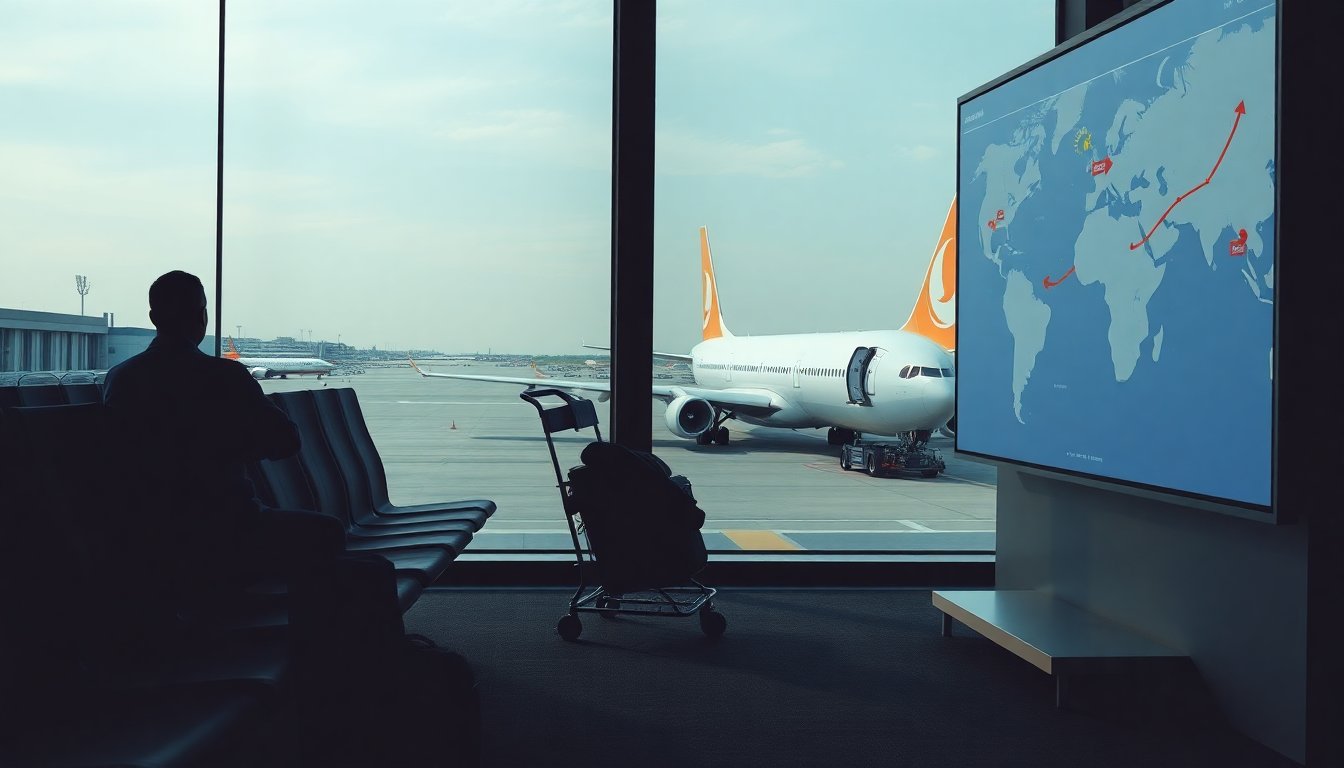
Airspace closures over parts of the Middle East have forced sweeping reroutes, emptied seat inventories and sent fares soaring on long‑haul routes — especially those to and from Hong Kong. Airlines are juggling crews and aircraft while passengers face higher prices, longer journeys and fewer direct options.
What happened and why it matters
– The basics: Multiple stretches of Middle East airspace were closed recently, eliminating key flight corridors. That has lengthened many long‑haul routings, increased fuel burn and reduced the number of available daily flights.
– The immediate consequence: Airlines have less usable capacity and transfer more passengers onto a smaller pool of alternative routes. Scarcity plus urgent rebookings is driving sharp, short‑term price increases on remaining seats.
– Who’s affected: Global carriers, travel agents, corporate travel teams and most visibly, travelers to and from Hong Kong and other Asia‑Pacific destinations that normally use Middle East overflights.
A snapshot from the market
“Our phones lit up within an hour,” said a London‑based travel agent assisting business travelers bound for Hong Kong. “Clients who usually book economy are suddenly seeing only premium seats — and at any price.”
Inventory checks show dramatic changes. In a sampling of Cathay Pacific departures from 57 European cities, the lowest available direct fares spiked on average by roughly 93% compared with typical year‑earlier rates for the same windows. Some extreme examples:
– London → Hong Kong: an imminent business‑class seat listed at about HK$53,486 (US$6,837) — roughly six times the normal fare for comparable last‑minute travel.
– Madrid → Hong Kong: similar premium jumps, with business seats quoted around HK$51,258 (US$6,553), about five times typical rates.
Why fares jumped so fast
– Longer flight time = more fuel and higher operating cost. A detour of a few hours on a long‑haul sector can push up fuel needs and crew duty costs significantly.
– Reduced seat inventory. When one corridor closes, multiple flights are rerouted or canceled. The remaining open flights sell quickly; revenue‑management systems then lift prices as low‑fare inventory disappears.
– Urgent demand. Passengers who must travel immediately are often willing to accept higher fares, which resets market benchmarks for remaining seats.
Operational pressures on airlines
Airlines must redesign schedules overnight. That means:
– Longer block times and extra fuel reserves, which lower how many flights a plane can operate in a day.
– Crew‑rest and duty regulations that may force additional stops or cancellations when legs stretch beyond planned limits.
– Complex network trade‑offs: adding a long feeder to preserve a long‑haul link may ripple back and disrupt domestic and regional services.
A human angle
One family we spoke with canceled a planned reunion in Hong Kong after watching round‑trip fares triple overnight. “We couldn’t justify paying that much for a short stay,” the traveler said. Another small tech firm postponed a client visit after its travel manager said expense approvals stalled under the new prices.
What travelers should do now
– Check your flight status directly with the airline before you travel — changes can appear within hours.
– Prefer flexible or refundable fares if your trip isn’t fixed. Fees for rebooking can be steep when routes are unstable.
– Allow extra connection time. Rerouted legs add hours and increase the risk of missed connections.
– Consider alternate airports or dates. Flying on a different day or from a nearby airport can cut costs and widen routing options.
– Use fare alerts and search repeatedly. Airlines sometimes release extra seats or revise pricing as they reallocate capacity.
– Confirm insurance and credit‑card protections for cancellations or delays, and keep receipts and correspondence for claims.
What airlines and regulators are saying
Carriers emphasize safety and regulatory compliance when explaining reroutes. “Our first priority is the safety of passengers and crew,” an airline spokesperson told our reporter, adding that rerouting is being done to meet all operational and crew‑duty rules.
Regulators and consumer groups are watching prices and transparency closely. If evidence of unfair pricing or anti‑competitive conduct emerges, they could open formal inquiries.
What happened and why it matters
– The basics: Multiple stretches of Middle East airspace were closed recently, eliminating key flight corridors. That has lengthened many long‑haul routings, increased fuel burn and reduced the number of available daily flights.
– The immediate consequence: Airlines have less usable capacity and transfer more passengers onto a smaller pool of alternative routes. Scarcity plus urgent rebookings is driving sharp, short‑term price increases on remaining seats.
– Who’s affected: Global carriers, travel agents, corporate travel teams and most visibly, travelers to and from Hong Kong and other Asia‑Pacific destinations that normally use Middle East overflights.0
What happened and why it matters
– The basics: Multiple stretches of Middle East airspace were closed recently, eliminating key flight corridors. That has lengthened many long‑haul routings, increased fuel burn and reduced the number of available daily flights.
– The immediate consequence: Airlines have less usable capacity and transfer more passengers onto a smaller pool of alternative routes. Scarcity plus urgent rebookings is driving sharp, short‑term price increases on remaining seats.
– Who’s affected: Global carriers, travel agents, corporate travel teams and most visibly, travelers to and from Hong Kong and other Asia‑Pacific destinations that normally use Middle East overflights.1