
Table of Contents
Overview
A U.S.-led coalition, with Israel taking part in some strikes, has moved beyond occasional sorties to a sustained air campaign aimed squarely at crippling Iran’s missile and drone industries. Public reporting and official briefings suggest a deliberate push to dismantle the systems, infrastructure and supply chains that allow Tehran to design, build and field ballistic missiles and unmanned aerial vehicles. The most consequential action reported so far occurred on March 6, 2026, followed by a series of follow-up strikes and tit-for-tat exchanges across the region in the ensuing days.
Objectives and scope of the campaign
Planners appear to be pursuing three tightly linked objectives. First, blunt Iran’s ability to launch ballistic missiles. Second, fracture the defense-industrial network—particularly sites tied to drone production. Third, establish a measure of air control over strategic stretches of Iranian territory to make rapid reconstitution of strike capabilities more difficult.
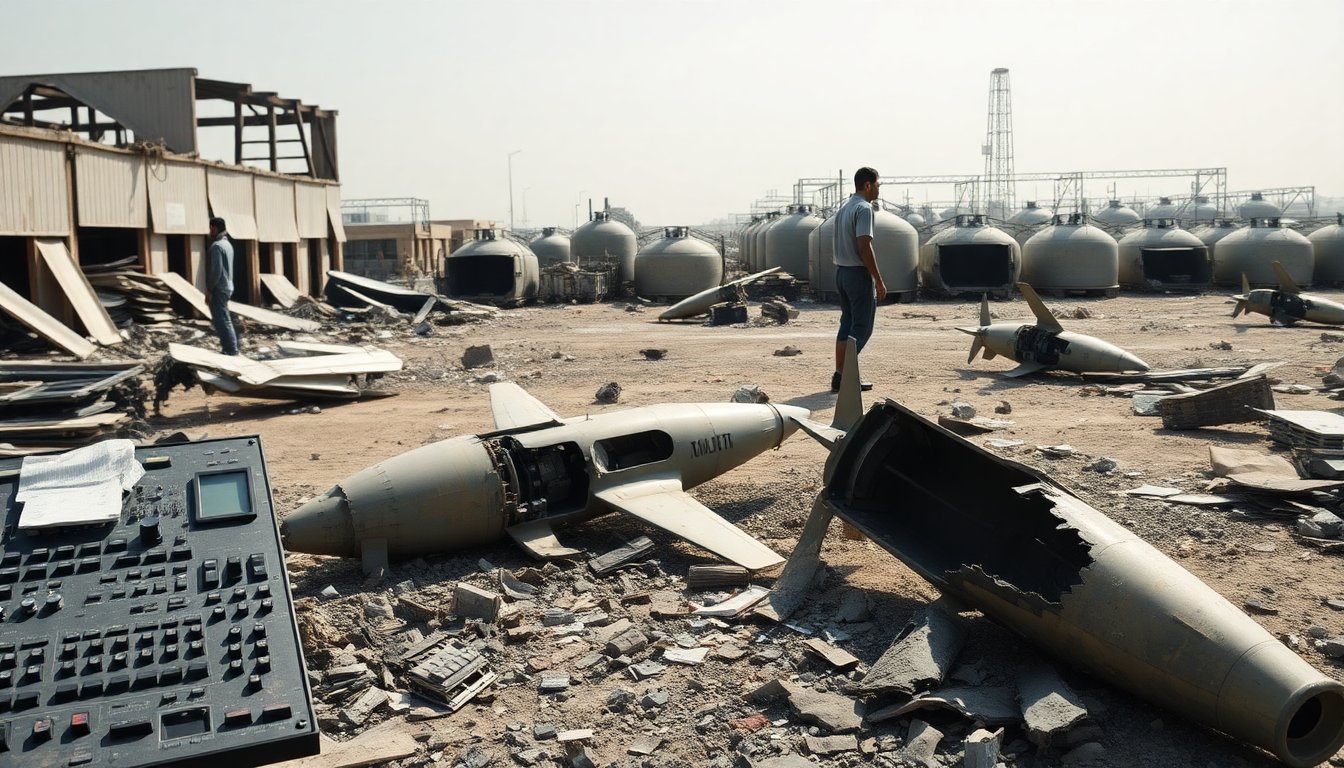
To achieve those goals, targets have gone well beyond launchers and warheads. Officials and analysts point to strikes on depots, storage yards, assembly lines and manufacturing hubs that turn out guidance systems, propulsion units and airframes. Logistics have been a clear emphasis too: attacks on transport corridors, distribution nodes and depots are intended to create chokepoints that slow movement of parts and munitions. The underlying logic: even if some factories survive, a fragmented supply chain will slow output and reduce
Key targets and reported effects
Open-source reporting organizes the campaign into three main buckets: missile and launcher sites; drone-related industrial facilities; and transportation and logistics nodes. Together, these strikes are designed to interrupt