
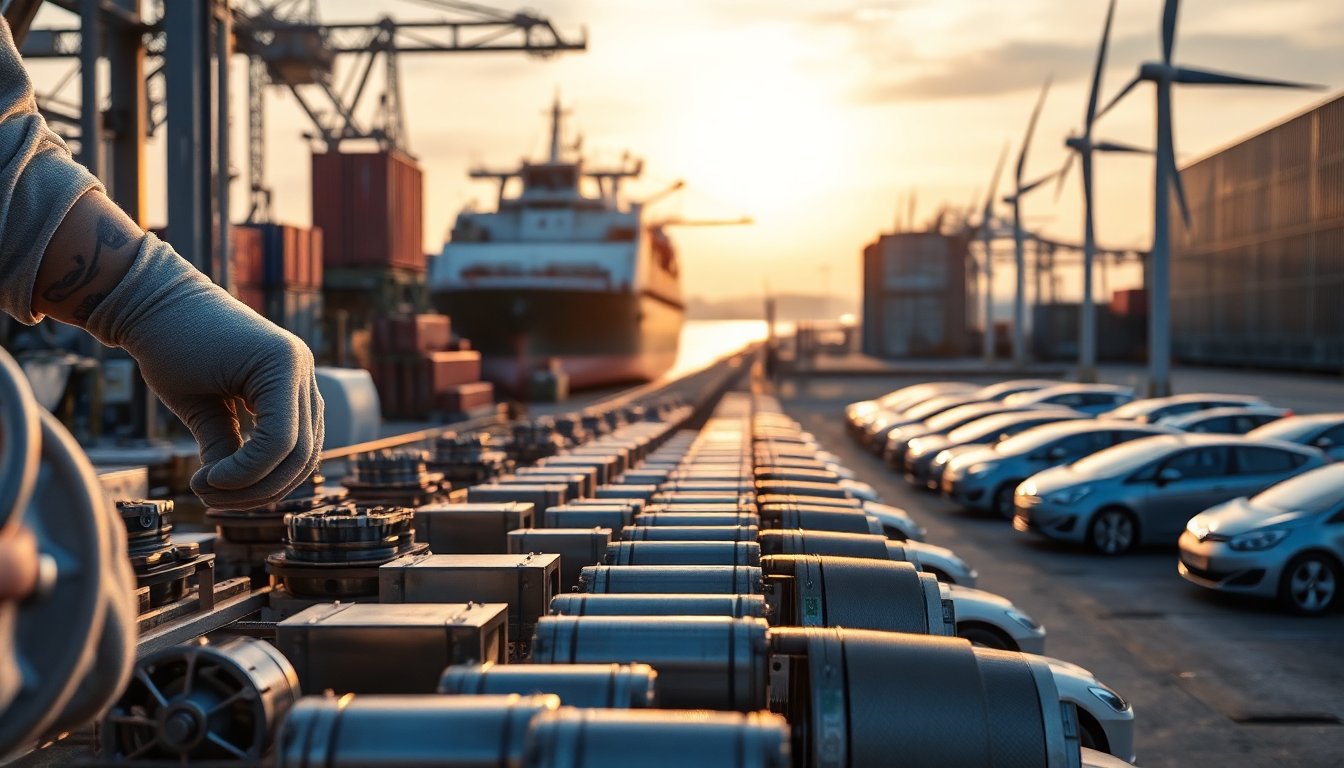
Europe is racing to lock down the minerals that will power its clean-energy future. Wind turbines, electric cars and advanced defence systems all depend on high-performance permanent magnets made from a handful of rare earths — notably neodymium, praseodymium, dysprosium and terbium. Those elements may be tiny by weight, but they are decisive for motor performance and sensitive equipment.
Why raw ore matters
The nuance of this transition is often missed: processing and manufacturing can be relocated or scaled, but the raw material that starts the value chain cannot. Without steady access to upstream ore, investments in separation plants, recyclers and magnet factories risk being undercut by supply shocks or geopolitical leverage. That central constraint — securing feedstock — is shaping policy across Europe.
Political pressure to move faster
Swedish deputy prime minister Ebba Busch and other leaders have urged national governments to speed up permitting and sharpen industrial policy rather than waiting for Brussels. Public calls circulated on 12/02/2026 argue that national reforms are urgent because geopolitics and regulation matter as much as geology when it comes to access. The message is straightforward: quicker, clearer national rules could accelerate mines and processing projects, but critics warn safeguards must remain intact.
Downstream gains don’t erase upstream pain
Europe has begun expanding downstream capacity. Companies such as Solvay and Neo Performance Materials are repositioning plants — La Rochelle and Sillamäe among them — to process separation feeds and produce magnets from diversified and recycled inputs. These moves reduce some risk, but a separation plant still needs steady concentrates; a magnet factory needs stable supplies of oxides, metals and alloys. In short: local processing helps, but it won’t solve the problem if the ore itself is scarce.
China and concentration risk
Global rare-earth processing and magnet production remain heavily concentrated in a few countries, with China dominant across mining, separation and manufacturing. That concentration leaves Europe and its allies vulnerable. The technical distinction matters: processing creates value downstream, while mining secures the raw feedstock. Without upstream control — through domestic mining, partnerships or stockpiles — finished production can be exposed to disruption.
Heavy rare earths: a small share, outsized importance
A specific subset of the 17 rare-earth elements determines magnet performance. NdPr (neodymium and praseodymium) drives most magnet volume; tiny additions of dysprosium and terbium — the heavy rare earths, HREEs — are often essential to keep magnets coercive at high temperatures. HREEs typically represent only about 1–2% of a deposit’s rare-earth basket, which makes them expensive and a strategic choke point for high-performance uses.
Policy responses: inventories, partnerships and permits
Policymakers are focusing on three levers: securing upstream deals, building strategic stockpiles and speeding permitting. The EU’s Critical Raw Materials Act (CRMA), which entered into force in May 2026 as Regulation (EU) 2026/1252, sets binding 2030 targets — 10% of annual consumption from EU extraction, 40% from EU processing and 25% from EU recycling — and caps reliance on any single third country at 65% per processing stage. This reshapes investment incentives: expect quicker mid- and downstream gains, but upstream capacity will depend on negotiated supply agreements and mine financing.
Export controls and market shocks
An April 2026 update to China’s export controls — which explicitly covered dysprosium and terbium — sent prices jumping and crystallized the urgency. The reaction has been swift: governments and industry in Europe and the United States have launched public-private partnerships, subsidies and procurement commitments to onshore or “allyshore” critical stages of the value chain. Still, authorities emphasize that feedstock stability will hinge on successful negotiations and timely permitting decisions.
Sweden as a case study
Sweden has proposed reforms to shorten and centralize mining permits, presenting a new environmental permitting authority in 2026 to cut bureaucratic delays. Industry groups welcome clearer timetables as a magnet for investment; environmental advocates urge that faster approvals must not dilute assessments. Whether projects move from concept to actual “metal in the ground” will depend on how these trade-offs are managed.
What’s missing and what’s next
Europe has few projects with strong HREE exposure — Norra Kärr is one of the exceptions. Many promising deposits lie outside the EU or come with geopolitical complications in places such as Greenland and parts of Africa. Analysts say practical progress requires three pillars: streamlined national permitting, investment in separation and recycling, and pragmatic partnerships with trusted suppliers. The near-term milestones to watch are concrete permitting approvals and signed upstream contracts: those will determine how quickly feedstocks stabilize and downstream investments follow. Policymakers are juggling faster permitting, targeted investment and international deals to reduce dependence on concentrated global supply chains. The ratchet-up of diplomatic and industrial efforts over the next year will decide whether those plans translate into reliable supplies for the technologies at the heart of the green transition.