
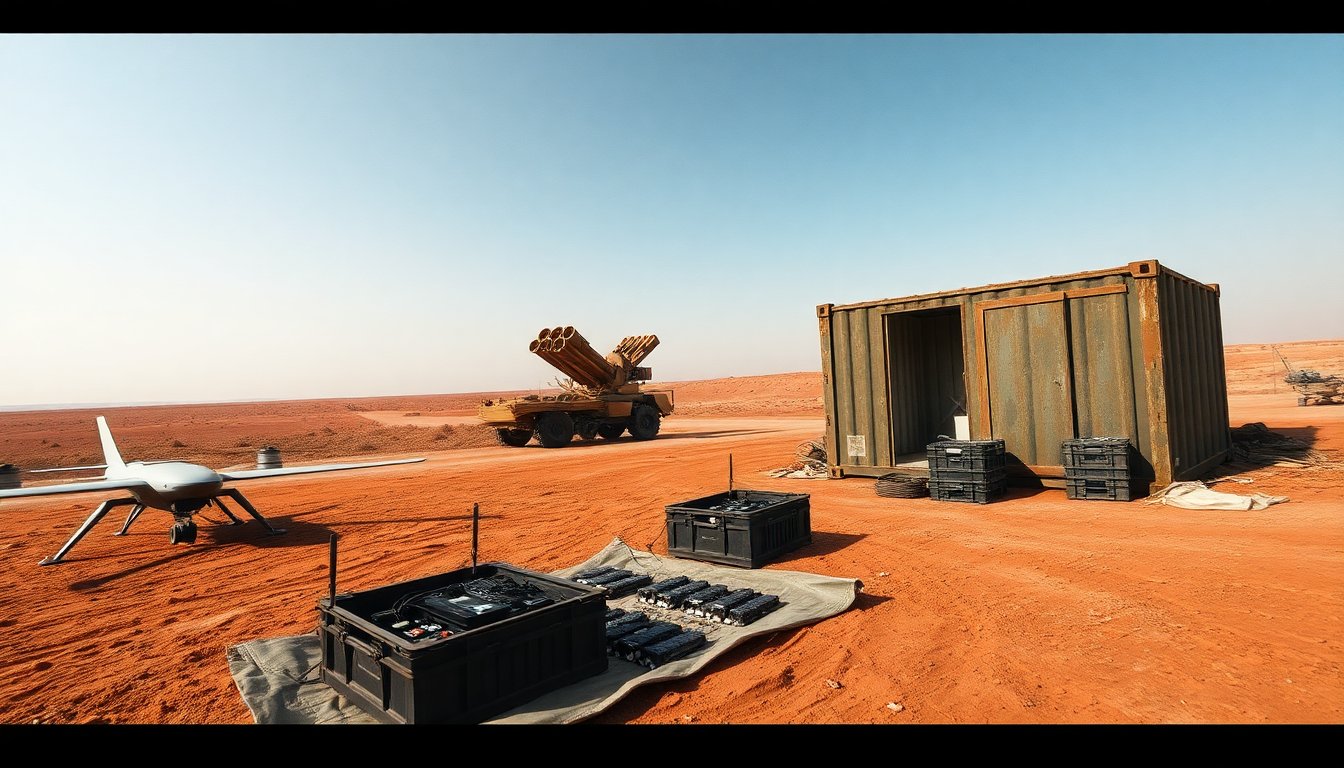
Hezbollah is quietly reshaping how it fights. After a punishing 2026 campaign that decapitated parts of its leadership, drained weapon stocks and weakened its political safeguards in Beirut, the group seems to be moving away from massed border assaults and toward longer-range, lower-cost methods — drones, missiles and other stand‑off systems that can strike from a distance and are tougher to pin down.
What changed on the battlefield
– Focused Israeli operations removed senior commanders, struck weapons depots and disrupted supply nodes, forcing Hezbollah to reorganize under pressure. – The collapse of reliable Syrian corridors and tighter Lebanese border controls have choked resupply routes, complicating sustainment for forward units. – Many fighters have redeployed north of the Litani River, where rugged terrain and dispersed positions favor long‑range fires over dense formations camped near the frontier. – A more active Lebanese Armed Forces presence in the south likewise narrows freedom of movement and raises the cost of any large cross‑border maneuver.
Political shifts and operational fallout
Political changes in Beirut have also altered Hezbollah’s environment. A new cabinet reduced ministers aligned with the movement, and public splits with former allies curbed the overt political protection the group once enjoyed. That political squeeze has enabled the state to tighten ports and border screening, pursue legal measures and coordinate intelligence — all moves that make rapid, open rearmament far riskier.
How Hezbollah is adapting
Intelligence suggests a modest recovery since late 2026: fresh recruitment, new leadership cadres and partial replenishment of certain stocks. But these are only fragments of pre‑war capacity. Iran remains a crucial patron, yet Lebanese financial reforms and stricter customs controls have narrowed traditional channels. As a result, the group is leaning more on domestically produced systems, maritime smuggling, covert procurement networks and limited sea routes to rebuild capabilities.
Geographic trade-offs
By shifting combat power northward, Hezbollah gains strike depth — longer‑range rockets and loitering munitions can reach farther into Israel — but loses the immediacy and mass it once deployed along the border. The mix of a stronger Lebanese Army in the south and forbidding terrain up north pushes Hezbollah toward endurance, surveillance and stand‑off fires, rather than rapid territorial grabs.
Three likely operational paths
Analysts see three broad options, each with distinct risks and aims:
1) Symbolic probes — small cross‑border raids or limited incursions designed to show resolve without provoking all‑out retaliation. These conserve manpower but risk local backlash. 2) Concentrated missile and drone salvos — large volumes of remote strikes that inflict political or operational pain while keeping personnel sheltered. Such campaigns can be highly disruptive but raise the odds of forceful countermeasures and wider escalation. 3) Covert or deniable extraterritorial actions — clandestine operations targeting regional assets to disrupt logistics or shift perceptions. These lower immediate battlefield exposure but carry diplomatic and legal costs if attribution follows.
Escalation, civilians and the map of future clashes
The pivot toward attrition and remote strikes changes more than tactics: it alters escalation dynamics, widens the geography of where conflict can hit, and shifts the burden of risk onto civilian populations and infrastructure farther from the front lines. Stand‑off weapons are harder to deter and harder to target without increasing collateral impacts.
What analysts are watching
Open and classified monitoring feeds are tracking several indicators: production and logistics signals from suspected manufacturing sites; automated alerts for unusual force movements or camouflaged staging areas; messaging from Lebanese political figures and militia spokespeople; and layered HUMINT to filter disinformation and correlate strike patterns with logistic disruptions. These streams help distinguish temporary improvisation from a sustained operational shift. That evolution raises thorny questions about deterrence, escalation management and how conflicts spill beyond immediate battlefields.