
Table of Contents
The sprawling marketplaces of Yiwu in eastern China have long been called the world’s supermarket, a place where retailers source everything from ornaments to electronics. Now those same corridors are revealing how a distant conflict can choke distribution networks. With shipments bound for the Middle East delayed or cancelled, many stalls that normally feed global retailers are stacked with unsold goods and rising overheads. The situation highlights how localized hostilities near the Strait of Hormuz can morph into a wider test of resilience for global supply chains, affecting shipping, pricing and sourcing choices across continents.
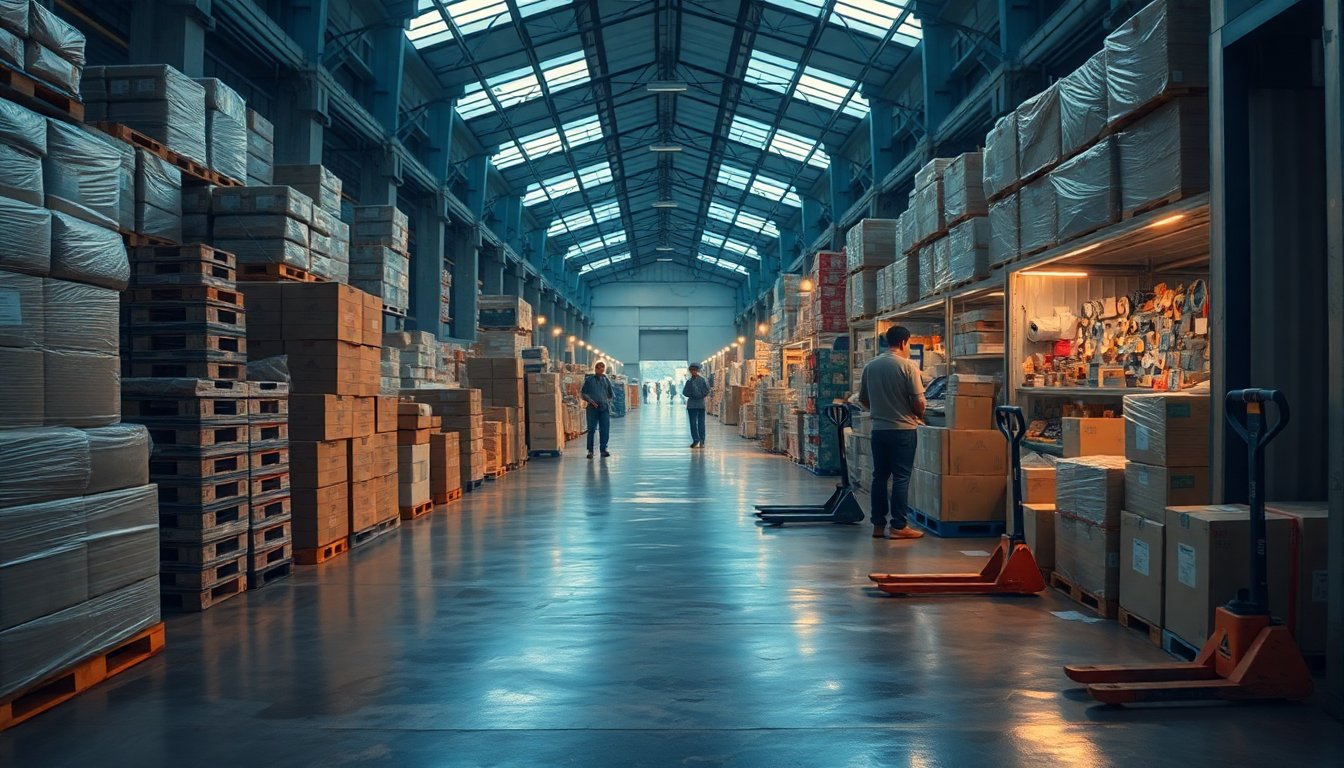
Goods stranded in warehouses and showrooms
In Yiwu, vendors describe containers that should be at sea instead occupying warehouse space and showroom floors. A footwear supplier says tens of thousands of pairs meant for buyers in Saudi Arabia and Egypt are stalled after a dramatic jump in shipping costs from about $1,200 US to near $6,000 per container. Other merchants report pallets of kitchenware and machine parts destined for Lebanon and Iraq that cannot move because importers either cannot afford transport or fear attacks on vessels. These blockages have a second-order effect: local manufacturers face higher input prices as raw material costs, such as plastic resins, climb by roughly 40 per cent, pushing sale prices upward across the supply chain.
Energy flows add a second layer of pressure
The trade squeeze in Yiwu coincides with broader concern about tankers and fuel. China receives substantial volumes of energy through the Strait of Hormuz: in 2026 the country sourced a large share of its liquefied natural gas from Qatar and took a sizeable portion of Iranian crude, at times receiving up to 90 per cent of Iran’s exports. Analysts monitor whether shipments are allowed through or interrupted because any reduction affects industries that rely on steady fuel and feedstock deliveries. For context, the International Energy Agency reported that about 20 million barrels per day transited the strait in 2026, underscoring why disruptions matter for manufacturing and transport costs globally.
Why sellers and buyers are pausing orders
Importers in the Middle East have reduced new orders, delaying cash flows for Yiwu suppliers who depend on repeat business. Some merchants are pivoting to new customers in South America and Africa to recycle inventory and preserve margins. Others weigh the costs of risk insurance for tankers or look for longer, often pricier, routing options to bypass the chokepoint. The reluctance to place fresh orders is driven by both economic calculus and security concerns: a shipment’s fate now depends on volatile freight rates and whether vessels will transit without incident.
Price transmission and global reactions
Even countries that import little oil directly from the Persian Gulf feel the consequences because oil trades on a global market. Higher crude prices feed through to consumer and industrial costs, lifting gasoline and freight rates worldwide. The situation prompted members of the International Energy Agency to coordinate releases from strategic reserves, and some national governments authorized substantial sales from their emergency stockpiles to ease market strain. Such moves may temper short-term volatility, but if the conflict persists, analysts warn that releases will only be a temporary cushion unless shipping routes are stabilized.
Short-term fixes and longer-term resilience
In Yiwu, chamber officials and merchants adopt a mixed stance of caution and opportunism. While volumes shrink in the short term, local leaders point to historical precedents where post-conflict reconstruction created strong demand for Chinese products. The broader strategy also involves diversification: Chinese buyers have been increasing purchases from a wider set of suppliers, expanding renewable energy and electric vehicle usage domestically, and building inventories to blunt future shocks. Officials argue that if China can avoid escalation and remain a stable provider, its exporters may gain market share during any regional rebuild.
For shop owners in Yiwu, the immediate work is pragmatic: find alternative markets, renegotiate logistics, and manage cash flow until shipping normalizes. Alongside those micro decisions, energy and trade policymakers watch tanker movements and pricing indicators to judge whether the disruption will be a temporary correction or a structural shift. Either outcome will influence how quickly containers clear, how fast prices settle, and which exporters emerge strongest when the smoke finally clears.