
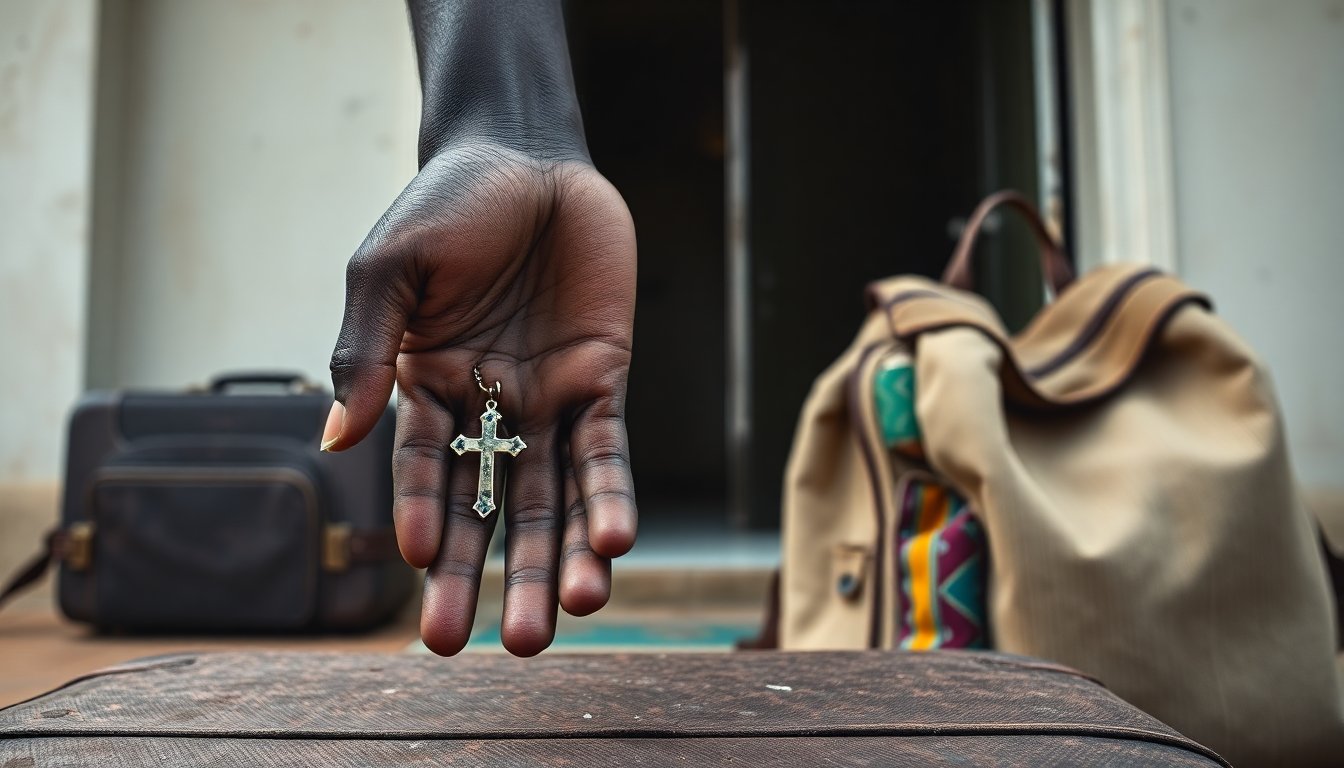
Investigations by journalists, rights groups and government agencies have uncovered troubling claims that the Russian Orthodox Church’s exarchate in Africa played a role in recruiting Kenyan nationals who later fought in Ukraine. The allegations, still under investigation, paint a picture of young people lured with promises of work or theological study, then sent to Russia and — according to some sources — onward into military service.
What investigators say
– Multiple independent outlets, human rights organizations and affected families have described a recurring pattern: intermediaries tied to church networks reportedly offered employment or seminary places to Kenyans and other Africans. Travel costs were frequently covered by actors linked to those networks.
– Several reports, including investigations by iStories and the group Vocal Africa, say recruiters promised monthly pay in the range of 350,000–400,000 Kenyan shillings (about $3,000). Families and advocacy groups told journalists those promises were rarely fulfilled.
– Testimony collected by NGOs and family members alleges recruits arrived on tourist visas, had personal documents confiscated on arrival, and found bank accounts opened in their names but controlled by others. After these administrative steps, sources say some were channelled toward combat zones.
Sources and limits of verification
– Evidence so far comes from family testimony, NGO reports, investigative journalism and some government data. These accounts overlap in several respects but do not yet amount to a single, conclusive legal finding.
– Kenya’s National Intelligence Service (NIS) provided a stark estimate, saying more than 1,000 Kenyans had been recruited into the Russian armed forces and that 89 were on front-line duty as of early 2026. Officials have not publicly released the full evidence behind these figures.
– Church representatives cited in reporting deny mass recruitment. A source linked to Religion News Service said Kenyans were invited primarily for seminary study and that the Church could account for everyone it sent — asserting “not one of them has joined the army.” Rights groups and families dispute that narrative.
Wider context and competing accounts
– The allegations sit at the crossroads of religious outreach, migration and wartime manpower practices. Religious institutions commonly fund travel for education or work; investigators say those legitimate channels may have been misused in some cases.
– Conflicting accounts complicate the picture: victims, advocates and intelligence officials describe coercion, fraud and document seizure; church spokespeople insist their programs were educational and lawful.
– Adding to the confusion, documents and lists purporting to show which countries Russia was recruiting from have circulated online in multiple, differing versions. Ukrainian officials have identified hundreds to thousands of foreign fighters on Russian ranks — figures that underscore the international scale of recruitment but remain hard to verify precisely.
Legal and ethical implications
– If proven, the reported practices — confiscation of identity documents, restriction of account access, transport on false pretenses — could amount to trafficking, debt bondage or forced recruitment.
– Authorities in affected countries will need to determine whether church-affiliated channels were knowingly or unwittingly used to move recruits across borders and whether criminal laws were broken.
– Humanitarian concerns are immediate: families need clear information, returnees may require legal and psychosocial support, and prisoners of war require protection under international law.
Immediate developments and next steps
– Journalists, human rights groups and government bodies in Kenya and elsewhere are continuing inquiries. Local NGOs are mobilizing legal aid and trauma support for families and alleged returnees.
– Diplomatic and legal scrutiny is likely to follow if investigators find patterns of organized coordination. International agencies and foreign ministries are monitoring the situation to assess protection needs and any cross-border consequences.
– Official updates remain the most reliable source for definitive figures and evidence; reporters on the ground say the story is still unfolding and that families are pressing for answers.
What this means for communities
– Communities named in the reports face a mix of legal, social and diplomatic fallout: stigma, consular demands, and possible investigations. Accurate rosters are essential for repatriation, legal processing and family tracing.
– Human rights groups warn that channels framed as education or employment can be diverted to recruit fighters, exploiting social trust and institutional ties. That risk heightens vulnerability for economically and socially marginalised young people. Evidence so far is mixed and still being checked; investigators and authorities are racing to verify claims, support affected families and determine whether crimes were committed. Expect further reporting and official statements as inquiries progress.