
Table of Contents
Nikita Volodin: how athletic skill met bureaucratic hurdles
Nikita Volodin’s path to the Olympic podium combined athletic ambition with persistent administrative effort.
To compete under the German flag and stand among medalists, he faced two distinct challenges. First, he had to master the triple twist, a high-risk technical element in pair skating. Second, he was required to pass Germany’s demanding citizenship test.
Behind the celebratory image on the medal stand lay a quieter story of language drills, test preparation, and thousands of hours refining a single element. Coaches timed practice sessions. Administrators scheduled exams. Both strands had to align for Volodin to become eligible and competitive.
This profile examines how linguistic hurdles and athletic training intersected to produce an Olympic podium finish.
The athletic challenge: perfecting the triple twist
The story links two demanding tasks: a technical feat on the ice and administrative gatekeeping off it. On the ice, the triple twist is a high-risk, high-reward element that requires millisecond timing, explosive lift, and seamless partner coordination.
Coaches describe the move as a chain of precise actions. A slight mistiming in the launch, an imperfect grip, or uneven rotation can end the element in a fall or deduction. Training routines therefore break the skill into repeatable drills that isolate timing, strength and spatial awareness.
Off the ice, eligibility hinged on a separate set of exacting standards. The citizenship process demanded competence in German grammar and retention of civic knowledge essential under national rules. Administrative offices required documented proof, often delivered through tests and interviews that measured language and institutional understanding.
Together, the two pressures illuminate a wider truth about elite sport. Raw talent alone rarely secures international competition. Athletes must also navigate legal frameworks, language requirements and federation rules that shape who can represent a country.
For Volodin, combining intense technical work with bureaucratic preparation became part of daily training. Coaches, legal advisers and federation officials coordinated schedules to balance ice time with language study and paperwork deadlines.
The intersection of these demands shows how modern athletic success depends on mastering systems as well as skills. Observers say this dual burden is becoming standard for athletes who change national affiliation or seek to compete abroad.
Observers say this dual burden is becoming standard for athletes who change national affiliation or seek to compete abroad. For skaters such as Volodin and his partner, mastering the triple twist requires structured technical training and stringent risk management.
Technical training and risk management
Coaches divide the element into discrete phases: entry, lift, rotation and catch. Teams rehearse each phase separately until execution meets strict timing and positional standards.
Drills focus on synchronized timing, explosive leg drive and consistent hand placement. Video analysis and frame-by-frame review are routine. Repetition builds muscle memory so the sequence can be delivered under competitive pressure.
Safety protocols include progressive height increases, off-ice simulation and the use of harnesses during early lifts. Medical staff are present during maximal-power sessions to monitor for acute injury risk.
Risk management also covers load planning and recovery. Trainers limit high‑intensity attempts to reduce cumulative strain on shoulders, hips and the cervical spine. Physiotherapists prescribe prehabilitation routines aimed at maintaining joint stability.
Psychological preparation is integrated into practice. Sports psychologists run visualization and arousal-control sessions to help partners manage the narrow time window for the lift and catch.
Coaches say this meticulous approach reduces performance variability. Yet the combined demands of elite training and administrative hurdles remain a persistent challenge for athletes navigating national transfers.
Yet the combined demands of elite training and administrative hurdles remain a persistent challenge for athletes navigating national transfers. Coaches structure progressions to protect skaters while increasing difficulty. Off-ice sessions develop the explosive strength needed for higher lifts. On-ice work prioritizes timing and takeoff trajectory to minimize rotational error. Sports scientists review footage frame by frame to erase small inconsistencies. This meticulous approach turned the triple twist into a dependable scoring element under technical scrutiny.
The administrative hurdle: passing Germany’s citizenship test
Securing eligibility through naturalization can be as exacting as refining technical elements on the ice. Nationality processes often require proof of language ability and knowledge of civic life, and bureaucratic timelines can delay competition entry. Such procedural requirements influence selection windows and training plans. Federations and athletes therefore coordinate legal steps alongside athletic preparation to avoid gaps in eligibility that could jeopardize championship opportunities.
Volodin had to meet Germany’s legal requirements before he could represent the country at the Olympics. He completed the procedures that grant nationality, including a formal assessment of language and civic knowledge. The process requires applicants to demonstrate comprehension of the legal system and social institutions, and to show competence in German grammar. The citizenship test examines factual knowledge and the ability to engage with civic concepts in German. For athletes who spend most of their time training and traveling, adding study of grammar, vocabulary and civic topics increases the administrative load.
Language learning as part of athletic preparation
Coaches and federations now often factor language study into transfer plans. Teams arrange tutoring and flexible study schedules to fit training blocks and travel. National authorities may accept language certificates or interview-based assessments, but the requirement to function in the host country’s language remains common.
Meeting those requirements can determine whether an athlete misses key competitions. Delays in naturalization or gaps in eligibility can sideline athletes during qualifying windows. Clubs and national bodies therefore coordinate legal steps alongside sporting preparation to reduce that risk.
Clubs and national bodies therefore coordinate legal steps alongside sporting preparation to reduce that risk.
How the two paths converged at the Olympics
Volodin combined routine physical drills with targeted language work to meet eligibility requirements. He spent hours on German grammar, focusing on sentence structure, verb conjugations and comprehension of civic texts. Tutors and study groups turned abstract rules into practical skills for the test.
The study routine mirrored athletic preparation. Practice was daily and incremental. Feedback was immediate and specific. Progress was measured in small, repeatable gains rather than sudden breakthroughs.
The objective was pragmatic: secure legal certainty before competition. Clearing the language assessment removed an administrative obstacle and allowed him to concentrate on performance. That alignment of paperwork and training reduced uncertainty at a crucial moment in his career.
Officials say coordinated support—technical coaches alongside language tutors—can shorten the path to eligibility for other athletes facing similar requirements. The convergence of legal and sporting preparation thus became part of the broader strategy to field competitors without administrative surprises.
How technical skill and paperwork combined on the podium
The convergence of legal and sporting preparation thus became part of the broader strategy to field competitors without administrative surprises. Behind the brief, high-stakes moment on the ice lay months, and in some cases years, of off-ice preparation.
Precision skills determined the result: the timing of a lift, the angle of release and the security of a catch. The successful landing of the triple twist delivered crucial technical points and bolstered the pair’s confidence. At the same time, passing the citizenship test removed an administrative barrier and allowed Volodin to compete under his chosen flag.
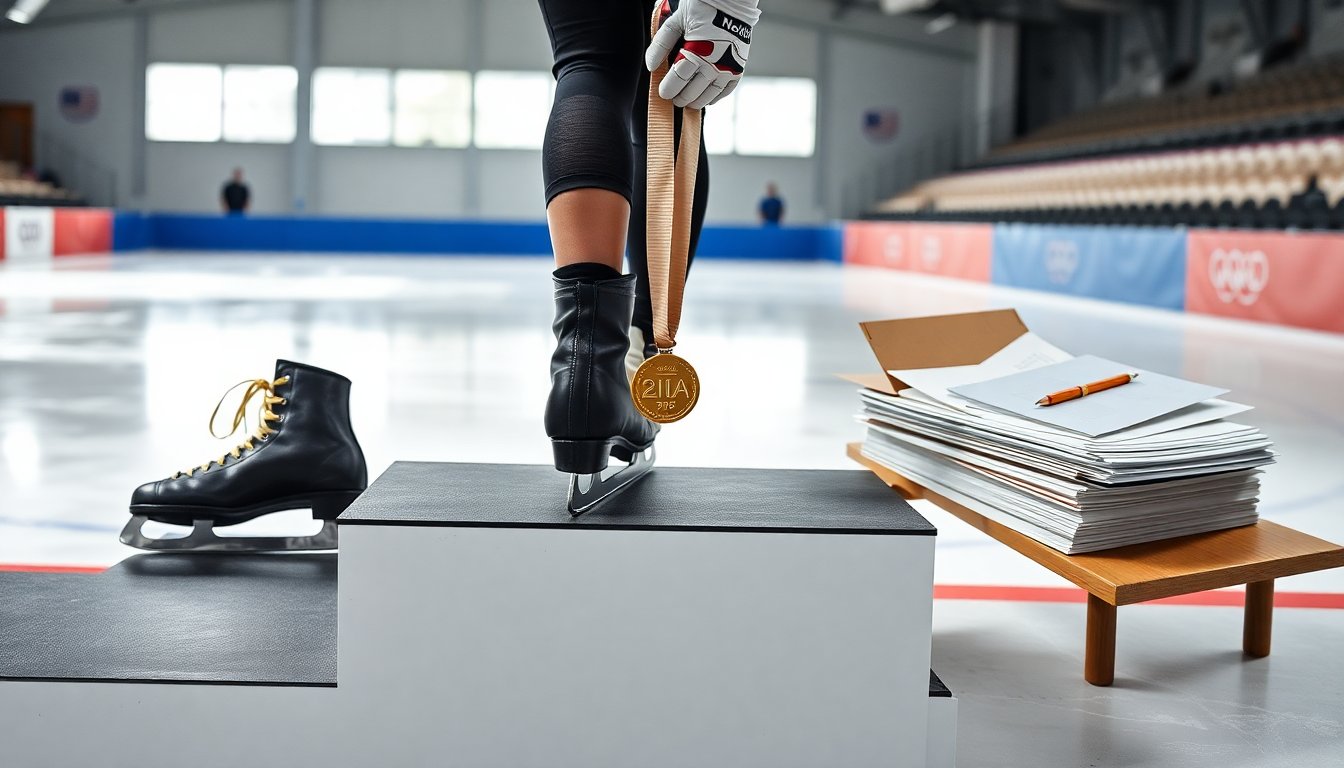
Together, these achievements — one technical, one bureaucratic — enabled the medal-winning performance. The episode underlines the multifaceted demands of modern elite sport, where athletic excellence and administrative compliance often advance in parallel.
That episode extends the article’s central theme: modern elite sport demands more than physical preparation. Athletes must navigate legal systems, cultural expectations and administrative procedures alongside training.
Mastering the triple twist and meeting civic requirements become parallel tasks. Success on the podium now often depends on institutional support as much as individual talent. National federations, clubs and coaching teams increasingly add legal advisers, language tutors and administrative coordinators to athlete support rosters.
The practical consequence is a broader talent pipeline. Athletes with access to comprehensive off-ice resources are better positioned to compete internationally. Expect continued growth in programs that combine technical coaching with legal and linguistic assistance.